Dog Daily Care Checklist: Simple Routine for Busy Dog Owners
A dog daily care checklist keeps meals, walks, potty breaks, grooming and medication on track — even on busy days. Here is how to build a daily routine that works for your lifestyle.
In short
A dog daily care checklist keeps meals, walks, potty breaks, grooming and medication on track — even on busy days. Here is how to build a daily routine that works for your lifestyle.
Dogs thrive on routine. A predictable daily schedule reduces anxiety, improves behaviour and makes it easier to spot when something is off — because you notice quickly when a usually food-motivated dog skips a meal or when a normally energetic dog wants to sleep all day.
This guide walks through a complete dog daily care checklist and explains how to turn it into a sustainable routine.
Morning Routine
Meals
- Measure the correct portion — do not eyeball it
- Note any food refusal or gulping (both can indicate illness)
- Refresh water bowl — bacteria builds up overnight
Morning Walk or Toilet Trip
- First outdoor trip within 20–30 minutes of waking
- Check for normal toileting — changes in frequency, colour or consistency are health indicators
- Note any limping, unusual gait or reluctance to walk
Quick Health Check (takes 60 seconds)
- Eyes: clear or discharge?
- Ears: sniffing or scratching more than usual?
- Coat: any new mats, lumps or sore spots?
- Energy level: normal, lethargic, hyperactive?
Midday
- Toilet trip or short walk (essential for puppies and senior dogs)
- Midday meal if on three meals per day
- Enrichment or mental stimulation: scatter feeding, Kong, training session
- Water check — refill if low
Afternoon
- Main exercise walk — most dogs need at least 30 minutes of meaningful activity
- Post-walk paw check: thorns, cuts, ice melt chemicals in winter
- Grooming: quick brush 3–4 times per week for most breeds, daily for heavy shedders
Evening
- Evening meal
- Final toilet trip before bed
- Medications if prescribed in the evening
- Settle time — consistent bedtime helps anxious dogs
Weekly Tasks
- Nail check (trim if clicking on hard floors)
- Ear check (clean if waxy or smelly)
- Teeth brush (daily is ideal, three times a week is realistic for most owners)
- Weight check once a month is enough for most adult dogs
- Flea and tick check after walks in long grass
What to Track and Why
You do not need to write an essay every day. A simple tick and note system — meals eaten, walks done, toilet normal, medications given — creates a record that is invaluable at vet visits.
"Has this been going on long?" is a question vets ask constantly. Owners who track have a real answer. Owners who do not guess and underestimate, which delays diagnosis.
What to log daily:
- Meals: eaten fully, partially or refused
- Water intake: normal, increased or decreased
- Walks: duration and energy level
- Toilet: times, consistency, anything unusual
- Medications given (tick when done)
- Mood and energy: a 1–5 scale is enough
Building a Routine That Actually Sticks
The most common reason dog care routines fail is that they are too ambitious. A checklist with 25 items twice a day gets abandoned by week two. The right checklist is the one you actually do.
- Start with the non-negotiables: feeding, walking, medication, water
- Add one or two tracking points that give you useful information
- Review it after two weeks and adjust
- Involve everyone in the household — use the same tracker so tasks do not get doubled or missed
Daily Dog Care Tracker
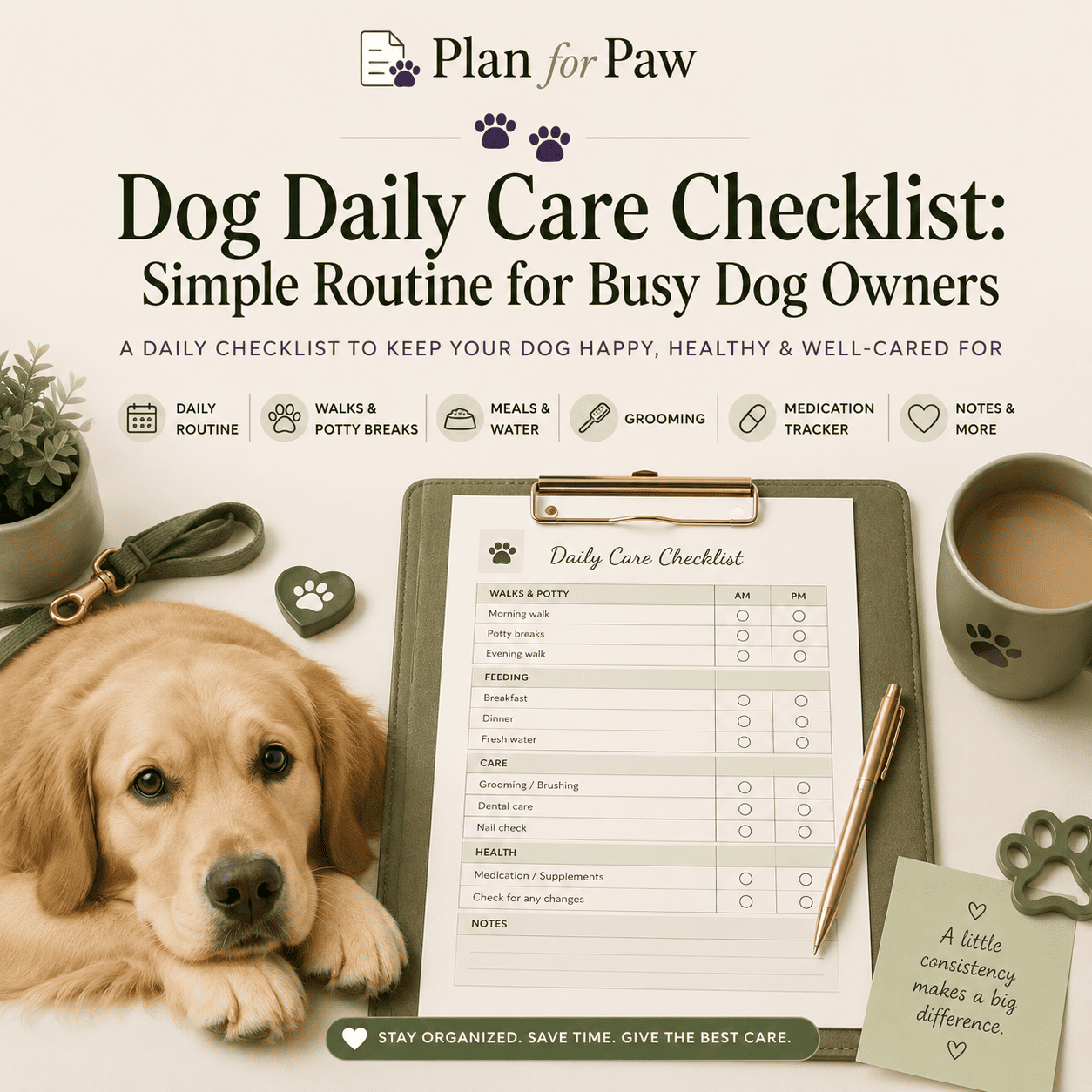
Printable and fillable daily care sheets covering meals, water, walks, potty, grooming, medication and mood. Simple enough to use every day, detailed enough to be genuinely useful at the vet.
Get the Daily Dog Care Tracker →Frequently Asked Questions
What should be on a dog daily care checklist?
Meals and water, morning and evening walks, toilet trips, medications, a quick health check and mood/energy notes. Weekly additions include grooming, nail checks and ear cleaning.
How do I create a daily routine for my dog?
Anchor the routine to your own schedule — meals happen when you eat, walks happen when you commute. Use fixed times rather than flexible "morning" or "afternoon" labels. Consistency is more important than the exact time.
Why track my dog's daily routine?
Tracking gives you a baseline. Changes from that baseline — eating less, sleeping more, drinking more water — are often the first signs of illness, several days before the dog looks visibly unwell. Vets find daily logs extremely helpful for diagnosis.
Printable and fillable PDF templates for pet owners — feeding schedules, health records, training trackers and more.