
Cat Sitter Instructions Template: Feeding, Litter, Medication and Emergencies
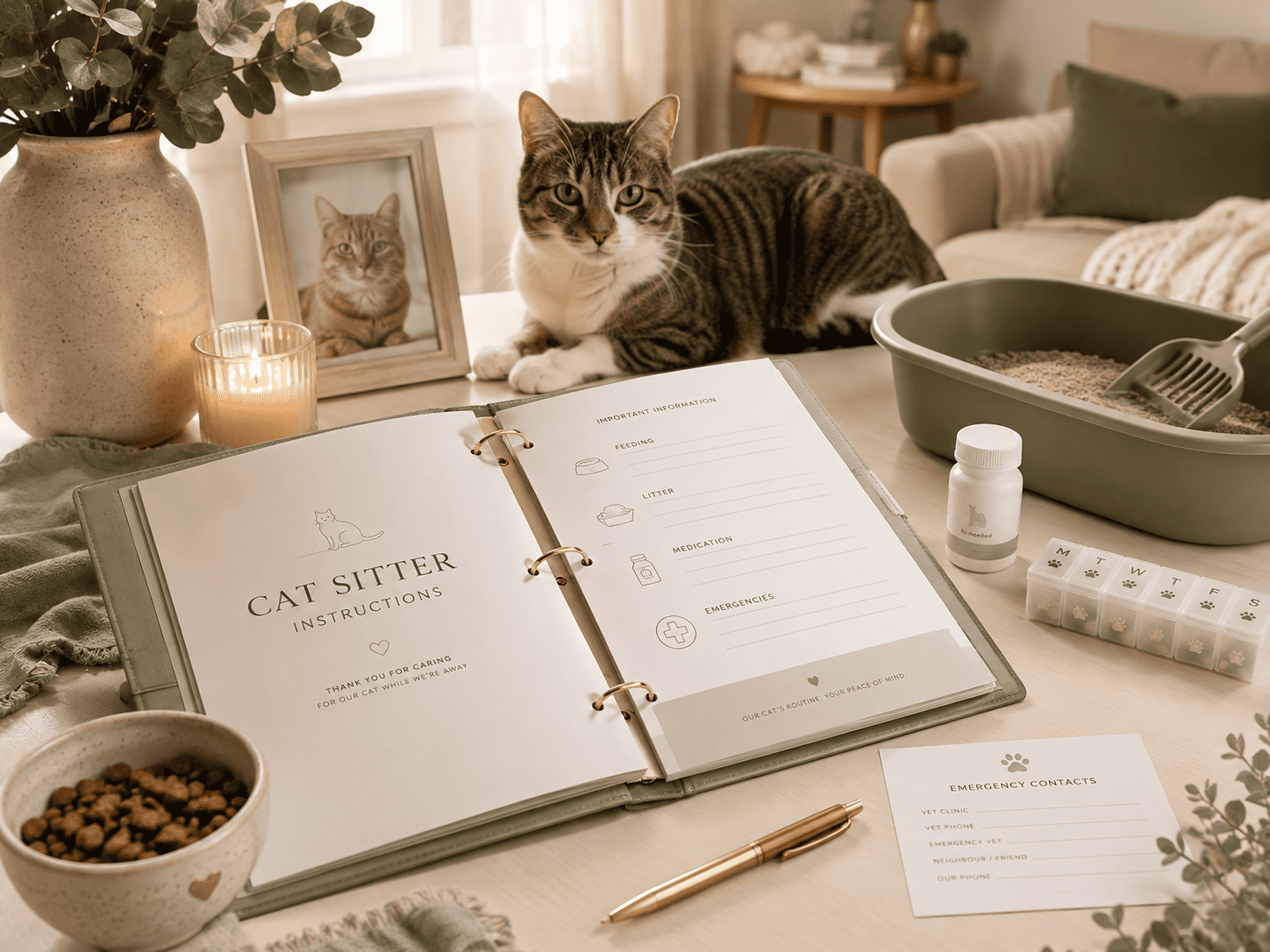
Copy named-cat fields for meals, litter, hiding checks, access and prescribed care. Includes fill-in wording, a visit sequence and a two-cat feeding example.
In short
Copy named-cat fields for meals, litter, hiding checks, access and prescribed care. Includes fill-in wording, a visit sequence and a two-cat feeding example.
A cat sitter instructions template needs clear fields for meals, litter trays, hiding places, access rules and help. Fill it in for the individual cat so the sitter can check their welfare without pulling them from a safe retreat.
Keep the familiar routine wherever you can. For several cats, use a separate named care entry for each animal and a shared map of household resources.
Cat sitter instructions template: copy the main fields
Use the headings below as fill-in prompts. Resolve any blank that affects essential care before the sitter takes over.
| Field | Enter |
|---|---|
| Booking | Care start, agreed visits or overnight arrangement, expected return and delay backup |
| Cat identity | Name, photo reference, markings, microchip details and how to distinguish similar cats |
| Owner and backup | Contact order, reachable numbers and who has agreed to help locally |
| Veterinary help | Practice, emergency route, transport arrangement and clinic-confirmed consent/payment process |
| Meals | Food name, portion plan, times, bowl position, storage and separate-feeding rule |
| Water | Bowl or fountain locations and refreshing/cleaning tasks |
| Litter | Tray map, litter used, scooping, washing and waste disposal |
| Presence and comfort | Hiding places, ways to check the cat is present, play preferences and handling limits |
| Access | Indoor/outdoor arrangements, doors, windows and cat flap |
| Prescribed care | Current veterinary directions, labelled supply location, completion entry and clinic contact |
Give private keys and security details separately. Keep the care sheet available offline with a clear update date.
Fill the feeding, water and litter blocks
State the food and amount from the cat's current feeding plan. If there are several feeders or cats, make the bowl and storage labels match the animal's name.
“Cat: [name]. Food: [product]. Meal plan: [current portions and times]. Store at [location]. Feed in [room/bowl position]. Allowed rewards: [plan]. Collect and wash bowls using [supplies]. Contact [person/practice] if the meal is refused or you notice a change.”
Do not ask a sitter to switch diets or estimate an unfamiliar scoop. Demonstrate preparation and explain safe storage for the food you leave.
Write every tray location
As a general starting point, provide one litter tray per cat plus one extra, spread between locations, and scoop at least daily. Keep the cat's familiar litter and setup during the absence; discuss a care problem with the vet rather than treating holiday departure as the time for an abrupt change.
“Trays: [locations]. Litter: [product/type]. Scoop [care routine] and dispose of waste in [place]. Washing supplies: [location and instructions]. Report changed toileting or a tray that appears unused; if you see straining or distress, contact veterinary help.”
List water points individually, including any bowl behind an internal door. A sitter should not have to guess whether closing a room removes the cat's access.
Make a presence check for a shy cat
Describe where the cat hides and a calm way to look. The sitter can check a known retreat from a distance, offer the usual meal and watch ordinary movement without chasing.
| What the sitter needs | Example entry |
|---|---|
| Usual retreat | Behind the chair in the spare room; keep the route open |
| How to check | Look quietly from the doorway; do not move the chair or pull the cat out |
| Comfortable interaction | Let the cat approach; offer the familiar wand game if interested |
| Concern | Cat cannot be located, refuses the usual meal or seems changed: contact owner and veterinary advice as needed |
Do not write “she always hides, so ignore it”. A familiar hiding habit still needs a presence and care check. Agree what the sitter does if the cat cannot be found, and do not rely on empty food bowls as the only evidence in a multi-cat home.
Specify access, prescribed care and carrier use
Write the precise arrangement for doors and the cat flap. If outdoor access will change while you are away, prepare that change beforehand and discuss welfare concerns with the vet or a qualified behaviour professional.
- Which rooms stay open for feeding, trays and rest?
- Which windows and exterior doors must remain secured?
- Who handles deliveries while the cat is near the entrance?
- What is the cat-flap setting and who checks it?
- Where is the carrier and what familiar bedding belongs with it?
Copy current prescribed directions and have the sitter demonstrate any task they agree to perform. Ask the prescribing practice about an administration method the cat does not tolerate; do not assume a medicine can be crushed or hidden in food.
“Prescribed care: [exact current directions/reference]. Labelled supplies: [storage]. Completion record: [place]. If a task cannot be completed or its completion is unclear, call [practice] for instructions. Carrier: [location]. Transport help: [agreed person].”
Use a visit sequence and an emergency contact route
- Enter using the agreed door sequence and secure the entrance.
- Check each named cat is present without forcing contact.
- Prepare meals and refresh water according to the individual plan.
- Scoop trays and check for changes needing attention.
- Complete agreed prescribed care, using the current directions.
- Offer calm company or play if the cat wants it.
- Check resource access and secure the home before leaving.
Plan company and visits around the cats' needs, including any treatment and health concerns. A large bowl of dry food does not replace an agreed person checking on the cat during an overnight absence.
Contact a vet or emergency clinic immediately for breathing difficulty, collapse, suspected poisoning, seizures, severe bleeding, repeated retching without producing vomit, or straining to pass urine. For suspected heatstroke, move the pet out of heat and begin cooling immediately while arranging urgent veterinary care.
Put the clinic number beside the contact instruction, and confirm that urgent care is arranged while the owner and backup are notified. Do not make the sitter wait for an overseas reply when veterinary help is needed.
Worked example: Sable eats away from Taro
Mei's cats share a home but need separate meals. Sable retreats behind the spare-room chair when unfamiliar people arrive; Taro approaches the food cupboard immediately.
“Check Sable quietly from the spare-room doorway. Serve her labelled portion there and close the door while she eats. Feed Taro in the kitchen. Collect the dishes before restoring access. Sable's tray and water remain reachable in the spare room.”
Mei walks the sitter through the room arrangement and shows how to see Sable without moving furniture. The template names both animals and makes separate feeding a sequence the sitter can follow.
Check the completed template before sharing
- Each cat has a clearly labelled feeding and prescribed-care entry.
- All litter trays and water points appear on the sheet.
- Hiding places have a calm presence-check method.
- Doors and cat-flap instructions preserve resource access.
- Clinic numbers and backup roles have been confirmed.
- The carrier is reachable and transport help is arranged.
- The sitter has tested ordinary tasks and knows who covers a delay.
Use the broader printable pet sitter instructions template for shared household fields. Keep the cat-specific feeding, tray and hiding details on the named cat's entry.
Common mistakes: one unlabeled food plan for two cats, an incomplete tray map, security codes in a forwarded care sheet and a hiding note without a check. Repair those fields before printing the final copy.
Frequently Asked Questions
Should I make a separate template for each cat?
Use individual entries for identity, meals, health and handling. Contacts and the household resource map can be shared if the sitter can still tell which instruction belongs to which cat.
What should I write for a cat who avoids strangers?
Give the usual retreat, a quiet way to confirm presence and the interaction the cat accepts. Include a contact route for changes rather than telling the sitter to ignore all hiding.
Can I leave a fountain instead of water instructions?
Leave the fountain's cleaning and refill instructions and tell the sitter how to check it works. Keep an accessible water option if the equipment fails.
Should I change the litter before a holiday?
Keep the familiar litter and explain its cleaning routine. If a change is needed because of a health or care problem, get advice and prepare the arrangement before relying on a sitter.
Resources & Links
These sources help complete resource, care-cover and prescribed-care fields for a cat sitter.
- PDSA: Creating a Cat-Friendly Home — Map litter, water, rest and feeding access in the sitter’s named-cat instructions.
- PDSA: Pet Boarding, Kennels and Holiday Care — Check care arrangements and the level of support needed while the owner is away.
- Cornell: Medication Care — Prepare questions about prescribed tasks before a cat sitter accepts them.
Prepare handover notes with the Pet Sitter Instructions Pack and organise wider cat care with the Complete Cat Owner Binder. Get the Pet Sitter Instructions Pack → Get the Complete Cat Owner Binder →
Printable and fillable PDF templates for pet owners — feeding schedules, health records, training trackers and more.