
Printable Pet Sitter Instructions Template: Complete Guide
Fill a sitter sheet with workable feeding, access and emergency instructions, then test it during a visit and agree who covers delayed returns.
In short
Fill a sitter sheet with workable feeding, access and emergency instructions, then test it during a visit and agree who covers delayed returns.
A printable pet sitter instructions template can look complete while still leaving the sitter unable to find the correct food or enter the house safely. The useful test is whether someone can carry out the agreed care using the sheet, not whether every box contains words.
Build your instructions around the services this sitter has accepted. Then use a practice visit to find missing details before your pet depends on the handover.
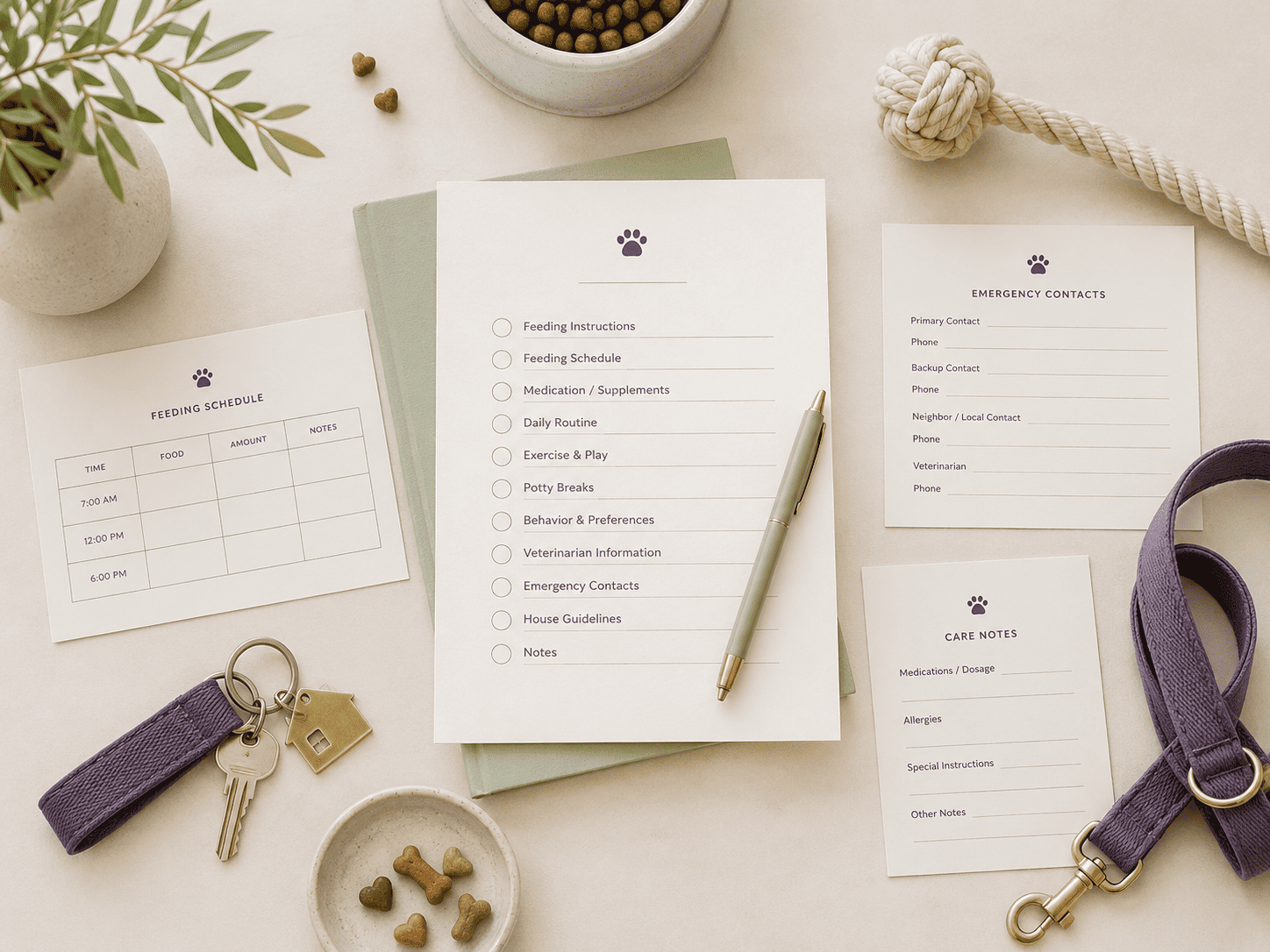
Fill the template in the order a sitter will use it
Start with arrival, pet identification and urgent contacts. Feeding and ordinary care come next; supporting history can sit behind them. Do not bury the emergency number beneath a long description of favourite toys.
- Identify each pet and state the dates or care periods the sitter has accepted.
- Add your contact, a consenting backup and verified veterinary contact details.
- Describe entry and escape prevention, keeping access credentials in a private arrangement.
- Write the established feeding and species-specific care tasks.
- Explain reporting, missed visits and your delayed-return plan.
- Check the completed sheet during an actual visit.
A field that does not apply should say “not applicable”. An unresolved question should say what is being confirmed and by whom. Neither should be disguised by copying the template's sample answer.
Include every care section without skipped numbering
Pet identity and access
List names, distinguishing markings and the rooms or areas each pet can use. Explain which doors must stay shut and how the sitter should enter when an animal waits by the doorway. Include a safe exit sequence as well as arrival instructions.
Contacts and veterinary help
Provide the regular practice and emergency clinic arrangements, including where transport equipment is kept. Ask the clinic about consent and payment procedures before departure. Writing your preferred arrangement on a sheet does not establish that the clinic has accepted it.
Feeding, water and toileting
Name the actual food, its storage location and the established measuring method. Describe separate feeding where needed, water checks, dog toilet access and cat litter care. State what must be recorded when food is left or a normal task cannot be completed.
Prescribed care and behaviour
Point to current written veterinary instructions instead of composing a new treatment plan. Only arrange tasks the sitter can perform safely. Add relevant behaviour notes: handling preferences, known triggers and practical ways to avoid difficult situations.
Household arrangements and return
Separate agreed pet care from optional household jobs. Say where supplies and rubbish facilities are, how keys will be returned and when responsibility transfers back to you. Confirm backup access rather than merely naming a nearby friend.
Replace ambiguous words with observable actions
“Feed normally” works only for someone who already knows the routine. “One scoop” fails when there are several scoops in the cupboard. Identify the labelled container and measuring tool, and use the feeding amount already established for that pet.
| Ambiguous entry | What is missing | Useful replacement |
|---|---|---|
| Let the dog out | Safe route and supervision | Use the agreed toilet area and demonstrate the door sequence |
| Check the cat | What counts as a sighting | Confirm the named cat is present without forcing contact; report if not located |
| Give usual care | Authoritative instructions | Use the dated veterinary directions in the named folder |
| Message if needed | Which events need action | Report missed essential tasks and health concerns; obtain immediate veterinary help for emergencies |
Describe unfamiliar equipment in words and demonstrate it. A note can identify which clip to use, but it cannot prove the sitter knows how to fit a harness or secure a carrier.
Test the sheet with supplies in their normal places
Let the sitter locate the food, prepare a normal meal and find transport equipment while you are available to help. Avoid moving everything into a temporary display that will disappear before the first visit. The sheet should describe the home as the sitter will actually encounter it.
Ask them to explain how they would handle a locked door, an absent cat or a dog that cannot be walked safely. Fix access problems and unclear instructions now. Do not make the pet endure forced handling to demonstrate that the sitter can manage.
- The key works and the sitter can secure the property afterwards.
- Every pet can be distinguished from the others.
- The food label and measuring method are unambiguous.
- The current veterinary instructions can be located.
- The backup person has accepted the role and can enter.
- The emergency contact route is available on paper if a device fails.
If an essential task cannot be performed comfortably and safely, arrange different support. More detailed wording will not replace missing handling skills or make a frightened animal cooperative.
Make departure and delayed return explicit
Write which tasks you completed before leaving and which task belongs to the sitter next. This prevents an overlapping departure visit from producing an extra meal or a missed toilet opportunity.
Departure note: “The current instructions are dated [date]. I have completed [tasks]. Your next agreed task is [task]. Please confirm arrival, and call [backup] if access or attendance fails.”
Agree how ordinary updates will be recorded and which changes require immediate contact. A reassuring photograph is not the same as a care log: it does not establish that a meal was eaten or a prescribed task completed.
Your expected arrival time does not end the sitter's responsibility by itself. If travel is delayed, ask whether they can extend and obtain an explicit acceptance. Otherwise activate the agreed backup and confirm the transfer of access and current notes.
For breathing difficulty, collapse, suspected poisoning, seizures, repeated unproductive retching or straining to urinate, the sitter should contact a vet or emergency clinic immediately. They should not wait for an unanswered owner message before obtaining urgent help.
Example: fix the scoop problem before leaving
During a trial visit, Rowan finds a large scoop beside the food and a smaller one in the drawer. The instruction sheet only says “one scoop”, so Rowan cannot confidently prepare the meal.
The owner replaces the wording with the established measured portion, labels the correct tool and watches Rowan prepare that meal. The completed-care entry records which pet was served and whether food remained. The departure note then identifies the next meal the sitter owns.
This change solves a real uncertainty rather than adding a decorative field. Keep a space for trial-visit questions so any similar problem with leads, litter supplies or keys is resolved before the final copy is issued.
Common mistakes when completing a sitter template
- Leaving private access codes in a widely shared file. The file may be forwarded beyond the intended sitter. Share credentials separately and limit the care sheet to necessary instructions.
- Assuming a completed form proves the plan works. Unclear tools and inaccessible supplies remain hidden. Run the normal care sequence together and revise the fields that cause hesitation.
- Ending cover at the flight's scheduled arrival. Delays can leave essential care unassigned. Agree how homecoming is confirmed and who accepts extra cover.
Frequently Asked Questions
Can I fill the PDF on a computer and still leave paper?
Yes, if the file supports filling and saving. Reopen the saved version, check the entries and print a readable copy. Test this before relying on a phone screenshot as the only instructions.
What belongs in a blank treatment field?
State that no prescribed task is currently assigned, if that is accurate. If you are unsure, confirm it with the owner or veterinary team rather than assuming the blank means none.
Should I reuse the previous holiday's instructions?
Reuse the layout, but review the contents against present arrangements. Remove expired dates, old exceptions and completed notes so the sitter receives this trip's plan.
What should I ask on returning home?
Ask what was last completed, what changed and whether any concern remains unresolved. Read those notes before restarting your usual routine so the final sitter task is not duplicated.
Resources & Links
Read these welfare guides when choosing care cover and preparing the sitter's emergency arrangements.
- RSPCA: Exploring pet sitting options — Helps you compare holiday care arrangements before assigning tasks to a sitter.
- PDSA: Pet boarding, kennels and holiday care — Discusses care options to consider when your proposed home handover is not workable.
- PDSA: Getting emergency vet care — Explains how to obtain urgent veterinary help, including out-of-hours arrangements.
The Pet Sitter Instructions Pack is for owners preparing written care instructions and a clear handover for a temporary carer. Get the Pet Sitter Instructions Pack →
Printable and fillable PDF templates for pet owners — feeding schedules, health records, training trackers and more.