Cat Feeding Schedule: Simple Printable Routine for Cat Owners
Build a cat feeding schedule with food details, life-stage meal guidance, daily amounts and a worked example covering meals, extras and separate feeding.
In short
Build a cat feeding schedule with food details, life-stage meal guidance, daily amounts and a worked example covering meals, extras and separate feeding.
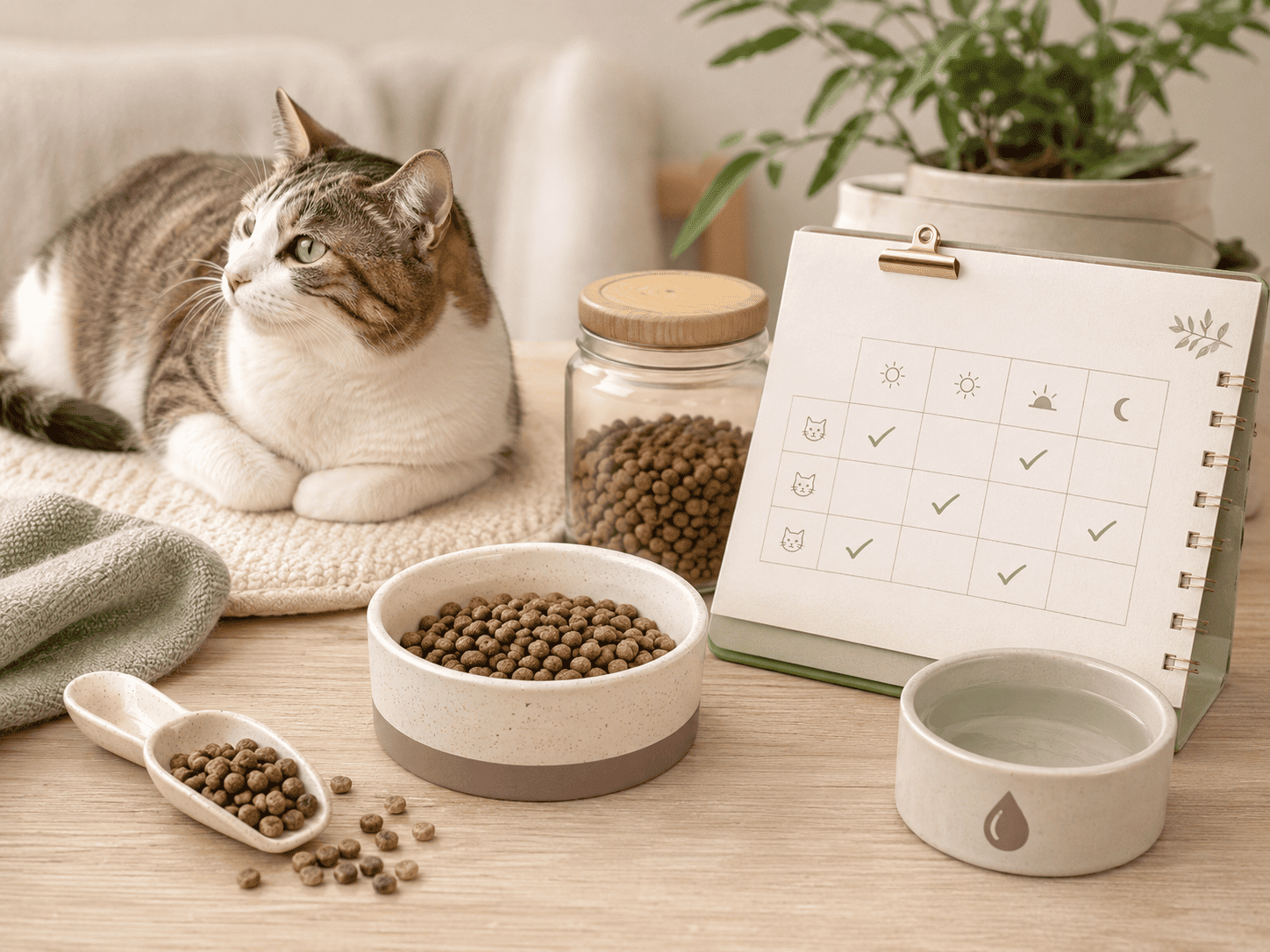
A cat feeding schedule printable should show the food your cat currently eats, how meals fit the household and which person is responsible. It is most useful when it prevents an extra serving or helps you notice that a particular cat is not eating as usual.
Use your cat's current feeding plan to set meals, mixed wet-and-dry servings and separate feeding for several cats. Adapt the timetable to each cat's needs.
Fill the food reference before the timetable
Write the exact food and variety, not just the brand. Identify the nutritional purpose and the cat it belongs to. Keep any current veterinary feeding instructions beside the schedule.
- Cat's name and relevant life stage.
- Food your cat currently eats, including the exact variety.
- Total daily food amount and how it is divided between meals.
- Measuring method and labelled equipment.
- Serving place and any agreed separation from other pets.
- Food used for treats or enrichment within the plan.
- Storage instructions and the location of supplies.
If the package wording or feeding plan is unclear, ask the vet before designing servings. Keep the exact food details and veterinary directions beside the meal entries.
Build a cat feeding schedule printable around your home
Choose meal times you can cover, such as before work and after returning home, with additional meals where the cat's plan requires them. Do not make every cat fit a morning-and-evening pattern for the convenience of the form.
| Meal or food event | What the planned entry contains | What to complete afterwards |
|---|---|---|
| Regular meal | Food, measured serving, place and responsible feeder | Serving completed and leftovers |
| Food for enrichment | Food drawn from the agreed daily plan | Amount offered and any remaining food |
| Additional meal | The cat-specific arrangement and person covering it | Food eaten and any problem |
| Water care | Bowl or fountain locations and cleaning arrangement | Availability and maintenance checked |
Leave enough space to identify the feeder. In a shared household, place the daily page beside the serving area or use a shared file that can be opened during feeding. A tick should refer to a completed action, with any relevant exception beside it.
Adapt the page for kittens, adults and older cats
These are general starting points for healthy cats, not a prescription for every household. Kittens usually need several smaller meals each day and are fed more often than adults. Adult cats are commonly offered at least two meals a day; some prefer their daily food divided into more small meals.
| Life stage or need | General starting point | What to write on the schedule |
|---|---|---|
| Weaned kitten | Complete kitten food, divided into several smaller meals across the day | Daily food amount, each meal, and the person covering daytime feeding |
| Healthy adult cat | Complete adult food, commonly served at least twice daily or divided into smaller meals | Daily total, meal portions and food reserved for play or rewards |
| Older cat | Keep meals easy to reach; smaller, more frequent servings may help some cats, but age alone does not determine the diet | Food your cat eats, serving pattern and any changes in appetite or weight to discuss with the vet |
| Cat on a prescribed diet | Follow the practice's feeding directions, including permitted extras | Exact product, written plan reference and meals required by that plan |
Start with the food label's daily feeding guide, then ask your vet to help adjust the total for your cat's body condition, activity and health. Divide that daily total between meals; do not serve the whole daily allowance at each meal. For mixed wet-and-dry feeding, check how the two foods contribute to the combined allowance.
Keep treats to a small part of daily intake and include them in the plan. Food taken from the measured daily ration can be used for rewards. A growing kitten, a cat needing weight management and a cat with a prescribed diet may need different instructions, so put the individual plan on the page rather than copying another cat's portions.
Coordinate wet food, dry food and extras
If the current diet combines wet and dry food, give each its own serving line. The daily total should follow the feeding plan rather than adding a complete wet-food ration to a complete dry-food ration.
Keep measuring tools consistent. A kitchen scale may suit a measured feeding plan; a marked container can help another feeder identify the correct supplies. Do not use an unlabelled scoop whose size nobody can confirm.
Include food offered by visitors, used in puzzles or given during reward-based training. Agree which extras are allowed and how they fit the plan. Keep fresh water accessible regardless of which food format is used.
Follow the product's storage and handling instructions, including opened food and leftovers. Retain original identification and batch details if food is decanted. A stored tub should still be traceable to the product.
Use separate meal stations where needed
For several cats, label individual instructions and demonstrate where and how each meal is served. Feed in separate places where necessary to protect access or follow a prescribed plan. Avoid creating stressful competition around the bowls.
Watch the individual cat when intake matters and note the relevant result. If another pet has access, describe the observation honestly. Ask the practice how to monitor a cat whose needs require more detail.
When another person takes over feeding, confirm the last completed meal and who will serve the next one. Speak to the previous feeder when an entry is missing rather than automatically providing an extra serving.
Seek veterinary advice promptly about changed appetite or a cat stopping eating, especially with other concerning signs. Do not withhold food to force acceptance of a replacement or keep moving mealtimes to explain away a health change.
Example: a meal and a food puzzle
Bean eats in the quiet dining area, while Clover has a separate station. Bean's owner prepares the planned morning serving and reserves food for an enrichment puzzle within Bean's agreed feeding plan.
| Example field | Entry to write |
|---|---|
| Cat | Bean |
| Meal | Usual food and measured serving from the current plan |
| Feeder | Owner who prepared and watched the meal |
| Enrichment | Food set aside within the agreed daily arrangement |
| Result | Meal observed; remaining food noted if relevant |
| Next meal | Named household member using the current page |
The next feeder sees that puzzle food belongs to the plan rather than being an unlimited extra. Clover's page remains separate, so Bean's completed entry cannot accidentally stand in for Clover's meal.
If the owners switch products after veterinary advice, they replace the food reference and explain the change to both feeders. They retain relevant earlier notes without leaving competing current instructions beside the bowls.
Common mistakes with feeding schedules
- Applying one meal count to every life stage. It can miss an individual cat's needs. Set the timetable from the feeding plan, including kitten and clinical arrangements.
- Forgetting food used outside meals. Several small extras can change the daily intake. Include puzzle and reward food in the agreed arrangement.
- Choosing food by similar packaging. The variety or purpose may differ. Write the exact product and preserve its identification.
Frequently Asked Questions
Can I use this template if dry food is left available?
Yes. Describe how food is offered, replenishment and cleaning tasks. Discuss individual intake monitoring with the vet when shared access or health needs make it important.
Should I put kitten meals on the adult timetable?
Use the kitten's feeding plan and enough rows for all its meals. The form should adapt to the kitten, rather than removing a needed meal to match an adult layout.
What if my cat asks for food between planned meals?
Check the current plan and whether another feeder has already served food. Discuss a persistent appetite change with the practice instead of increasing servings automatically.
Does a feeding schedule help a sitter?
Yes. Leave exact food identification, preparation, serving place and the current arrangement. Demonstrate the meal setup and explain the veterinary contact route for appetite concerns.
Resources & Links
These feline feeding and diet-label guides help you prepare the food reference behind the meal schedule.
- Cornell University: Feeding your cat — Discusses feline food choices and feeding considerations relevant to an individual meal plan.
- FDA: Complete and balanced pet food — Explains US nutritional adequacy wording when checking a food's purpose before entering it on the schedule.
- PDSA: The best diet for your cat — Discusses feline diets and practical feeding questions to raise when preparing the page.
The Complete Cat Owner Binder is for owners organising cat feeding information alongside other household care pages. Get the Complete Cat Owner Binder →
Printable and fillable PDF templates for pet owners — feeding schedules, health records, training trackers and more.