
How to Organise Your Pet's Health Records
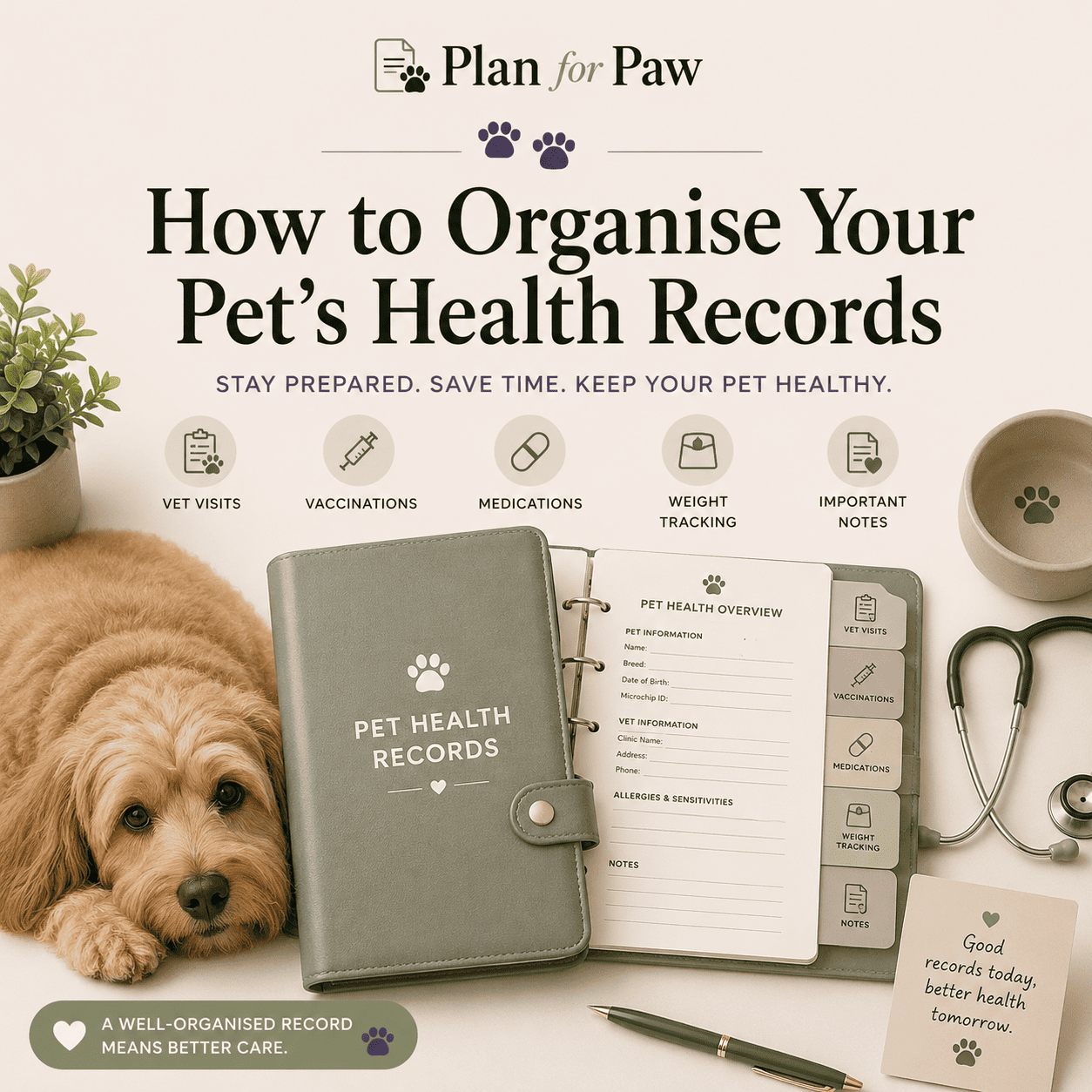
A well-organised pet health record saves time at every vet visit and keeps you on top of vaccinations, medications and weight. Here is how to set one up and what to include.
In short
A well-organised pet health record saves time at every vet visit and keeps you on top of vaccinations, medications and weight. Here is how to set one up and what to include.
Most pet owners have a drawer somewhere containing a jumble of vet receipts, vaccination certificates, insurance documents and prescription labels. It works until it does not — until you are at an emergency vet at midnight and cannot remember when your dog last had their heart wormer.
A dedicated pet health record system takes about 20 minutes to set up and saves far more than that over your pet's lifetime.
What to Include in a Pet Health Record
1. Pet Profile and Basic Information
Start with a single reference page: everything about your pet at a glance.
- Full name and nickname
- Species, breed and date of birth (or estimated age)
- Sex and whether neutered/spayed
- Microchip number and registration
- Colour, markings and identifying features
- Insurance provider and policy number
- Vet clinic name and contact details
2. Vaccination Record
Track every vaccination: what it covers, date given, batch number and next booster due date. This section alone has prevented many expensive catch-up vaccination courses when vets cannot find the record of a previous booster.
- Vaccine name and what it covers
- Date administered
- Batch number (important for recalls)
- Next booster due
- Administering vet or clinic
3. Vet Visit Log
A chronological log of every vet visit, no matter how minor. Over time this becomes an invaluable medical history.
- Date
- Reason for visit
- Diagnosis or findings
- Treatment prescribed
- Follow-up actions required
- Cost (useful for insurance claims and budgeting)
4. Medications Log
Current and past medications in one place. When you start a new treatment, being able to show a complete medication history helps your vet avoid interactions.
- Medication name
- Prescribed by
- Condition it treats
- Dose and frequency
- Start and end dates
- Notes (e.g. "gave with food", "refused tablet — crushed in peanut butter")
5. Parasite Prevention Tracker
Flea, tick and worming treatments are easy to forget when life gets busy. Tracking them ensures your pet is never left unprotected.
- Product name
- Type (flea/tick/worm/heartworm)
- Date given
- Next treatment due
6. Allergies and Sensitivities
- Known food allergies or intolerances
- Drug reactions and sensitivities
- Environmental allergies (grass, pollen, dust mites)
- Contact sensitivities (certain fabrics, cleaning products)
7. Weight and Growth Tracker
Weight is one of the earliest indicators of health issues in pets. Unexplained weight loss or gain often precedes a diagnosis by weeks. Tracking weight at each vet visit gives you and your vet a baseline.
- Date and weight
- Body condition score (most vets assess this)
- Notes on diet changes around that time
8. Insurance Documents
- Policy number and provider
- Policy renewal date
- Claim history with dates and amounts
- Exclusions relevant to your pet
- 24-hour claims line number
9. Emergency Sheet
The last section of your health record binder should be the emergency contact sheet — quick to locate under pressure. Include owner contacts, backup contacts, vet details and microchip number.
Digital vs Printed Records
Digital records are searchable and easy to back up, but require a working phone or laptop and an internet connection. Printed records can be handed directly to any vet, shared with a sitter and kept in your pet's travel bag. For critical information, keep both. Scan your documents and store them in a folder on your phone as a backup.
How Often to Update Pet Health Records
- After every vet visit
- When a new medication is started or stopped
- After any parasite treatment
- After each vaccination
- Whenever insurance details change
Pet Health Record Binder
A complete printable and fillable health record system: vaccination log, vet visit history, medications, weight tracker, allergy sheet and emergency card — all in one organised binder.
Get the Pet Health Record Binder →Frequently Asked Questions
What should be in a pet health record?
Vaccination history, vet visit log, medication records, parasite prevention dates, allergy notes, weight tracker and emergency contact information. A pet profile page at the front makes it easy to find key information quickly.
How do I keep track of my pet's vaccinations?
Use a dedicated vaccination log with columns for the vaccine name, date given, next booster due and administering vet. Set a reminder on your phone for each booster date so nothing is missed.
Do vets keep their own records?
Yes, but only for visits at their clinic. If you switch vets, visit a different clinic in an emergency or travel abroad with your pet, their records may not be accessible. Your own copy gives you full continuity regardless of which vet you see.
Printable and fillable PDF templates for pet owners — feeding schedules, health records, training trackers and more.