
How to Teach Your Dog to Settle on a Mat
A dog who can switch off on cue is easier to live with at home, in cafés, at the vet and when visitors arrive. Here is a step-by-step plan for teaching a settle on a mat.
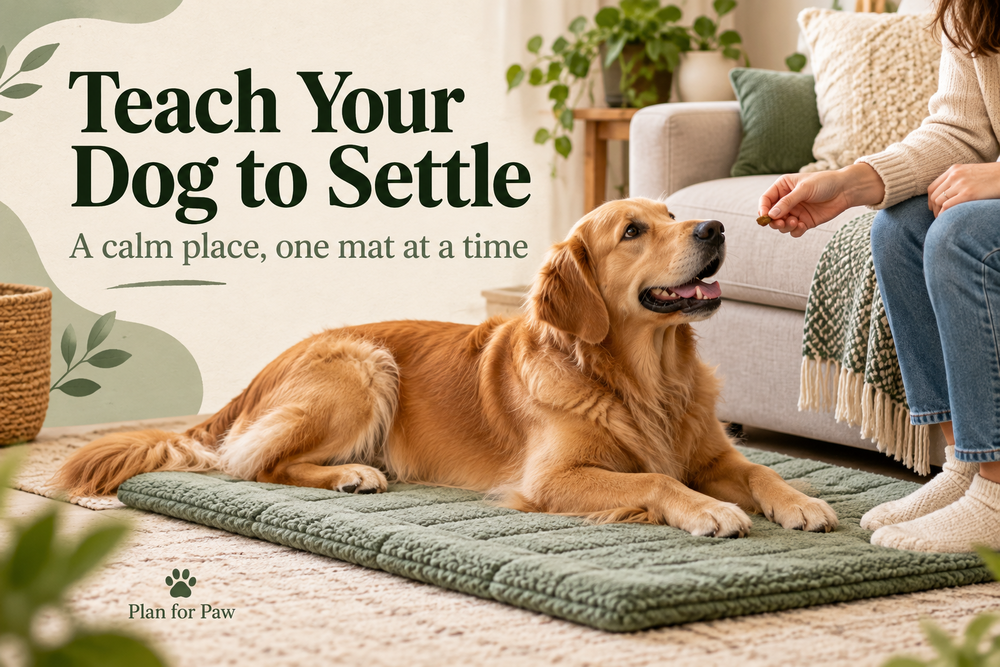
In short
A dog who can switch off on cue is easier to live with at home, in cafés, at the vet and when visitors arrive. Here is a step-by-step plan for teaching a settle on a mat.
Most training focuses on what we want dogs to do. Settling is about teaching them to do nothing — to lie down, relax and wait. It is one of the most useful skills a dog can have, and one that many high-energy dogs genuinely struggle with until they are taught it.
Why a Mat?
A portable mat becomes a signal: "this is where we relax". Once your dog has learned it at home, you can take the same mat to a café, a friend's house, the vet waiting room or a holiday rental.
Step 1: Make the Mat Valuable
Put the mat down. Every time your dog looks at it, steps on it or sniffs it, drop a treat on the mat. Pick the mat up after a few minutes so it stays special.
Step 2: Reward Lying Down
Wait until your dog lies down on the mat — you can ask for a down at first. Place treats between their front paws, calmly and slowly. Keep your voice quiet.
Step 3: Reward Relaxation, Not Just Position
Look for signs of real relaxation and reward those:
- Rolling onto one hip
- Head resting on the floor or paws
- A sigh
- Soft eyes and slower breathing
This is the heart of the exercise. You are rewarding a calm state, not a frozen pose.
Puppy Training Tracker
Settling builds in small steps — duration, distance, distractions. Note each session in the printable Puppy Training Tracker and you will see exactly when your dog is ready to try the mat somewhere new.
Get the Puppy Training Tracker →Step 4: Build Duration
Gradually space out the rewards — a treat every few seconds, then every ten, then every thirty. Release your dog with a clear word ("free") before they get up on their own.
Step 5: Add Distance and Distractions
One at a time:
- Take a step away, return and reward
- Sit down on the sofa
- Walk into the kitchen and back
- Practise while the TV is on, then while someone moves around
- Practise when the doorbell rings
Step 6: Take It on the Road
Start somewhere quiet — a friend's house or a quiet café corner at a slow time. Bring high-value treats and a long-lasting chew. Keep the first visits short and leave while your dog is still calm.
Tips
- Practise after a walk, not when your dog is full of energy
- A chew or lick mat on the mat helps dogs relax
- Keep sessions short — two to five minutes at first
- Never use the mat as a punishment
Two ways to build calm routines
Focused on training sessions? Choose the Puppy Training Tracker. Want calm time logged alongside walks and meals? Choose the Daily Dog Care Tracker.
Get the Daily Dog Care Tracker →Frequently Asked Questions
How long does it take to teach a settle?
Many dogs grasp the basics within a week or two of short daily sessions. Settling in busy places takes longer.
My dog will not stay on the mat. What am I doing wrong?
Usually the steps are too big. Reward more often, shorten the duration, and practise when your dog is already a little tired.
Is settling useful for puppies?
Very. Puppies often need help learning to switch off, and an overtired puppy is usually a bitey one.
Printable and fillable PDF templates for pet owners — feeding schedules, health records, training trackers and more.