
How to Stop a Dog Jumping Up at People
Teach paws-on-the-floor greetings with controlled adult practice. Includes door-arrival decisions, visitor wording, outdoor steps and concrete troubleshooting.
In short
Teach paws-on-the-floor greetings with controlled adult practice. Includes door-arrival decisions, visitor wording, outdoor steps and concrete troubleshooting.
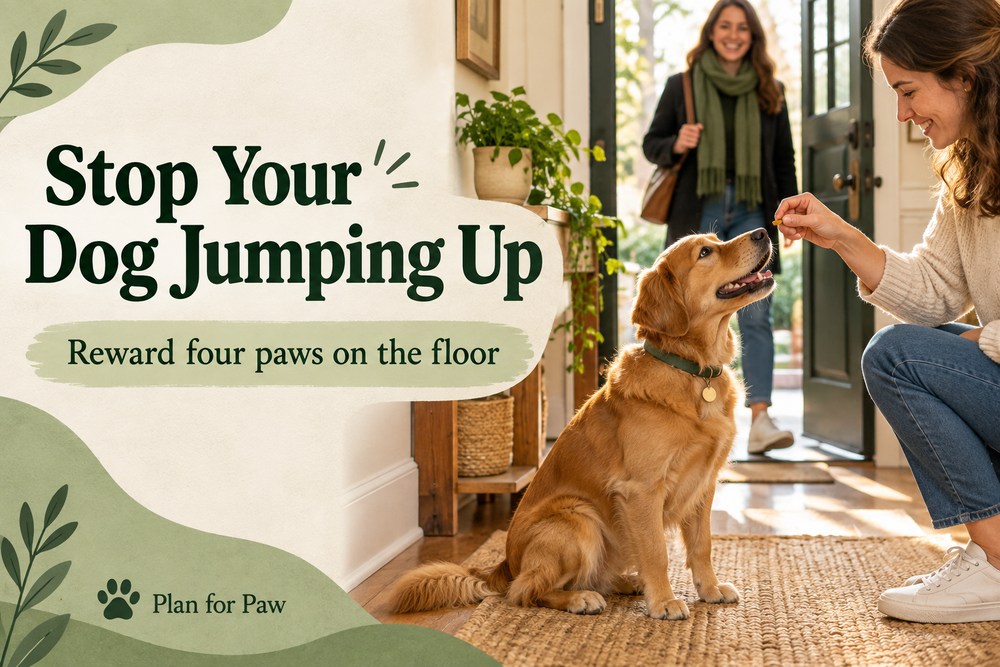
To stop a dog jumping up, make greetings predictable: people approach when paws are on the floor, and jumping no longer wins excited attention. At the same time, prevent the dog reaching children, vulnerable visitors or anyone who cannot follow the training plan safely.
Begin with a willing adult in a quiet setting. The front door during a delivery is usually too difficult for the first lesson; a barrier and an easier rehearsal let you teach without somebody getting knocked over.
Stop a dog jumping up by choosing a clear greeting
Four paws on the floor is a useful starting rule because the dog does not have to hold a perfect sit. You can teach a sit as an alternative if your dog is comfortable doing it, but choose one response everyone can recognise.
Reward before the jump where possible. If you only deliver a treat after every jump-and-land sequence, you may accidentally make jumping part of the routine. Notice a calm approach, mark it with your usual reward word and deliver the reward low enough that the dog need not leap for it.
- Choose the greeting rule and one calm reward word.
- Keep rewards within the dog’s normal food allowance.
- Prepare a gate or separate space for arrivals you cannot train through.
- Ask helpers not to encourage pawing or jumping “just this once”.
- Check that the dog has had toilet access and its ordinary activity and rest.
Set up the first greeting practice
- Start in a room with space to step away, using an adult helper the dog can greet safely.
- Have the helper stand at a distance where the dog can keep its paws down.
- Reward that easy moment before the helper moves closer.
- Let the helper take a small step toward the dog.
- Reward paws staying down; keep any touch brief and quiet.
- If the dog starts to jump, have the helper pause or move away calmly before trying an easier distance.
- Finish after a few manageable repetitions rather than waiting for the dog to become frantic.
If the dog makes contact, the helper can calmly withdraw attention when safe. Turning away is not a safety plan for a large dog that can knock someone down. Use separation first, then rehearse at a distance with support.
A lead can help a capable adult manage access, but should not be used for jerking or suspending the dog. Keep enough space that the helper is not trapped against a wall.
Transfer the lesson to arrivals at home
| Arrival | Before opening | Greeting choice |
|---|---|---|
| Family member returning | Prepare a quiet entry without shouting greetings. | Reward floor-level paws before brief attention. |
| Willing adult training helper | Explain the rule and secure the dog’s access. | Use the practised approach and retreat sequence. |
| Child, frail guest or nervous visitor | Set up comfortable separation. | Do not use the visitor as a test subject. |
| Delivery or unexpected caller | Keep the dog behind a secure barrier. | Handle the delivery without a greeting lesson. |
Opening the door, allowing entry and greeting the dog can be separate steps. Let the guest come in and sit while the dog settles at a manageable distance. A visitor who is rushed or excited may be better greeted another time.
Visitor script: “We are practising paws on the floor. Please wait while I settle him behind the gate. If we greet, keep your voice quiet and pause if he starts jumping. You do not need to help if you are uncomfortable.”
Check the barrier itself. A low gate that the dog jumps over is not reliable management, and a visitor opening it defeats the plan. Give the dog water and a comfortable resting place when separated.
Practise greetings outside without recruiting strangers
Use a known adult helper in an uncrowded place. Begin farther apart than you would for a normal greeting, reward a calm response and let the helper approach only while you can manage safely.
- Ask before allowing anyone to greet the dog.
- Keep the dog on a lead under an adult’s control.
- Leave space for people to pass without joining the exercise.
- Move farther away if the dog becomes too excited to respond.
- End the greeting before excitement builds into repeated jumping.
You can say, “Not today, we are training,” and continue walking. Every person does not need to touch the dog. A calm pass-by is also useful practice.
Troubleshoot what happens before the jump
| Pattern | Likely training gap to examine | Adjustment |
|---|---|---|
| Paws stay down until the person bends over | The touch or movement is much harder than approach. | Practise smaller movements and shorter contact. |
| The dog succeeds with you but jumps on family | Household responses vary. | Rehearse with each adult at an easy level. |
| The dog jumps after a reward is held high | Reward placement invites reaching upward. | Deliver low and safely when paws remain down. |
| Door practice leads to frantic barking or distress | The setting is too intense or another problem needs help. | Separate arrivals from training and seek support if persistent. |
Do not knee the dog, shove its chest or grab its paws. These responses can hurt or create more excitement and worry. If jumping increases, simplify the setup rather than assuming you must endure a predictable worsening phase.
Sudden behaviour change, apparent pain, aggression or persistent fear needs veterinary advice and, where needed, qualified behaviour help. A greeting exercise should not be used to suppress distress.
A worked example: one family member keeps inviting jumps
Dev’s dog, Basil, greets Dev with paws down but jumps on his brother, who claps and pats his chest. They agree to change the brother’s entry: quiet arrival, Basil behind the gate, then a short greeting once he can approach calmly.
The brother rehearses the same movement during a quiet afternoon instead of saving every attempt for a busy evening. Dev notes the one difficult stage—bending to stroke—so they can practise that part separately.
Frequently Asked Questions
Must my dog sit before every greeting?
No. Four paws on the floor can be a clearer first target. A sit is useful if it is comfortable and does not become a struggle during excitement.
What if ignoring makes the jumping harder?
Protect people with separation and practise an easier approach. Do not stand through unsafe contact waiting for the dog to stop.
Can visitors give the treats?
A willing adult can help if the dog takes food safely and stays manageable. Start with the handler rewarding if reaching toward a guest increases jumping.
Why does my dog jump on some people but not others?
People may approach, touch or respond differently. Rehearse the same easy greeting with each adult helper and keep arrivals consistent.
Resources & Links
These sources support reward-based greetings and recognising when a dog needs space or extra help.
- Blue Cross: Dog and Puppy Training — Use rewarded learning and manageable practice when teaching a new greeting.
- PDSA: Canine Body Language — Read comfort and distress during approaches instead of watching paws alone.
- Blue Cross: Behaviour Problems — Find advice on seeking qualified help when greetings involve fear or unsafe behaviour.
Keep greeting practice in the Puppy Training Tracker and use the Complete Dog Owner Binder to coordinate the wider household plan. Get the Puppy Training Tracker → Get the Complete Dog Owner Binder →
Printable and fillable PDF templates for pet owners — feeding schedules, health records, training trackers and more.