Senior Pet Care: How to Support Your Pet as They Age
Ageing pets need more from us — not less. Here is how to recognise the signs of ageing, adapt their care and give your senior pet the quality of life they deserve.
In short
Ageing pets need more from us — not less. Here is how to recognise the signs of ageing, adapt their care and give your senior pet the quality of life they deserve.
Senior Pet Care: How to Support Your Pet as They Age
Ageing pets need more from us — not less. A dog entering their senior years or a cat over 10 will have different needs than they did at their peak. Recognising those changes early and adapting your approach makes an enormous difference.
When Does a Pet Become Senior?
| Animal | Senior Age |
|---|---|
| Small dogs (under 10 kg) | 8–9 years |
| Medium dogs (10–25 kg) | 7–8 years |
| Large dogs (25 kg+) | 6–7 years |
| Cats | 10–11 years |
| Rabbits | 5–6 years |
Common Signs of Ageing
- Sleeping more, tiring more quickly on walks
- Stiffness, particularly after rest
- Changes in appetite or water intake
- Weight loss or unexpected weight gain
- Cloudiness in the eyes
- Increased vocalisation, confusion or disorientation
- Reduced grooming in cats
Adapted Care
Vet visits: Move from annual to twice-yearly. Blood panels and dental checks become more important.
Diet: Switch to a senior formula appropriate for their size and health status. Discuss with your vet.
Exercise: Less intense, more frequent. Short gentle walks work better for arthritic dogs.
Pain management: Arthritis is extremely common and significantly underdiagnosed. If your pet is moving more slowly, discuss pain assessment with your vet before assuming it is just old age.
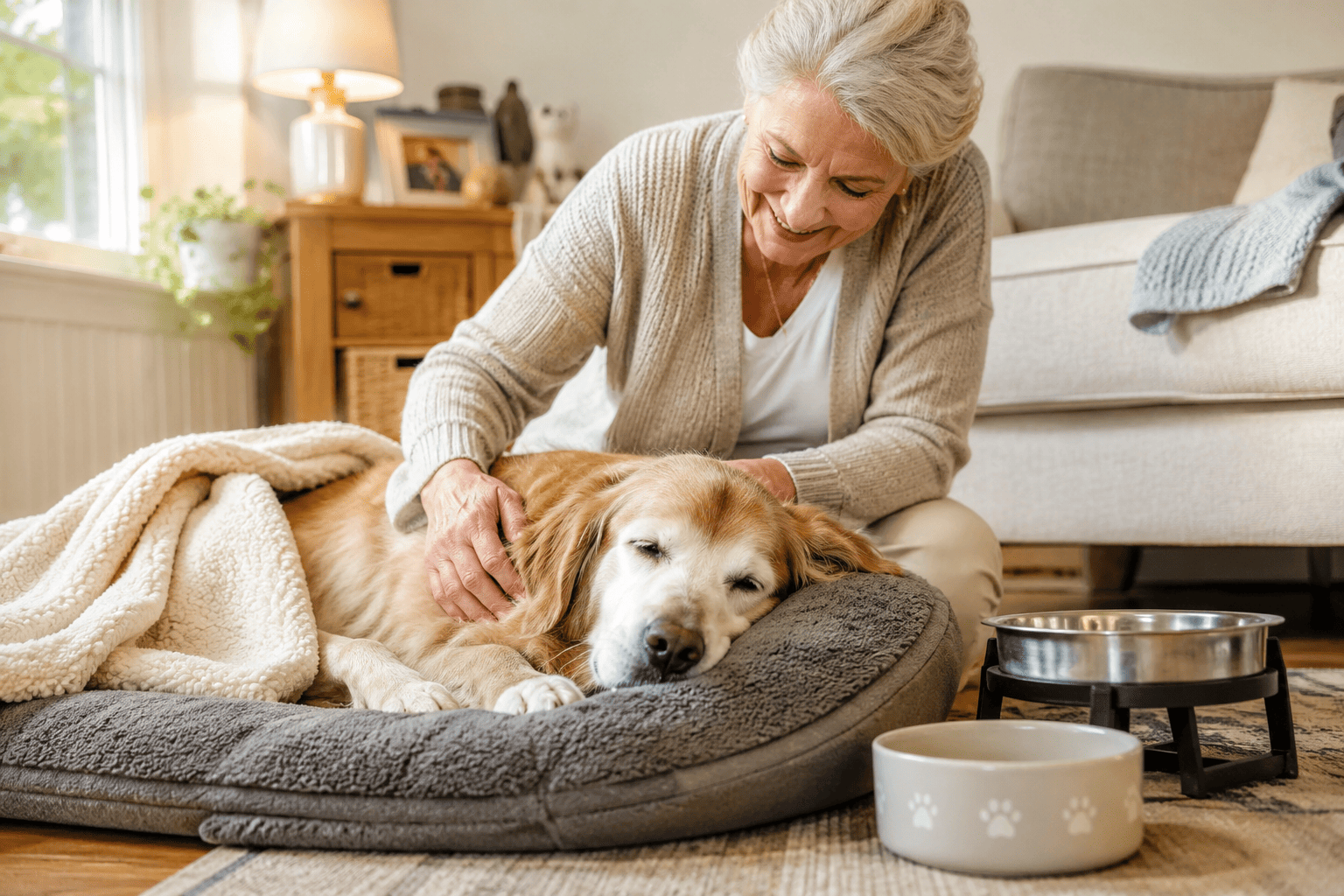
Environment: Ramps to the sofa, non-slip mats on hard floors, raised food bowls, litter trays with lower sides for cats.
Record Keeping Matters More Now
As pets age, their vet history becomes increasingly important. Keep detailed records of medications, test results and weight changes.
Printable and fillable PDF templates for pet owners — feeding schedules, health records, training trackers and more.