
Pet Sitter Checklist Before Vacation: What to Prepare 7 Days Before You Leave
Prepare care cover, access, supplies and clinic arrangements before travelling. Use a staged checklist, departure note and a worked return-delay plan.
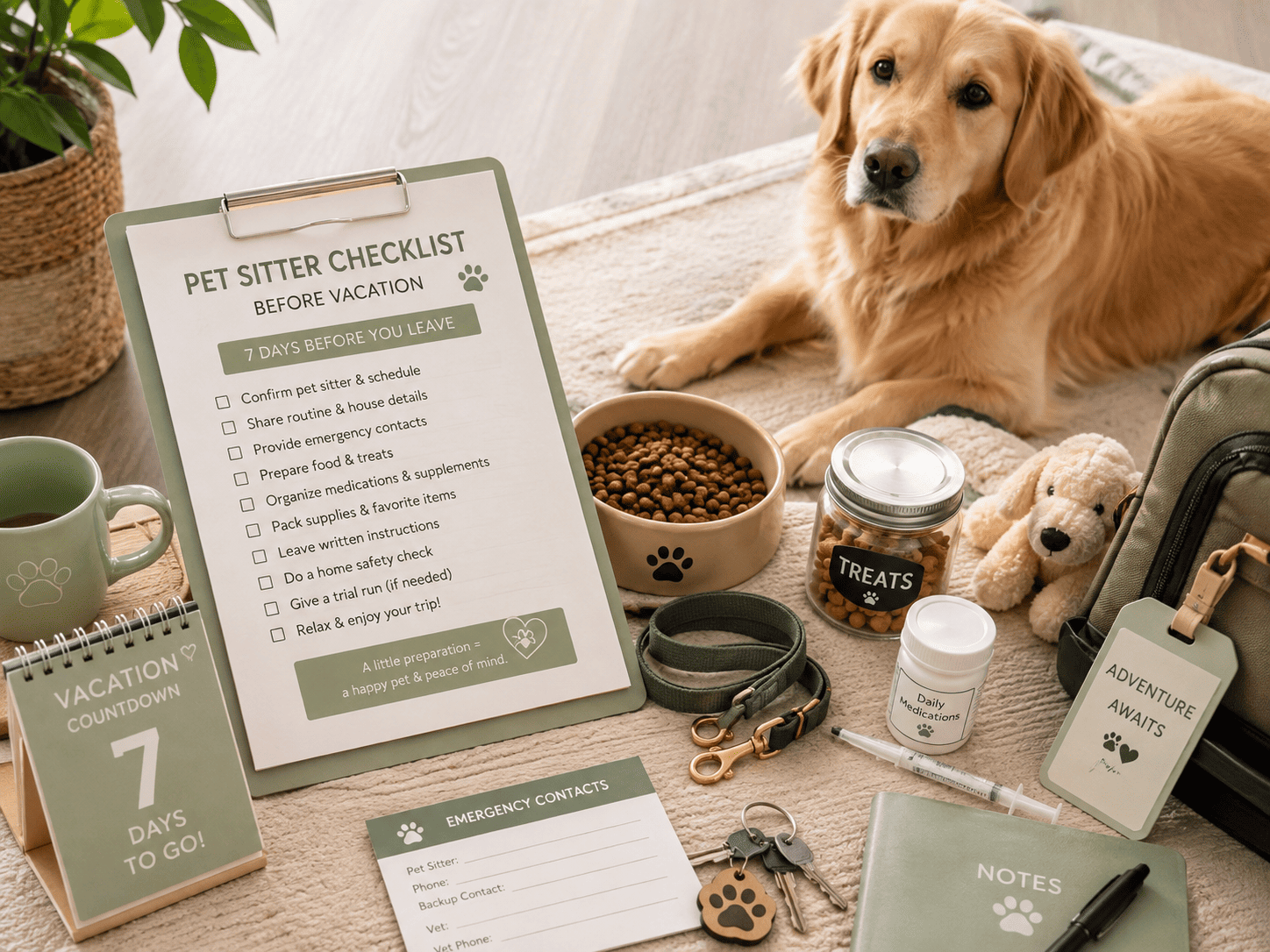
In short
Prepare care cover, access, supplies and clinic arrangements before travelling. Use a staged checklist, departure note and a worked return-delay plan.
A pet sitter checklist before vacation should finish the jobs that can derail care while you are away: booking gaps, a key that does not work, too little food, unclear treatment instructions and nobody covering a delayed return.
Start before the last packing rush. Use the timeline below as a household planning example, moving prescription, booking and specialist-care arrangements earlier when they need more lead time.
Pet sitter checklist before vacation: confirm care first
Agree the care arrangement before buying holiday extras. Write the start and end of responsibility, what the sitter provides and which periods need company or supervision.
- Confirm every booking date and the relevant arrival and departure times.
- Agree visits, overnight care or other cover around the pet's individual needs.
- Tell the sitter about prescribed care, behaviour and handling needs before they accept.
- Ask about experience with the species and tasks involved.
- Check references and the provider's insurance or other relevant arrangements.
- Arrange an introduction and a routine practice visit.
- Name a backup who has agreed to attend if needed.
For UK care businesses, requirements can depend on the service and local authority. Ask the provider what applies to its work and verify licensing where relevant; a home sitter and a boarding establishment do not automatically have the same requirements.
A week before: remove the difficult gaps
“A week before” is an example checkpoint, not a deadline for obtaining medicines or formal documents. Begin those tasks as soon as you know they may be needed.
| Job | Complete it by doing this | Do not leave it as |
|---|---|---|
| Booking | Get written confirmation of cover and responsibility | “They probably remember the dates” |
| Instructions | Update current care, contacts and handling limits | An old document with a new trip date |
| Prescription supply | Check supply and ask the practice about repeat or review needs | An assumed immediate refill |
| Access | Test the key, entry sequence and private security handover | A key cut but never tried |
| Backup | Confirm the person can attend and has an access arrangement | A neighbour's number with no agreement |
Ask the clinic how to prepare consent and payment arrangements for another carer. Tell the sitter what has been confirmed instead of giving a promise the practice has not accepted.
A few days before: check supplies and practise the routine
- Open the food storage and check the correct product and remaining supply.
- Prepare the portion reference or labelled meal containers.
- Inspect leads, harnesses, barriers and carriers for damage.
- Check litter, bedding, waste bags and cleaning supplies.
- Show current labelled treatments and instructions for tasks the sitter has accepted.
- Practise access, a normal meal, an outing or species-specific cleaning task.
- Confirm how supplies will be replenished if the booking extends.
Use familiar food and equipment. A newly bought harness or unfamiliar feeder can create a task neither the animal nor sitter has learned.
Choose the species-specific check
- Dog: fit the walking equipment, practise the exit and identify a backup route.
- Cat: locate all trays, water stations and hiding areas; demonstrate a quiet presence check.
- Small mammal: demonstrate feeding, enclosure security and waste removal using the species' care plan.
- Bird, reptile or fish: confirm the sitter understands the animal's environment, equipment and feeding needs; arrange experienced help where necessary.
The visit should reveal practical gaps without putting an animal through a stressful demonstration. Change the care arrangement if an essential task cannot be performed safely.
The day before: prepare the working care area
Put supplies in the locations shown to the sitter and leave a readable offline instruction copy. Keep medicines, cleaners and private access information secure.
- Clean bowls and complete the normal enclosure or litter maintenance.
- Make beds, rest areas and water points accessible.
- Check ID tag and microchip contact details against your current information.
- Keep carriers and transport equipment reachable.
- Write any new health or behaviour concern and obtain veterinary advice when needed.
- Confirm the sitter's first arrival and how they will report successful access.
- Check the agreed delay plan with the backup.
Do not hide a new problem in a last-minute note saying “keep an eye on it”. Speak to the vet and sitter about whether the agreed level of care still meets the pet's needs.
Departure day: hand over completed tasks and responsibility
Record what you have already done so the sitter starts with the right next task. Check that care begins when you leave it, rather than leaving an unintended gap before the first visit.
“Departure update: [pet] has had [completed meals/outings/care] at [time]. Next task: [instruction]. Supplies are at [location]. First care contact: [person]. Please confirm access as agreed; [backup] covers any problem or change in return.”
Send only a current instruction version. For the care wording, use what to write in pet sitter instructions rather than trying to compose essential directions in the airport queue.
Final departure tick list
- Access works and the correct key is with the sitter.
- Exterior doors, windows and enclosure closures are secure.
- Water and the next meal are covered.
- The current care sheet is where you agreed.
- First arrival and backup contact are confirmed.
- Transport and emergency clinic details are reachable.
- The next task and its responsible person are named.
Agree what happens if care is disrupted
Contact a vet or emergency clinic immediately for breathing difficulty, collapse, suspected poisoning, seizures, severe bleeding, repeated retching without producing vomit, or straining to pass urine. For suspected heatstroke, move the pet out of heat and begin cooling immediately while arranging urgent veterinary care.
Agree that the sitter contacts veterinary help for an urgent concern while notifying you and the backup. Ordinary travel delays also need a plan: someone continues care until you or another agreed person takes over.
| Disruption | Pre-agreed response |
|---|---|
| First visit cannot happen | Backup attends using the agreed access route |
| Return transport is delayed | Owner confirms an extension or replacement carer |
| Supplies run low | Named person obtains the correct replacement under the care plan |
| Pet needs more support | Sitter contacts veterinary help and owner arranges the required care |
Give an escalation route if the first contact cannot reply. A phone message alone does not confirm that someone has accepted the next care period.
Worked example: Farah's flight comes home late
Farah books a sitter for dog Juniper and cat Ash. Before travelling, she agrees who handles the next evening's care if the return changes and who can collect replacement food.
When a flight is delayed, Farah confirms the sitter can continue. The sitter follows the current feeding and access instructions, while the backup remains available if the extension cannot be covered.
“My return is delayed. Can you cover the next agreed care period? Please confirm directly. If you cannot, I will confirm the backup handover before your booking ends.”
The checklist had treated the end of care as a confirmed handover, so the pets are not left waiting for Farah's original arrival time.
Common last-minute mistakes
- Giving old medical directions: check the current clinic source before sharing.
- Hiding supplies while tidying: keep the tested task locations.
- Assuming a text means cover is agreed: get the person's confirmation.
- No plan for an inaccessible key: arrange a working backup privately.
Frequently Asked Questions
How early should I start preparing for a sitter?
Begin when you book care. Access checks, introductions and clinic arrangements may need time. Use the week-before checklist as a review point, not the earliest time to request prescriptions or specialist help.
Do I need a practice visit for an experienced sitter?
Yes, when they have not used your home, equipment or pet's routine. Experience with animals does not show them which gate sticks or which cat eats behind a closed door.
What if my pet develops a new problem before I leave?
Contact the vet and discuss the care needs with the sitter. Change or postpone arrangements if the agreed cover cannot provide the required support.
When does the sitter's responsibility end?
Use the agreed booking terms and confirm the handover to you or the next carer. Plan an extension or backup in advance if your return changes.
Resources & Links
These sources help complete care arrangements and welfare checks before the vacation handover.
- RSPCA: Exploring Pet Sitting Options — Check sitter selection, introductory visits and the information needed before departure.
- PDSA: Pet Boarding, Kennels and Holiday Care — Compare care arrangements early and check they meet the pet’s needs.
- PDSA: Home Health Checks — Notice changes that should be discussed with the vet before handing over care.
Prepare handover information with the Pet Sitter Instructions Pack and backup care details with the Pet Emergency and Care Info Kit. Get the Pet Sitter Instructions Pack → Get the Pet Emergency and Care Info Kit →
Printable and fillable PDF templates for pet owners — feeding schedules, health records, training trackers and more.