
Pet Medication Tracker Printable: A Safer Way to Organise Daily Doses
Organise labelled prescriptions, secure storage, completion entries and refill requests. Use an inventory table, blank grid and a changed-label example.
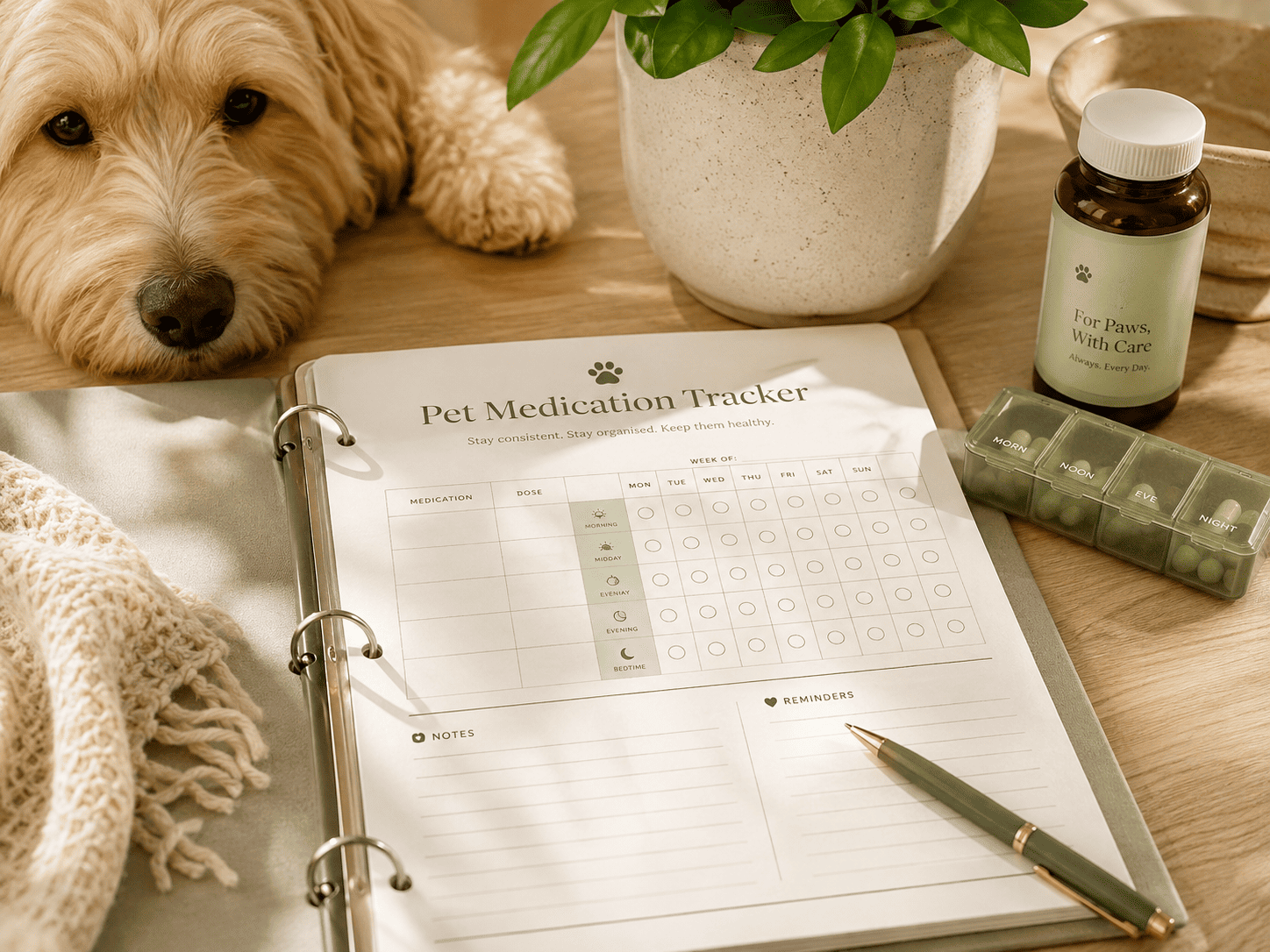
In short
Organise labelled prescriptions, secure storage, completion entries and refill requests. Use an inventory table, blank grid and a changed-label example.
A pet medication tracker organiser needs to show which medicines are current, where they are kept, what the vet prescribed and what has already been given. It also needs to help you notice when a supply is running low before the next task depends on it.
Keep the pharmacy label or veterinary instructions with each medicine, then add a clear inventory and completion sheet. The organiser helps you follow the prescription; ask the prescribing clinic about any unclear direction, missed administration or treatment change.
Build a pet medication tracker organiser around each prescription
Make a separate inventory entry for every current medicine and every pet. Include preventative treatments when prescribed or recommended for that individual, using their own current instructions.
| Inventory field | What to enter | Why it helps |
|---|---|---|
| Pet | Name and a distinguishing description where needed | Prevents sharing a medicine between pets by mistake |
| Medicine | Full name, strength and formulation from the label | Distinguishes similar packages and different preparations |
| Prescribed instructions | Amount, route, timing and food directions copied exactly | Keeps the instruction beside the task |
| Course or review plan | Start, stop or review information supplied by the clinic | Shows whether the treatment is still current |
| Prescriber | Practice and contact number | Gives you a route for questions and repeat requests |
| Storage | Label requirements and the household storage location | Helps carers find and store the medicine correctly |
| Supply | Amount remaining, expiry information and opened date when relevant | Supports a refill conversation and package checks |
| Current status | Active, stopped by the clinic or awaiting clarification | Keeps old treatments out of the working plan |
Write names in full rather than “small white tablet”. Do not calculate a new amount from the pet's weight or use instructions from another animal's prescription.
Give medicines a secure, labelled storage place
Keep medicines in their original labelled packaging unless the vet or pharmacist has agreed another arrangement. Separate each pet's supplies and keep them inaccessible to children and animals.
- Read the storage requirements on each label or supplied leaflet.
- Choose a location that meets them, away from places the pet can reach.
- Keep the medicine's label and supplied measuring device together.
- Label an outer box or pouch with the pet's name; retain the original packaging inside.
- Keep stopped or expired medicines out of the active storage area and ask the clinic how to return or dispose of them.
- Write the storage location on the inventory so another carer can find it.
Refrigerate a medicine when its instructions require it, rather than assuming colder storage is better. Ask the dispensing practice about uncertain conditions or a medicine left somewhere that may have affected it.
| Storage choice | Benefit | Check first |
|---|---|---|
| Original packs in a labelled outer box | Keeps the medicine identity and directions together | The box's location meets each pack's storage requirements |
| Separate pet pouches | Makes it easier to select the correct pet's supplies | Each contains the original label, not loose unidentified medicines |
| Compartment organiser | May help with an agreed administration routine | The vet or pharmacist confirms the medicine can be removed from its packaging and stored this way |
| Refrigerated storage | Meets a medicine's labelled cold-storage requirement | The specific product requires it and remains clearly identified |
Store the completion sheet where carers can use it, but keep the medicines themselves secure. A visible checklist does not require an open box of tablets beside the food bowl.
Use a completion grid that shows what happened
Put the current directions beside the grid, or give a clear reference to the prescription entry. Write the administering person's name or initials and the time after administration.
A printable completion grid can use these columns:
| Date | Pet and medicine | Planned task from current instructions | Outcome | Completion time | Person | Follow-up |
|---|---|---|---|---|---|---|
| [date] | [pet; full labelled name] | [copy or reference the prescription] | [given, not given or unable to confirm] | [time if given] | [name or initials] | [question or clinic advice] |
Separate a future reminder from a completed entry. If a task has not happened, leave the completion field unmarked and write what needs attention in the follow-up column.
If you cannot confirm whether a medicine was given, contact the previous carer and prescribing practice for advice before giving an extra administration. The same applies if the pet spits it out or vomits afterwards: tell the clinic what happened rather than guessing how much was absorbed.
For a single paper sheet, use the printable pet medication tracker alongside your labelled supplies.
Plan refills from your supply and the clinic's process
Check the remaining medicine against the current prescription and ask the practice how repeat requests work. Lead times, review requirements and availability vary; do not rely on one universal refill deadline.
Refill checklist
- Confirm the pet and full medicine name before making the request.
- Check the remaining supply without changing how you give it.
- Ask whether the vet needs a review or test before another prescription.
- Confirm how the medicine will be collected or delivered.
- Compare the new label with the current directions when it arrives.
- Ask about any change in name, formulation, strength or instructions that you do not understand.
- Update the inventory and keep the new dispensing information.
Refill message: “I need to ask about a repeat supply for [pet], [full medicine name and strength]. We have [remaining supply] and are following the label dated [date]. Is a review needed, and how should I arrange the next supply?”
Do not stretch the supply by changing the prescribed amount or skipping tasks. If you may run out, tell the clinic promptly so it can advise you.
Worked example: a refill with a different label
Leah collects a repeat medicine for Robin and notices that the new label looks different from the one in the organiser. She keeps both packs separate and calls the dispensing practice before replacing the active instructions.
| Organiser entry | What Leah writes |
|---|---|
| Question | New dispensing label differs from the directions currently filed |
| Documents available | Old and new labelled packs, plus the current prescription entry |
| Action | Contact dispensing practice to confirm the directions before the next administration |
| After the answer | Copy the confirmed instructions, update the active entry and tell the other carer |
She does not assume that the appearance of the pack tells her whether treatment changed. Once the practice explains the label, she removes the superseded working copy and files the dispensing history behind the current entry.
Keep carers aligned and make useful clinic notes
Agree who is responsible for each task and use one shared completion record. At handover, show the other person the named pet's labelled supplies, current directions and last completed entry; keep the practice number available if something cannot be carried out.
For a concern during treatment, give the clinic a brief factual account: the medicine, administration time, what you saw and when it began. Follow the practice's advice about next steps and record that advice with the current plan.
Call prompt: “Robin is taking [labelled medicine]. The last confirmed administration was [time]. I noticed [observable change] at [time]. What should I do now, and what are the instructions for the next scheduled task?”
Do not crush, split, open or mix a medicine into food unless the vet or pharmacist says that method is suitable for the particular product. Ask for a demonstration or an alternative if administration is becoming difficult.
Common organiser mistakes to fix
- Several pets in one unlabelled box: separate supplies and identify the animal on every entry.
- Identifying medicine by colour: use the full labelled name, strength and formulation.
- Ticks added before administration: mark completion afterwards and keep reminders separate.
- Stopping notes left on the active grid: update the current list when the clinic stops or changes treatment.
- Refill requests left until the pack is empty: check supply and ask the practice about its process.
- Old and new packs combined: retain labels and resolve unclear changes with the dispensing practice.
Frequently Asked Questions
Can I put my pet's medicines in a weekly pill organiser?
Ask the vet or pharmacist first. Some medicines need their original packaging or particular storage conditions. If an organiser is approved, keep the labelled information available and identify the pet clearly.
How do I organise refrigerated and room-temperature medicines?
Follow each product's storage instructions and record its location in the inventory. Keep the medicines clearly labelled even when they cannot be stored together.
What if the new pack has different instructions?
Contact the dispensing practice to confirm the change before choosing which instructions to follow. Keep the packs separate until the question is resolved, then update the current prescription entry.
Should routine parasite treatments go in the same organiser?
You can include them with their full product name, pet identity and current directions. Keep their timing separate from other medicines and use the plan recommended for that pet.
Resources & Links
These sources support medication questions and prescribed administration while you organise supplies.
- Cornell: Giving Your Dog Oral Medications — Discuss administration methods and difficulties with the prescribing team before adapting a medicine.
- Cornell: Giving Your Cat Oral Medications — Prepare questions about giving the prescribed medicine and avoid assuming dog methods suit a cat.
- PDSA: Medications — Find medication information to support questions about your pet’s current treatment.
Keep treatment information together with the Pet Health Record Binder and prepare for backup care with the Pet Emergency and Care Info Kit. Get the Pet Health Record Binder → Get the Pet Emergency and Care Info Kit →
Printable and fillable PDF templates for pet owners — feeding schedules, health records, training trackers and more.