
Pet Emergency Card: What Information Should Be on It?
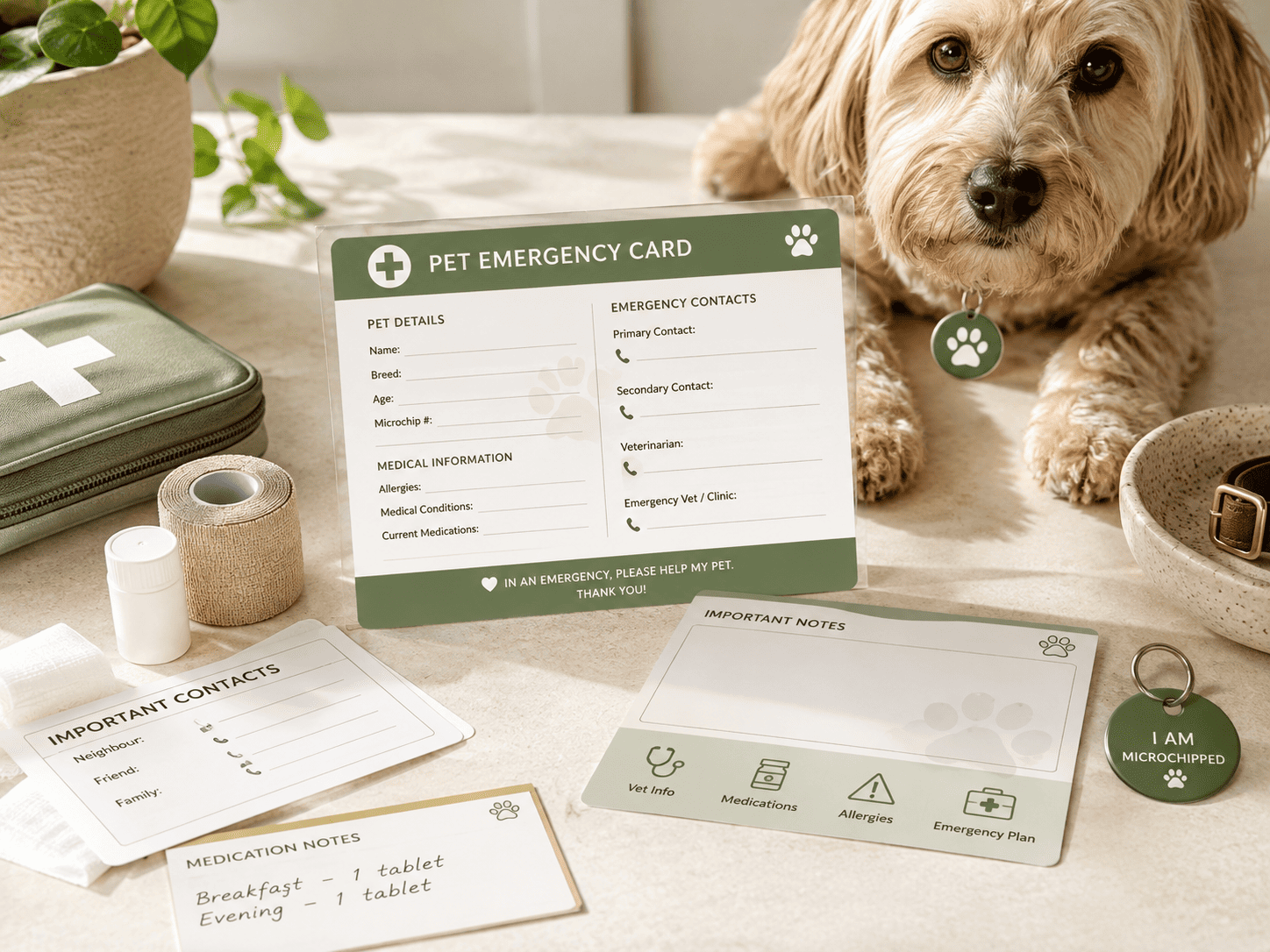
A pet emergency card puts the details anyone needs in a crisis on one printable card — vet, contacts, medications, allergies, microchip and behaviour warnings. Here is exactly what to include.
In short
A pet emergency card puts the details anyone needs in a crisis on one printable card — vet, contacts, medications, allergies, microchip and behaviour warnings. Here is exactly what to include.
A pet emergency card is a single card that holds everything anyone caring for your pet needs in a crisis — kept on the fridge, in the pet carrier, or in your wallet. Whether it is a sitter, a neighbour, or an emergency vet who has never met your pet, the card means they can act immediately without searching. Here is exactly what belongs on it.
What to Put on a Pet Emergency Card
- Pet identity — name, species, breed, age, colour and markings.
- Owner contact — your name and mobile number.
- Emergency contact — a backup who knows your pet and can authorise care.
- Vet details — clinic name, phone and out-of-hours emergency vet.
- Medications — current medication, dose and timing.
- Allergies — known drug and food reactions.
- Behavioural warnings — anything a stranger handling your pet should know.
- Microchip number — and the registry it is registered with.
Why Each Detail Matters
In an out-of-hours emergency at a clinic that has never seen your pet, this card is often faster than retrieving records from another surgery. The behavioural warning protects the person helping — a pet in pain may snap even if usually gentle. The microchip number, rarely to hand when you need it, sits ready on the card.
Pet Emergency Card
The Pet Emergency Card is a printable and fillable card with every section above — ready to fill in, laminate and keep wherever your pet goes. No design skills needed, and it costs less than a coffee.
Get the Pet Emergency Card →Where to Keep Copies
- On the fridge — where emergency services and sitters look first.
- In your pet's carrier or travel bag.
- With your pet sitter.
- Photographed on your phone for quick access.
- A wallet-sized copy you carry with you.
Keeping It Current
Update the card whenever medications, vet details or contacts change, and check it every six months. An emergency card with an out-of-date phone number is worse than none, because it creates false confidence.
Two ways to be emergency-ready
Want a compact card for the fridge and wallet? Choose the Pet Emergency Card. Want a fuller kit with a lost pet sheet and care information too? Choose the Pet Emergency and Care Info Kit.
Get the Pet Emergency Card →Frequently Asked Questions
What should a pet emergency card include?
Pet identity, owner and backup contacts, vet and emergency vet, current medications, allergies, behaviour warnings and the microchip number.
Where should I keep the emergency card?
On the fridge, in the carrier, with your sitter, photographed on your phone, and a copy in your wallet.
How often should I update it?
Whenever medications or contacts change, and a general check every six months.
Printable and fillable PDF templates for pet owners — feeding schedules, health records, training trackers and more.