Pet Emergency Contact Sheet: What to Include
A pet emergency contact sheet can save your pet's life. Here is exactly what to include — owner contacts, vet details, microchip number, medications and a free downloadable template.
In short
A pet emergency contact sheet can save your pet's life. Here is exactly what to include — owner contacts, vet details, microchip number, medications and a free downloadable template.
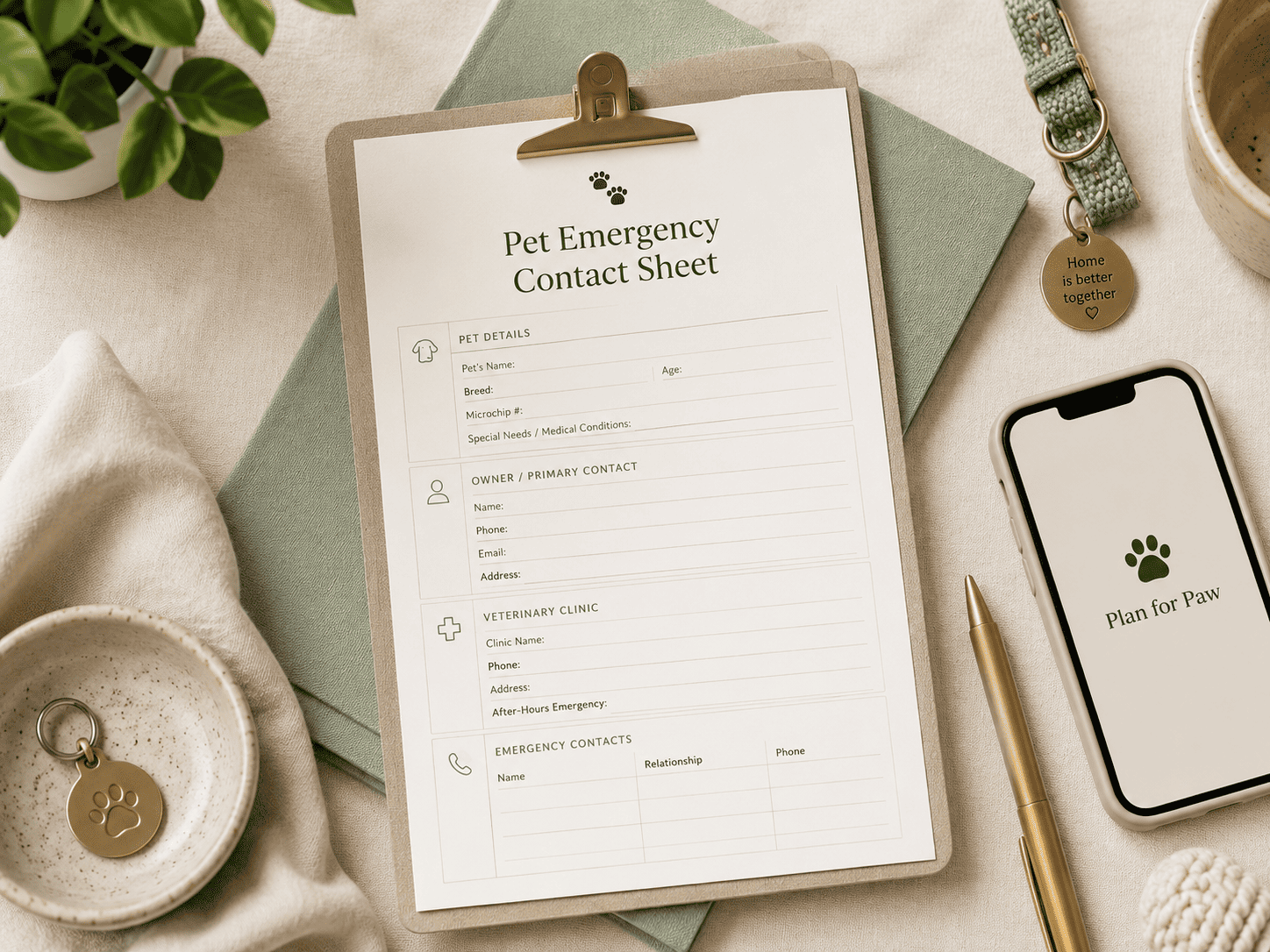
A pet emergency contact sheet is a single document that contains everything anyone caring for your pet needs in a crisis. Whether it is a pet sitter, a neighbour letting your dog out, or a family member who does not usually care for your pet — this sheet means they can act immediately without searching for information.
You hope never to need it. But like a first aid kit, having it prepared before you need it is the whole point.
1. Owner Contact Information
The primary contact for any emergency is you. Make this section impossible to miss.
- Full name
- Mobile number (ideally one that works abroad if you travel)
- Home address (useful if the sheet is kept with the pet carrier or at a vet)
- Email address as a backup
2. Backup Emergency Contact
Include at least one person who can make decisions about your pet's care if you cannot be reached — ideally someone who knows your pet.
- Full name and relationship
- Mobile number
- Whether they have authority to authorise vet treatment
3. Regular Vet Contact
- Clinic name
- Address
- Phone number and out-of-hours number
- Your pet's registered name and patient ID if you have it
4. Emergency or Out-of-Hours Vet
Your regular vet is often closed in the middle of the night. Include a separate 24-hour emergency clinic.
- Emergency clinic name and address
- 24-hour phone number
5. Microchip Number
Microchip numbers are 15 digits and are often on the vaccination card or registration certificate — not easy to find in a hurry. Write it here.
- Microchip number
- Which registry it is registered with (e.g. Petlog, Microchip Central)
6. Current Medications
A vet treating your pet in an emergency needs to know what medications are already on board to avoid dangerous interactions.
- Medication name
- Dose and frequency
- What it is for
- Prescribing vet
7. Allergies and Sensitivities
- Known drug allergies (e.g. a reaction to a specific antibiotic)
- Food allergies or intolerances
- Environmental allergies if they affect treatment decisions
8. Lost Pet Information
If your pet goes missing, the person searching needs to be able to describe your pet accurately and contact the right services quickly.
- Species and breed
- Colour and markings
- Distinctive features (missing toe, scar, unusual eye colour)
- Current collar colour and tag information
- Last seen location and date
- Local shelters and dog warden contact numbers
9. Pet Photo
Include a clear, recent photo of your pet. If your pet is lost, stolen or taken to an unfamiliar vet, a photo speeds up identification. For a printed emergency sheet, tape a wallet-sized photo to the sheet.
Where to Keep Your Pet Emergency Sheet
- On the fridge (traditional but effective — it is where emergency services look)
- In your pet's travel bag or carrier
- With your pet sitter
- Photographed on your phone for quick access
- In a fireproof document folder with your other important papers
Pet Emergency & Care Info Kit
A complete printable and fillable emergency card with all the sections above — ready to fill in, laminate and keep wherever your pet goes. No design skills needed.
Get the Pet Emergency Card →Frequently Asked Questions
What should a pet emergency contact sheet include?
Owner contact, backup contact, regular vet, emergency vet, microchip number, current medications, allergies and a recent photo. The goal is that anyone can care for your pet and make medical decisions without needing to search for information.
Do I need a pet emergency contact sheet if my vet already has my details?
Yes. Your vet's records help at your regular clinic, but in an out-of-hours emergency at a different clinic, having all information on a single printed sheet is much faster than retrieving records from another surgery.
Printable and fillable PDF templates for pet owners — feeding schedules, health records, training trackers and more.