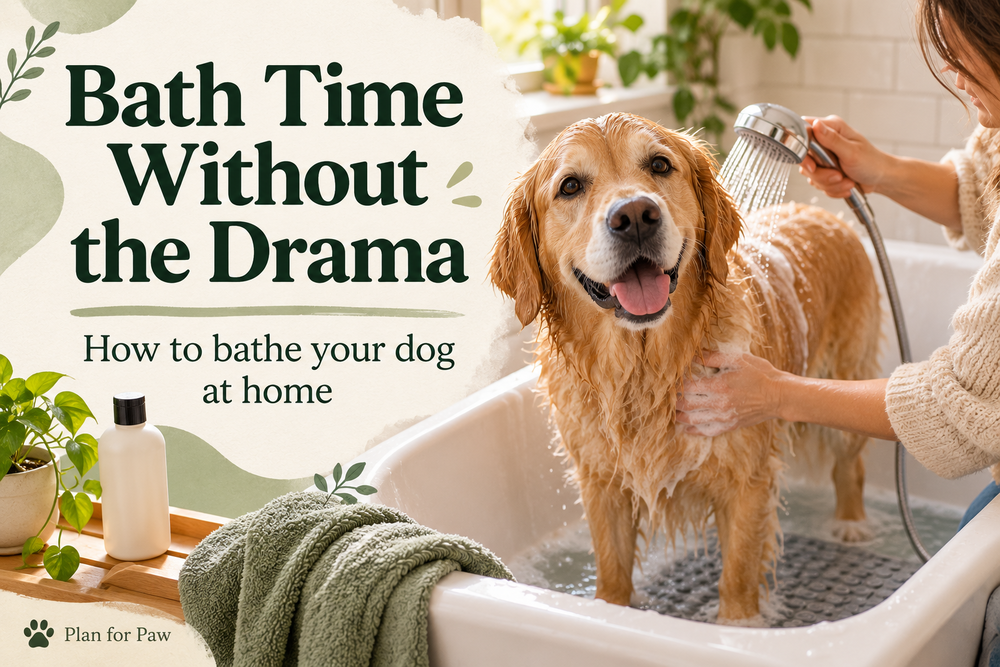
How to Bathe a Dog at Home Without the Drama
Most dogs only need an occasional bath, but when they do, a bit of preparation makes it far easier. Here is how often to bathe, what to use, a step-by-step method and how to dry properly.
In short
Most dogs only need an occasional bath, but when they do, a bit of preparation makes it far easier. Here is how often to bathe, what to use, a step-by-step method and how to dry properly.
Most dogs do not need frequent baths. Too much bathing can strip the oils that keep skin and coat healthy. But muddy walks, rolling in something unspeakable and skin conditions all mean a bath is sometimes necessary, and a calm, well-prepared bath is a much better experience for everyone.
How Often?
There is no single rule. Many dogs do well with a bath every one to three months, or simply when they are dirty or smelly. Dogs with skin conditions may need a specific routine — follow your vet's advice. Brushing between baths does more for the coat than frequent washing.
What to Use
- Dog shampoo: human shampoo is formulated for different skin. Use a gentle dog shampoo, or a medicated one only if your vet recommends it.
- Non-slip mat in the bath or shower
- Hand-held shower head or jug
- Several towels
- Treats or a lick mat stuck to the wall
- A brush to use before the bath
Before the Bath
- Brush thoroughly. Water tightens mats and tangles.
- Check the water temperature — lukewarm, never hot.
- Have everything ready before the dog goes in.
- Take a short walk first so your dog is a little calmer.
Step by Step
- Wet the coat thoroughly, starting at the neck and working back. Keep water away from the eyes and ears.
- Apply shampoo and work it into the coat down to the skin.
- Clean the face with a damp cloth rather than shampoo.
- Rinse very thoroughly — leftover shampoo is a common cause of itching. Rinse again once you think you have finished.
- Squeeze excess water from the coat by hand before your dog shakes.
Daily Dog Care Tracker
Baths, brushing, nail trims and ear checks are easy to lose track of. The Daily Dog Care Tracker has printable daily and weekly care sheets so grooming happens on schedule, not just when your dog smells.
Get the Daily Dog Care Tracker →Drying Properly
- Towel dry well, paying attention to skin folds, armpits and between toes
- Dry the outer ear gently
- For thick or double coats, a pet dryer on a cool setting helps prevent skin problems — introduce the noise gradually
- Keep your dog warm and indoors until fully dry, especially in cold weather
For Nervous Dogs
Build up slowly: treats in the empty bath, then with a little water around the paws, then a short wash of just the legs. A lick mat smeared with something tasty stuck to the tiles keeps many dogs busy and calm. For dogs who are very fearful, a professional groomer may be kinder.
Quick Clean-Ups Between Baths
Muddy legs and paws can often be rinsed with a bucket of warm water and a towel at the door. It avoids full baths and keeps the coat's natural oils.
Two ways to stay on top of grooming
Want a daily and weekly care log? Choose the Daily Dog Care Tracker. Want grooming alongside health records and routines? Choose the Complete Dog Owner Binder.
Get the Complete Dog Owner Binder →Frequently Asked Questions
Can I use baby shampoo on my dog?
A dog shampoo is the better choice. If your dog has sensitive skin, ask your vet what to use.
How do I stop my dog smelling after a bath?
Dry the coat completely and rinse thoroughly. A persistent smell can point to skin, ear or dental problems — ask your vet.
Should I bathe a puppy?
Only when needed, with a puppy shampoo, keeping the experience short and positive. Gentle handling practice is often more useful than full baths.
Printable and fillable PDF templates for pet owners — feeding schedules, health records, training trackers and more.