
How to Create a Dog Feeding Schedule That Everyone in the House Can Follow
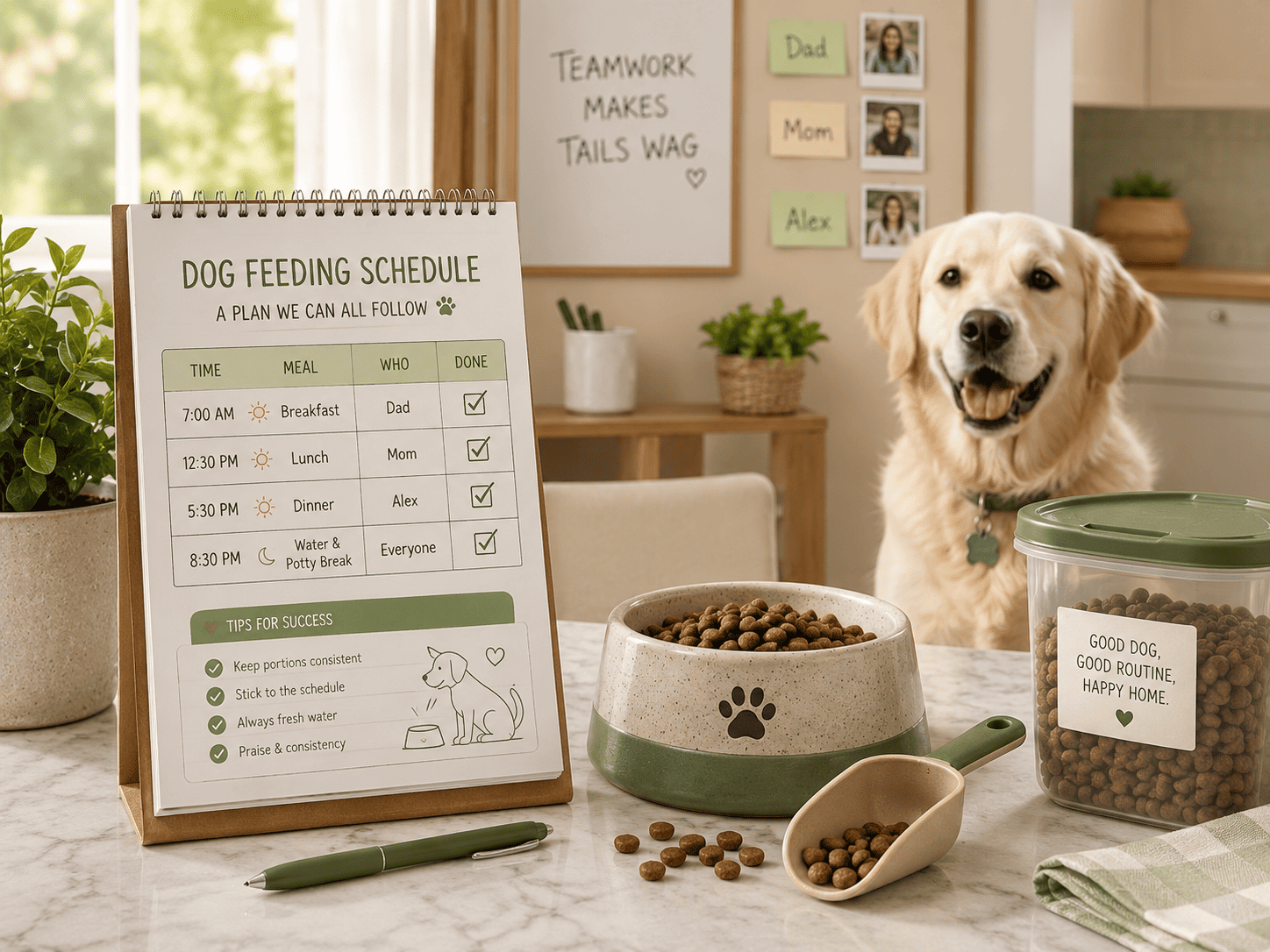
Allocate daily food to meals, training and enrichment, then assign feeders and backups. Use a shared table, supply labels and a household reward-pot example.
In short
Allocate daily food to meals, training and enrichment, then assign feeders and backups. Use a shared table, supply labels and a household reward-pot example.
A dog feeding schedule for the whole household needs one agreed daily food plan and a clear allocation to meals, rewards and enrichment. Otherwise breakfast can be measured carefully while training treats and a second dinner quietly add more.
Start with the food your dog eats and the total daily amount from their current plan. Use the food label as a starting point and adjust with the vet for the individual dog, especially where health, growth or weight changes affect feeding.
Dog feeding schedule for the whole household: allocate the food
Choose a daily reference before assigning feeders. Adults are commonly fed at least twice a day; puppies generally have more meals. Keep the dog's individual plan where everyone prepares food.
- Identify the dog and exact food products.
- Confirm the total daily amount and measuring method.
- Reserve the part used for training or food toys under that plan.
- Divide the remaining food between the planned meals.
- Name a feeder and backup for each meal.
- Use one shared completion entry after feeding.
Do not subtract grams of one food from another as if they provide identical energy. If wet food, dry food and treats are combined, use a feeding plan that accounts for those products.
Use a measuring method people can repeat
Weigh a portion when the plan specifies weight. If a particular measuring tool is used, label it and show the intended fill level. Different scoops and heaped servings make the same written instruction produce different meals.
Copy the schedule and label the supplies
| Meal or food use | Portion reference | Responsible person | Completion | Notes |
|---|---|---|---|---|
| Breakfast [time] | [Product and measured portion] | [Name; backup] | [Time and initials] | [Leftovers or concern] |
| Training / enrichment | [Reserved allowance and where stored] | [People using it] | [Allowance used] | [What remains] |
| Dinner [time] | [Product and measured portion] | [Name; backup] | [Time and initials] | [Leftovers or concern] |
| Other meal if in the plan | [Current directions] | [Name; backup] | [Time and initials] | [Entry] |
Put the dog's name on food containers, especially in a multi-pet household. Keep the portion reference beside the food so a household member does not need to search a message thread.
“Food plan for Cedar: use the named container and current portion sheet. Breakfast: [person]. Dinner: [person]. Training food comes from the labelled daily reward pot. Mark the meal after serving; ask the feeder before preparing another meal if the entry is blank.”
Make treats and enrichment part of the plan
Keep treats to a small part of daily intake and discuss the amount with the vet when needed. Food given by a walker, visitor or family member still belongs in the same plan.
- Prepare a labelled reward allowance rather than letting everyone use the bag.
- Tell walkers and trainers which food and amount they may use.
- Include food toys and chews that contribute calories.
- Ask visitors to use the reserved rewards instead of bringing extras.
- Keep a place to note any food given outside the plan.
Choose rewards compatible with any dietary restriction. A dog on a prescribed diet needs the practice's guidance about extras, not an assumption that small snacks do not matter.
| Extra food source | Household arrangement |
|---|---|
| Training in the garden | Take food from the day's named allowance |
| Walker rewards | Send the agreed portion and ask what remains |
| Food puzzle | Fill it using the allocated part of the plan |
| Visitor greeting | Use your reward pot or greet without feeding |
Keep completion separate from meal planning
A meal printed on a schedule is a reminder, not evidence it happened. Mark the time and feeder after serving; add a note if the dog leaves food or refuses the meal.
When the entry is missing, contact the person responsible before offering a duplicate. Agree how carers reach each other during work, then use a backup who can confirm the next task.
Write a useful exception
“Dinner served by J at [time]. Cedar left part of the portion; remaining food handled according to its storage instructions. Owner notified. Follow the current plan and contact the vet if the changed appetite needs advice.”
Keep this supporting record brief. The important feeding decisions are the product, daily amount, allocation and response to changes.
Prepare late shifts, visitors and multiple dogs
Give the backup person the same food and portion instructions. A late shift should change the person doing the job, not produce an improvised larger meal.
| Situation | Do this | Avoid |
|---|---|---|
| Usual feeder is late | Backup uses the current portion and confirms completion | Both people feeding when they arrive |
| Walker has used rewards | Return the remainder or report the agreed allowance used | Adding another full reward pot |
| Two dogs eat differently | Label food and feed separately when needed | Assuming bowl size identifies the diet |
| Visitor offers snacks | Explain the household reward arrangement | Letting an unknown extra become a routine |
If one dog takes another's food, change the physical feeding arrangement. Separate rooms or controlled access may be necessary; a note saying “don't steal” cannot manage the meal.
Worked example: Cedar's rewards come from several people
Three people care for Cedar. Breakfast and dinner are measured, but each person carries a separate treat bag. They decide to prepare one daily reward allowance under the feeding plan.
Breakfast is assigned to Tamsin and dinner to Jules. The walker takes an agreed part of the reward supply. When Jules works late, Tamsin confirms she will cover dinner and marks it after serving.
Household note: “Today's reward pot is already divided. Walker portion is in the small named container; the remainder is for home practice. Do not open another bag. Dinner backup is Tamsin when Jules confirms a late shift.”
The next review concerns Cedar's total food and condition with the vet, rather than whether one person's scoop looked smaller than another's. The household can describe the complete feeding pattern.
Review the plan when needs change
- Update the food reference when changing products under an agreed plan.
- Check whether growth, weight or health changes need veterinary input.
- Tell every feeder when portions or meal arrangements change.
- Remove old working portion sheets.
- Check rewards supplied by visitors, walkers and training sessions.
- Raise persistent appetite or eating changes with the vet.
A feeding schedule does not diagnose why a dog is eating less or asking for more. Bring the current products, portions and changed behaviour to the practice so advice is based on the whole pattern.
Common mistakes
- Meal portions measured but extras ignored: allocate all food sources.
- Several scoop sizes: use one labelled measure or weighed portions.
- Same grams for a new product: check the new food's feeding information.
- A blank tick answered with another meal: confirm with the responsible feeder.
Frequently Asked Questions
How many meals should an adult dog have?
At least two daily meals is a common starting pattern. Use your dog's individual feeding plan; age, health and the products used can affect how the daily food is divided.
Can training treats come out of the meal portion?
Food from the daily allowance can be reserved for practice when it suits the dog's plan. Different treats are not automatically equivalent by weight, so account for the products rather than guessing a gram-for-gram exchange.
Should every feeder have a separate meal log?
No. Use one shared completion record at the feeding point. Separate private notes can leave people unable to confirm whether the dog has eaten.
What if one dog eats the other dog's food?
Label supplies and change the feeding setup so each dog receives its own portion. Use separate spaces where needed and discuss repeated appetite or dietary concerns with the vet.
Resources & Links
These sources help identify food purpose and bring individual feeding or appetite questions to the vet.
- FDA: Complete and Balanced Pet Food — Check nutritional-purpose wording when identifying the products in a feeding plan.
- Blue Cross: Basic Healthcare in Dogs — Keep feeding and weight questions connected with the dog’s wider preventive care.
- PDSA: Home Health Checks — Bring changes in appetite or condition to veterinary discussions about the household food plan.
Keep the household’s dog-care routine organised with the Daily Dog Care Tracker. Get the Daily Dog Care Tracker →
Printable and fillable PDF templates for pet owners — feeding schedules, health records, training trackers and more.