
Dog Car Sickness: Why It Happens and How to Help
Drooling, yawning, whining and vomiting in the car are common, especially in young dogs. Here is how to tell sickness from anxiety, how to set up the car and how to build up journeys gradually.
In short
Drooling, yawning, whining and vomiting in the car are common, especially in young dogs. Here is how to tell sickness from anxiety, how to set up the car and how to build up journeys gradually.
Many dogs struggle in the car. Puppies in particular are prone to motion sickness, and for some dogs a few unpleasant early journeys turn into a lasting fear of the car itself. The good news is that both usually improve with the right setup and a slow approach.
Motion Sickness or Anxiety?
They look similar and often happen together.
- Motion sickness signs: drooling, lip licking, yawning, being very still, vomiting — usually once the car is moving.
- Anxiety signs: panting, whining, trembling, pacing, refusing to get in — often before the car moves.
If your dog drools before the engine is even started, the car itself has become the problem, and that needs a training plan as well as sickness management.
Set Up the Car
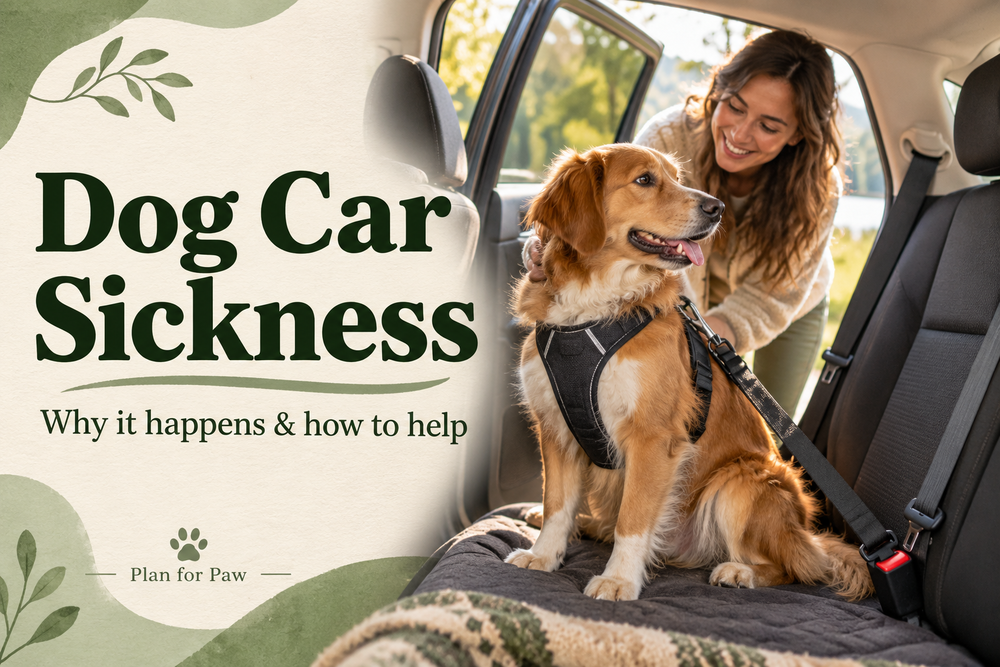
- Secure your dog: a crash-tested harness, a secured crate or a boot guard. It keeps your dog safe and stops sliding about, which makes sickness worse.
- Facing forward: many dogs do better facing the direction of travel.
- Fresh air: open a window slightly and keep the car cool.
- Limit the view: a covered crate helps some dogs who get worked up by things rushing past.
- Easy to clean: a washable cover or towel takes the stress out for you.
Before the Journey
- Avoid a big meal for a couple of hours before travelling
- Offer water
- A short walk first gives your dog a chance to toilet and settle
- Drive smoothly — gentle braking and slower corners make a real difference
Pet Health Record Binder
If you discuss car sickness with your vet, they will ask how often it happens and what you have tried. Note journeys, symptoms and any prescribed treatment in the printable Pet Health Record Binder.
Get the Pet Health Record Binder →A Gradual Plan for Anxious Travellers
- Spend a few minutes sitting in the parked car with treats and a chew. Engine off. Get out before your dog is worried.
- Repeat with the engine on.
- Drive to the end of the road and back.
- Build up to short trips that end somewhere good — a park, a favourite walk — not only at the vet.
- Increase distance slowly.
Keep each step easy enough that your dog stays relaxed. If they start drooling or panting, go back a step.
Talk to Your Vet
If car sickness persists, ask your vet. There are medications for motion sickness and for travel anxiety, and your vet can advise what is suitable. Never give human travel sickness tablets without veterinary advice.
Puppies Often Grow Out of It
Many puppies become less car sick as they grow. Keeping early journeys short and positive helps stop sickness turning into a fear of the car.
Two ways to travel prepared
Leaving your dog at home instead? Choose the Pet Sitter Instructions Pack. Want a daily log of journeys and how your dog coped? Choose the Daily Dog Care Tracker.
Get the Pet Sitter Instructions Pack →Frequently Asked Questions
Do dogs grow out of car sickness?
Many puppies do as they mature. Adult dogs whose sickness is linked to anxiety usually need gradual training too.
Should I feed my dog before a car journey?
A light meal a couple of hours before, rather than a full meal just before, usually works best.
Can I give my dog human travel sickness tablets?
No — not without your vet's advice. Some human medicines are unsafe for dogs.
Printable and fillable PDF templates for pet owners — feeding schedules, health records, training trackers and more.