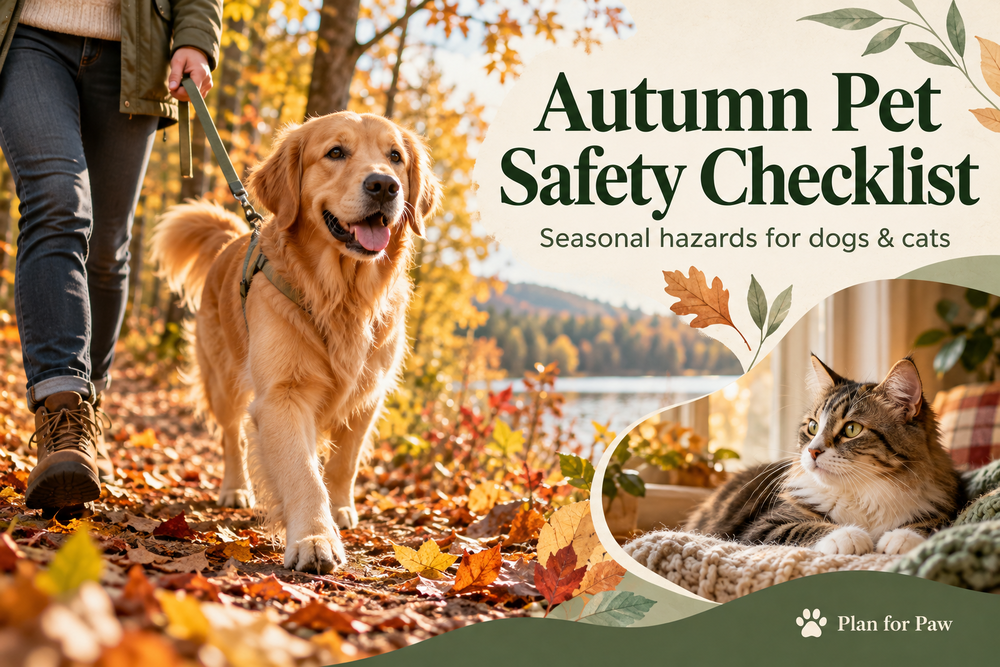
Autumn Pet Safety Checklist: Seasonal Hazards for Dogs and Cats
Autumn brings conkers, acorns, wild mushrooms, a second tick season and dark evening walks. Here is a practical checklist of what to watch for and what to change in your routine.
In short
Autumn brings conkers, acorns, wild mushrooms, a second tick season and dark evening walks. Here is a practical checklist of what to watch for and what to change in your routine.
Autumn is one of the best seasons for walking a dog, and one of the busiest for vets. The hazards are mostly things lying on the ground, and most of them are only a problem for dogs who pick up and chew whatever they find. A little extra attention from September to November prevents most of the trouble.
On the Ground: What to Watch For
- Conkers (horse chestnuts): toxic if chewed and a real risk of blocking the gut if swallowed whole. Do not throw them for a dog to fetch.
- Acorns and oak leaves: contain tannins that can upset the stomach and, in larger amounts, affect the kidneys.
- Wild mushrooms and toadstools: most are harmless, a few are seriously toxic, and telling them apart is a job for an expert. Treat any mushroom eaten as a reason to call the vet.
- Fallen fruit: fermenting apples and plums can cause stomach upset, and stones and pips are choking and blockage risks.
- Sticks: autumn sticks are wet and splinter easily. A rubber fetch toy is a safer swap.
Around the House and Garden
- Rodent poison: use increases as mice move indoors in autumn. If you or a neighbour use bait, it must be completely inaccessible to pets — and remember a cat can be poisoned by eating a poisoned rodent.
- Antifreeze: cars are topped up as temperatures drop. It tastes sweet and is extremely dangerous. Wipe up spills straight away.
- Garden clear-up: bonfire piles are often used as shelter by cats and wildlife. Check before lighting.
- Compost bins: mouldy food can cause tremors in dogs. Keep the bin closed.
Ticks Have a Second Season
Many owners stop thinking about ticks once summer ends, but autumn is a second peak in many areas. Keep parasite prevention up to date, check your dog after walks in long grass and woodland — around the ears, head, armpits and between the toes — and remove any tick with a proper tick remover. For the full routine, see our year-round flea and tick guide.
Darker Evenings
- A light-up or reflective collar and a reflective lead
- A head torch so you can see what your dog is sniffing and picking up
- Familiar, lit routes for dogs whose recall is less reliable in the dark
- An up-to-date ID tag — dogs that bolt at a sudden noise are harder to find after dark
Pet Emergency Card
When a dog has just eaten something on a walk, the last thing you want is a search for the out-of-hours number. The printable Pet Emergency Card keeps vet and emergency contacts, medications and microchip details on one card for your wallet and the fridge.
Get the Pet Emergency Card →Adjust the Routine, Not Just the Walks
Shorter days usually mean shorter walks while food stays the same. Weigh monthly through the autumn and adjust portions before winter weight gain sets in. Add indoor enrichment on dark evenings — ten minutes of scent work tires a dog more than you might expect.
If Your Pet Eats Something
- Take what is left away and keep a sample or photo of what was eaten.
- Note the time and roughly how much.
- Call your vet or an animal poison line straight away — do not wait for symptoms.
- Do not make your pet vomit unless a vet tells you to.
Two ways to keep autumn on track
Want walks, meals and weight logged in one place? Choose the Daily Dog Care Tracker. Want parasite treatments and vet visits recorded? Choose the Pet Health Record Binder.
Get the Daily Dog Care Tracker →Frequently Asked Questions
Are conkers poisonous to dogs?
Yes. They can cause vomiting and diarrhoea, and a whole conker can block the gut. Call your vet if your dog has eaten one.
Do I still need tick prevention in autumn?
In most areas, yes. Ticks are often active well into autumn and, in mild winters, beyond. Ask your vet about the right schedule for where you live.
My dog eats everything on walks. What can I do?
Train a solid "leave it" and "drop it", keep walks on a lead or long line in areas with lots of fallen nuts and fruit, and reward your dog for checking in with you.
Printable and fillable PDF templates for pet owners — feeding schedules, health records, training trackers and more.