How to Switch Your Pet's Food Safely: A 7–10 Day Transition Plan
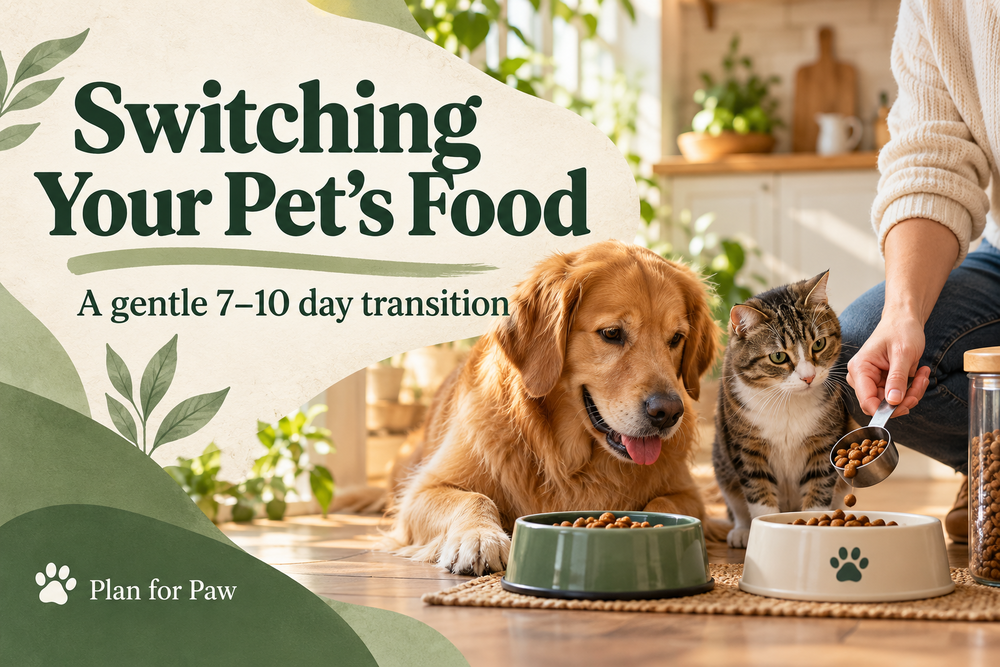
A sudden food change is one of the most common reasons for an upset stomach in dogs and cats. Here is a day-by-day transition plan, what to watch for, and when to slow down.
In short
A sudden food change is one of the most common reasons for an upset stomach in dogs and cats. Here is a day-by-day transition plan, what to watch for, and when to slow down.
Changing food is sometimes necessary — a puppy moving to adult food, a new life stage, a vet recommendation or a brand that has been discontinued. Done overnight, the change often brings loose stools, vomiting or a pet that refuses the new food entirely. Done gradually, most pets barely notice.
The Standard Transition Plan
| Days | Old food | New food |
|---|---|---|
| 1–2 | 75% | 25% |
| 3–4 | 50% | 50% |
| 5–6 | 25% | 75% |
| 7+ | 0% | 100% |
For pets with sensitive stomachs, stretch each stage to three or four days, making the whole switch around two weeks.
Keep Portions Right
Different foods have different calorie densities, so the same cup of a new food is not the same as the old one. Check the feeding guide on the new bag, ideally weigh the food, and calculate each stage by weight rather than by eye. Ask your vet if you are unsure of the right amount for your pet's target weight.
What to Watch For
- Stools: slightly softer stools for a day or two can be normal. Persistent diarrhoea is not.
- Appetite: is your pet eating the full mix, or picking out the old food?
- Vomiting: a sign to slow down or stop.
- Itching or skin changes: over the following weeks, especially for pets with known sensitivities.
- Energy and behaviour: anything out of the ordinary.
If problems appear, go back to the last stage that suited your pet for a few more days before moving on.
Daily Dog Care Tracker
A food change is much easier to judge on paper. Log the ratio, how much was eaten and stool quality each day with the printable Daily Dog Care Tracker — and you will know exactly which stage caused a problem.
Get the Daily Dog Care Tracker →Cats Need Extra Patience
Cats can be very attached to the texture, shape and smell of their food. Some tips:
- Go more slowly than with a dog — two to three weeks is fine
- Warm wet food slightly to bring out the smell
- Offer the new food in a separate bowl next to the old one at first
- Never let a cat go without eating to force a change — cats that stop eating can become seriously unwell. Contact your vet if your cat has not eaten for 24 hours.
When Not to Transition Gradually
If your vet has prescribed a new diet for a medical reason, follow their instructions — some therapeutic diets are switched differently. And if your pet's current food has been recalled, stop using it and ask your vet how to change over.
Common Mistakes
- Switching because a pet seemed bored — most pets do well on a consistent diet
- Changing food and treats at the same time, so you cannot tell which caused a problem
- Adding lots of toppers to tempt a pet, which teaches fussiness
- Not adjusting portions for the new food's calories
Two ways to track a diet change
For dogs, use the Daily Dog Care Tracker. For cats, the Complete Cat Owner Binder includes feeding and litter logs for each cat — exactly what you need to see how a new food is going.
Get the Complete Cat Owner Binder →Frequently Asked Questions
How long should it take to switch pet food?
Seven to ten days for most pets, and up to two or three weeks for cats and pets with sensitive stomachs.
Is it normal for stools to change during a switch?
Slightly softer stools for a day or two are common. Diarrhoea that lasts, blood or vomiting are reasons to slow down and call your vet.
Can I switch between flavours of the same brand without a transition?
Often, but recipes can differ more than the label suggests. A short transition is the safer option.
Printable and fillable PDF templates for pet owners — feeding schedules, health records, training trackers and more.