
Pet Travel Checklist: What to Prepare Before Leaving Home
Prepare travel bookings, route-specific documents, accessible supplies and a safe arrival setup with concrete checklists for the pet's actual journey.
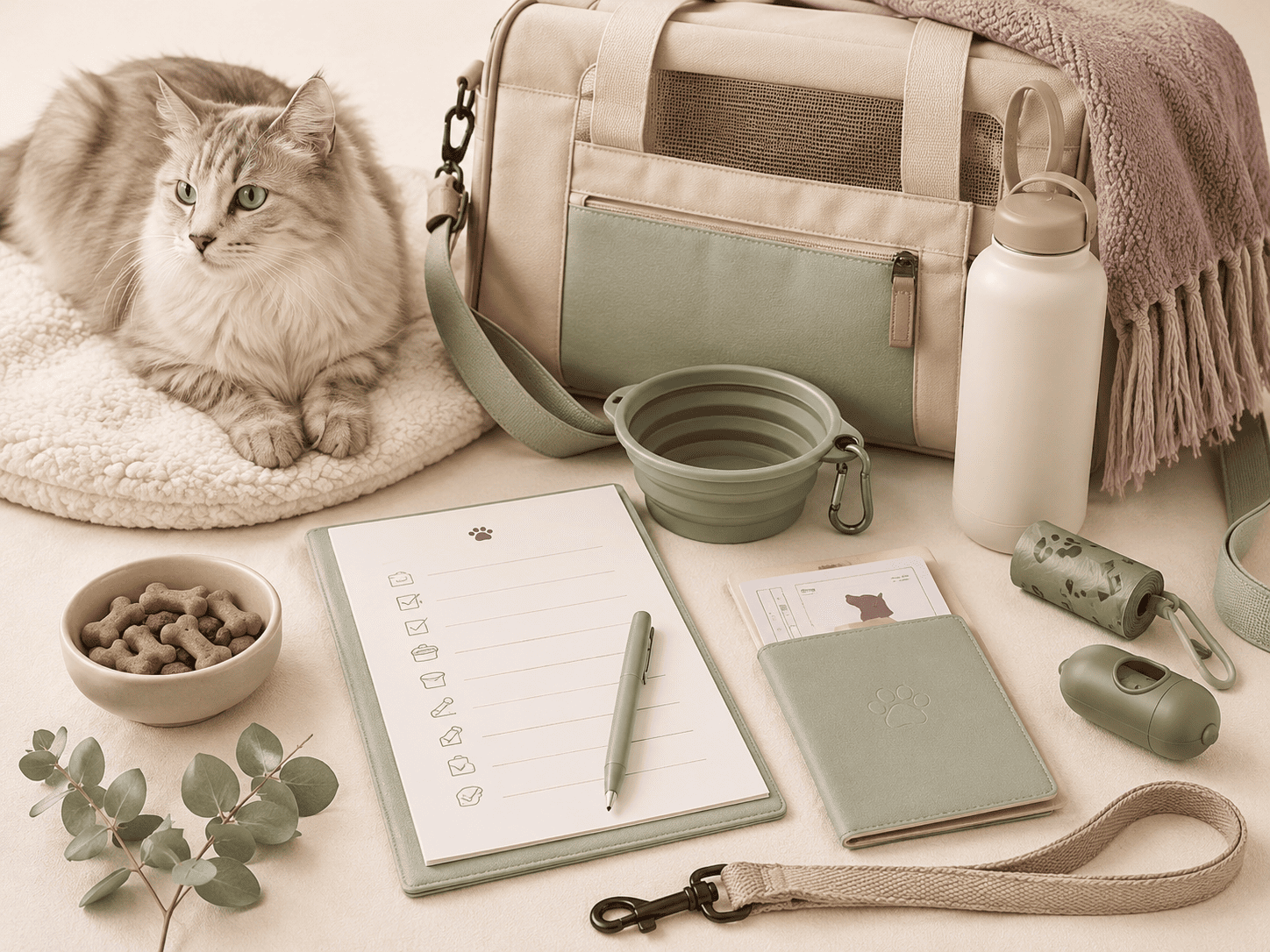
In short
Prepare travel bookings, route-specific documents, accessible supplies and a safe arrival setup with concrete checklists for the pet's actual journey.
A pet travel checklist printable needs to cover the journey, arrival and ordinary care away from home. Packing a bowl is useful, but it will not resolve an unaccepted carrier, missing entry paperwork or accommodation that forbids leaving the pet alone.
Use the checklists below to confirm arrangements before booking, pack by when supplies are needed and prepare a safe arrival. Keep destination, transit and return requirements separate where borders are involved.
Check the booking before paying
- Ask the vet whether the proposed journey suits the pet's health and welfare.
- Confirm the booked operator accepts the species and individual animal on that service.
- Check actual carrier or restraint requirements, not an “approved” label on a product.
- Confirm accommodation rules for your dates, including unattended pets and restricted areas.
- Plan care during activities the pet cannot join.
- Identify veterinary help at the destination.
- Arrange an alternative if transport or accommodation changes.
Give providers details they need to answer accurately, such as species, relevant size and access needs. Keep their written response with the booking. A general pet-friendly advertisement may leave the important restriction unexplained.
Booking question: “For our dates and booked service, could you confirm that [pet details] is accepted, which equipment is required and whether the pet may remain unattended? Please also explain any route or weather restrictions.”
Prepare documents for the actual route
Requirements vary by origin, destination, transit point, species and return route. Check current official animal-health guidance and ask an appropriately authorised vet about required steps. Rules change — verify them with the relevant authority before relying on your travel plan.
| Journey element | Check | Keep accessible |
|---|---|---|
| Departure and entry | Requirements that apply to your species and origin | Required original evidence and useful copies |
| Transit | Whether passing through another place adds requirements | Relevant official guidance and booking details |
| Transport | Operator admission and equipment rules for the service | Written confirmation |
| Return | Any separate requirements or steps during the stay | Confirmed instructions and relevant appointments |
Do not prescribe a universal travel certificate or vaccination requirement. Use the official process for the specific journey. A phone image may be useful for reference, but ask which evidence must be presented in its original form.
Pack the care essentials
Use this list as a packing reference and adapt it to the animal. Bring enough essential supplies for the expected arrangement and a realistic disruption plan, following storage instructions rather than inventing an extra-days rule.
- Established food in suitable packaging, with product identification.
- The familiar measuring tool and serving bowl.
- Suitable water access and a drinking bowl.
- Current prescribed-care supplies and the veterinary directions, where relevant.
- Secure transport equipment appropriate to the animal and service.
- Familiar bedding or another comfortable resting item.
- Identification and the selected owner contact route.
- Waste bags for dogs; suitable litter supplies for cats where required.
- Cleaning materials appropriate to the accommodation and animal.
- Relevant records, emergency contacts and destination address.
Keep treatment equipment tied to the pet's actual veterinary plan. Do not add unfamiliar medicines or wound products simply because a generic packing list mentions first aid. Ask the vet what emergency preparation fits this journey.
Arrange the journey bag by access
Keep what you may need in transit reachable without unloading the entire vehicle or opening a carrier unsafely. Put documents, contact details, appropriate water supplies and necessary care instructions in the accessible part of the packing.
Practise comfortable carrier or restraint use before non-urgent travel. Inspect closures and follow the equipment's securing instructions. The animal should not have its first encounter with an unfamiliar transport setup at the busiest departure point.
- Secure the animal before opening doors or loading luggage.
- Confirm who controls the pet at each transfer.
- Plan suitable stops and care opportunities for the route.
- Keep essential supplies stored as directed and accessible when needed.
- Check arrangements again when a service or route changes.
- Never leave the pet unattended in a parked vehicle.
For distress or illness during the journey, stop where safe and obtain veterinary advice. Emergencies require immediate contact with a vet or emergency clinic. If heatstroke is suspected, begin cooling at once while contacting the vet and follow current veterinary guidance.
Use an arrival checklist before exploring
- Secure doors, windows and unsuitable access areas before changing restraint or opening the carrier.
- Set up a comfortable resting place.
- Provide suitable water and the established feeding arrangement.
- Locate an appropriate dog toilet area or place the cat's litter resources.
- Check relevant hazards such as unsuitable plants, food or accessible cleaning supplies.
- Confirm how veterinary help and transport would be reached from this location.
- Reconfirm care cover for any activity the pet cannot attend.
Let the pet become comfortable with the immediate setup before introducing every new place. A secure room and familiar resources can be more useful than a busy first evening. Follow the individual's response rather than turning arrival into a sightseeing deadline.
Before returning, review supplies and required documents again. A changed route or delayed date may require new confirmation from the operator or authority, even when the outward journey went smoothly.
Example: a pet-friendly room with a restriction
A family plans to take their dog, Ada, to a pet-friendly stay. Before paying, they ask about their actual dates and learn that Ada cannot be left alone in the room. Their planned museum visit therefore needs another arrangement.
They revise the itinerary around activities Ada can comfortably join and confirm suitable care for the remaining gap. The packing list then covers her usual food, transport, rest and toilet needs rather than only travel accessories.
At arrival, they check the door and windows before releasing Ada from the travel setup. They locate the agreed outdoor access and confirm the destination veterinary contact. The checklist connects booking decisions with practical care.
Common mistakes in travel preparation
- Treating pet-friendly as unrestricted access. It can leave the pet without accepted care during outings. Ask about unattended stays and the exact booking.
- Assuming outward paperwork covers the return. Different route rules may apply. Check transit and return separately with the responsible authorities.
- Packing essential items under inaccessible luggage. A delay can make care difficult. Put transit supplies and contacts where they can be reached safely.
Frequently Asked Questions
What if I decide my pet should stay home?
Arrange a suitable carer and leave current instructions, supplies and accepted backup cover. The travel checklist can help identify the decision, but use a separate home-care handover for that arrangement.
Can I rely on an airline-approved carrier label?
Check the booked operator's actual requirements for the service. Construction, dimensions and admission rules may differ from the assumptions behind a retail label.
What should I do if a booking changes?
Reconfirm acceptance, transport equipment, care cover and applicable official requirements. Keep the revised written information with the journey documents.
Should a cat and dog use the same packing list?
Share general headings, then add species-specific transport, toileting and access needs. Cat litter arrangements and dog outdoor toilet access require different practical preparation.
Resources & Links
Check these travel guides for the journey and jurisdiction before completing the route-specific checklist.
- CDC: Pet travel safety — Covers pet travel preparation and relevant US public-health considerations.
- USDA APHIS: Pet travel process overview — Explains the US animal-health travel process and how to investigate destination requirements.
- Cornell University: Dog travel by car, plane and accommodation — Discusses canine travel and stay preparation relevant to packing and booking checks.
The Pet Emergency and Care Info Kit is for owners preparing accessible care information and contact details while away from home. Get the Pet Emergency and Care Info Kit →
Printable and fillable PDF templates for pet owners — feeding schedules, health records, training trackers and more.