
Dog Walking and Potty Log: Why Daily Tracking Helps
Fill a walking sheet with routes, conditions, toileting and practical behaviour notes, then use a completed example to plan comfortable future outings.
In short
Fill a walking sheet with routes, conditions, toileting and practical behaviour notes, then use a completed example to plan comfortable future outings.
A dog walking log printable is useful when you want to remember which route suited your dog, what a walker encountered or when a change first appeared. It should describe the outing clearly without becoming an exercise competition.
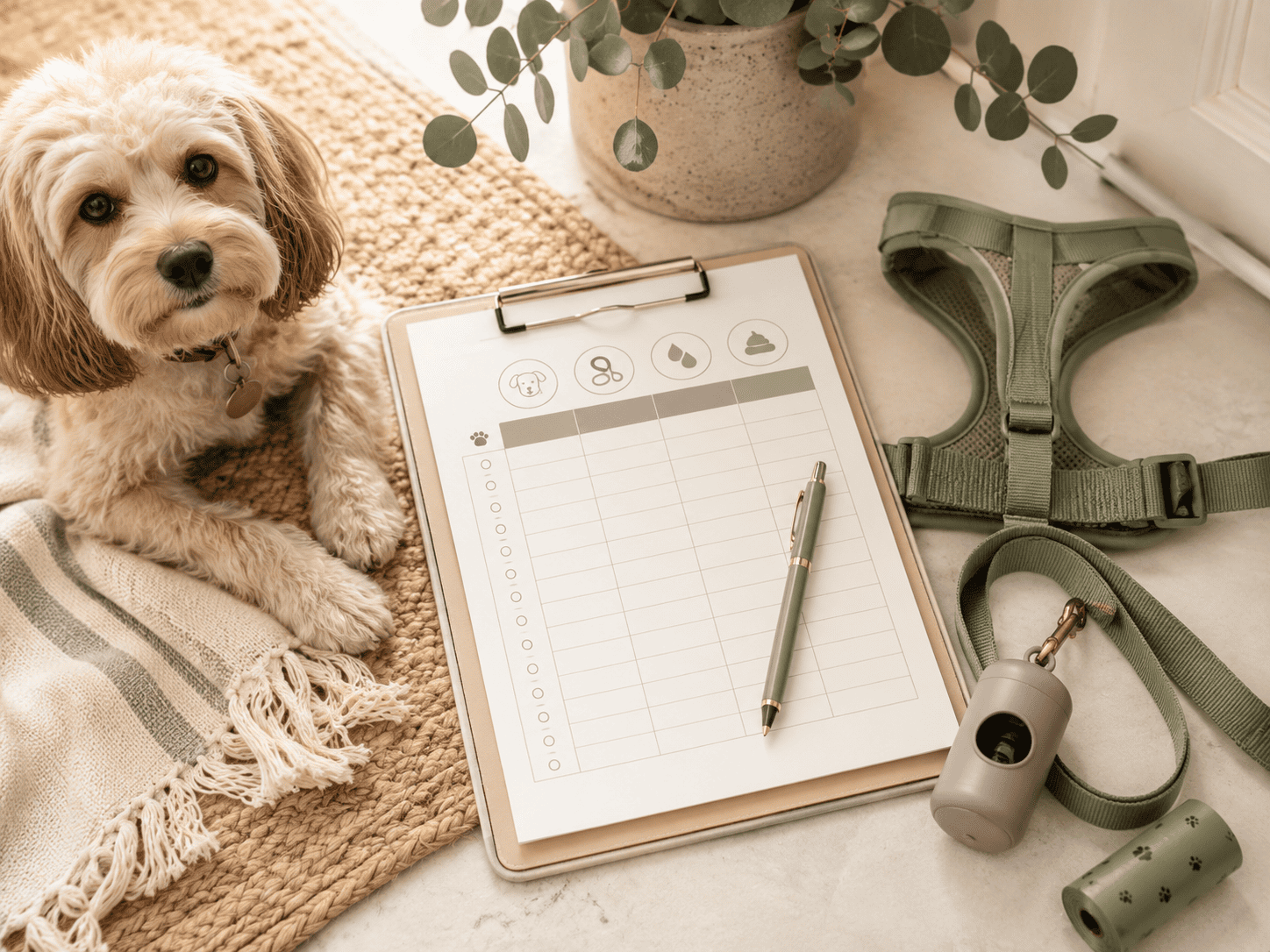
Build each entry around the route, conditions, activity and result. The sample below shows how to fill a page for an ordinary walk and make the next outing more comfortable.
Put useful walk fields on the sheet
Start with the dog's name, date and walker. Use actual departure and return details if they help coordinate care, then leave room for route and conditions. A few meaningful words are more useful than an unexplained mood rating.
- Route: park loop, neighbourhood streets or another identifiable location.
- Conditions: relevant weather, surface or crowding.
- Activity: comfortable walking, sniffing, pauses and appropriate play.
- Toileting: what was observed, including no event observed.
- Encounters: a situation that affected the outing.
- Equipment: an important fit, fastening or damage concern.
- Next action: route adjustment, supply replacement or a concern to discuss.
Skip fields you cannot use reliably, such as precise distance when nobody measures it. Include a separate space for a walk cancelled or changed, so an unused row does not hide whether care was rearranged.
Choose a route for the dog and conditions
Check the planned route before leaving. Consider traffic, access, surfaces, other animals and places to turn back. Use equipment appropriate to the dog and follow the established handling arrangement.
During the outing, allow suitable opportunities to sniff and move comfortably. A log can distinguish an active route from a quieter sniffing outing without ranking one as automatically better. Adapt activity to the individual dog's health and veterinary restrictions where relevant.
| Route feature | What to notice | Useful entry |
|---|---|---|
| Busy entrance | Whether the dog can pass comfortably | Used the quieter gate after school pickup began |
| Steep section | Movement and willingness to continue | Paused on the incline; returned along the level path |
| Rough or wet surface | Footing and relevant equipment condition | Chose the surfaced route when the field became slippery |
| Other animals | Distance and observable response | Moved further away and continued calmly |
Respect local access and lead requirements. Rules vary by place and can change; check the responsible authority or land manager rather than relying on a route used previously.
Write behaviour in a way the next walker can use
Describe the trigger and response instead of labelling the dog. “Barked when a dog approached the narrow gate” gives the next walker something to plan around. “Bad walk” offers no practical information.
Record a helpful adjustment, such as choosing more distance, waiting in a quieter area or ending an unsuitable interaction. Keep teaching reward-based and avoid provoking an encounter to make the log more detailed.
Use positive observations too: a comfortable route, a familiar cue that worked in that setting or an area the dog enjoyed sniffing. This builds a record of useful options rather than a catalogue of problems.
Behaviour note: “A delivery trolley appeared at the narrow pavement. We crossed at the safe crossing and used the wider side. The dog resumed sniffing; choose that side during busy deliveries.”
If a recurring interaction is unsafe or distressing, seek suitable professional help. The log can describe the circumstances without prescribing a training programme beyond the walker's competence.
Keep toileting and comfort observations relevant
Record what the walker actually saw: urination, stool, unusual effort or a change worth reporting. Outdoor urination cannot establish total drinking, so do not use the walking sheet to calculate hydration.
Notice movement and comfort during the actual route. A new limp, reluctance to continue or concerning toileting change needs veterinary advice. Contact a vet or emergency clinic immediately for collapse, breathing difficulty, suspected poisoning, seizures, repeated unproductive retching or straining to urinate.
For suspected heatstroke, start cooling at once while contacting the vet and follow current veterinary guidance. Do not finish the route or the paperwork before obtaining help.
Avoid using successful outings to establish how long the dog can wait without toilet access. The walking log describes opportunities and observations, while care planning should continue to meet the dog's needs.
Fill and use a dog walking log printable
- Identify the dog and walker at the start of the outing.
- Follow the suitable route and established care arrangement.
- Note the actual activity and any relevant change on return.
- Check paws or coat comfortably where appropriate after outside activity.
- Communicate an urgent concern directly rather than leaving it on the page.
- Use useful route notes when choosing the next outing.
Keep completed entries where the people arranging walks can find them. For an owner and paid walker, agree how ordinary reports arrive and what requires a direct call. Essential toilet cover should remain clearly assigned when an outing changes.
At review, compare outings with relevant context. An uphill route in difficult weather may demand a different response from a level route in comfortable conditions. Ask the vet about worrying changes rather than treating a slower entry as a performance failure.
Example: choose the quieter route next time
Rafi usually walks comfortably along a riverside path. During one outing, maintenance vehicles block the familiar entrance and the walker chooses a narrow diversion. Rafi repeatedly stops when people pass close by.
| Entry field | Completed example |
|---|---|
| Route | Riverside diversion through the narrow access lane |
| Conditions | Maintenance traffic and frequent close pedestrian passing |
| Response | Stopped near passing people; moved comfortably after turning back |
| Adjustment | Ended the narrow section and used the wider neighbourhood route |
| Next outing | Check the river entrance before choosing this route |
The record identifies an avoidable route issue without calling Rafi stubborn. If reluctance also appeared in familiar comfortable settings, the owner would discuss that change with the vet instead of attributing everything to the diversion.
Keep the same approach for enjoyable outings. A note that the wider park entrance worked comfortably can help a new walker choose a practical starting route without retesting the difficult lane.
Common mistakes with walking logs
- Using distance as the only measure of a useful walk. It misses comfort, sniffing and conditions. Add the details that help choose appropriate activity for this dog.
- Inferring drinking from outdoor urination. The outing covers only part of the day. Discuss hydration concerns with the vet and supply relevant home observations.
- Leaving an urgent concern only on the printed page. The owner may read it much later. Use the agreed immediate contact route when action is needed.
Frequently Asked Questions
Do I need a GPS distance for every walk?
No. An identifiable route and relevant activity description can be enough. Use distance only when it answers a useful question and is measured reliably.
How do I enter a cancelled walk?
Write the reason and the appropriate care arrangement that replaced it. Identify who accepted the next toilet opportunity so the blank outing does not leave care uncovered.
Should every walker use the same wording?
Agree simple field meanings, especially toileting and completion. Each person can then describe their own outing clearly without having to copy a scripted report.
Is this sheet suitable for puppy toilet training?
It can describe outings, but a puppy-specific toilet log needs event and accident context as well. Keep this sheet focused on walks rather than making it serve every training purpose.
Resources & Links
Use these dog-health sources to understand care concerns raised by the observations on your walk sheet.
- PDSA: Health checks at home — Explains comfortable checking and changes to raise with your practice after an outing.
- Blue Cross: Basic healthcare in dogs — Provides dog-health context for movement, preventive care and concerns described in walking notes.
The Daily Dog Care Tracker is for dog owners keeping everyday care records alongside useful notes from walks. Get the Daily Dog Care Tracker →
Printable and fillable PDF templates for pet owners — feeding schedules, health records, training trackers and more.