
Lost Pet Information Sheet: What to Prepare Before You Need It
A lost pet information sheet takes 10 minutes to prepare and could make the difference if your pet goes missing. Here is exactly what to include — and why having it ready before something happens matters.
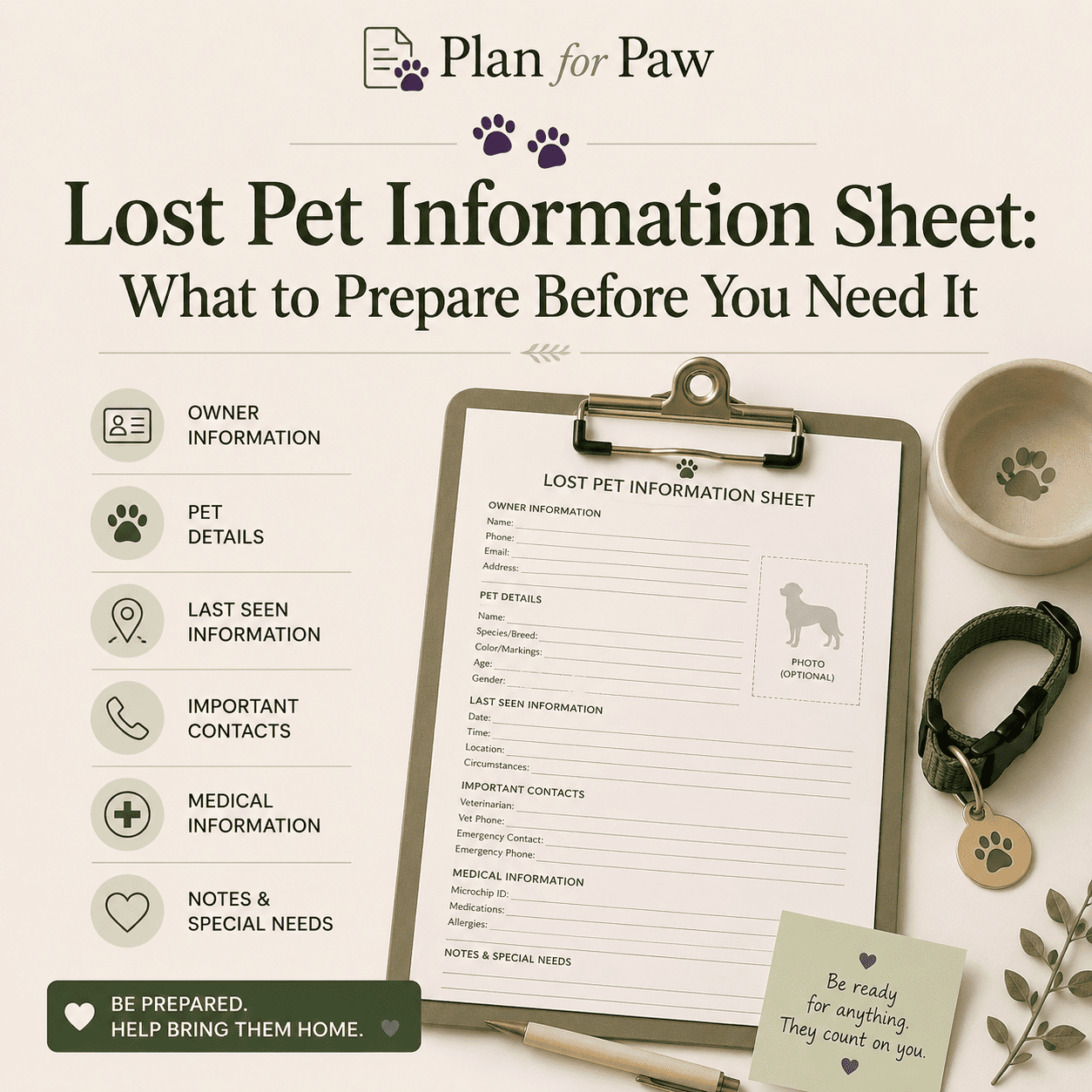
In short
A lost pet information sheet takes 10 minutes to prepare and could make the difference if your pet goes missing. Here is exactly what to include — and why having it ready before something happens matters.
No one wants to think about their pet going missing. But the owners who find their pets fastest are the ones who had a lost pet information sheet ready before anything went wrong — not the ones frantically searching for microchip numbers and trying to remember their vet's phone number at 11pm.
This guide tells you exactly what to put on a lost pet sheet and how to make sure it works if you ever need it.
Why Prepare This in Advance?
When a pet goes missing, panic sets in immediately. The first 24 hours are the most important for recovery. If you are spending that time searching for your dog's microchip number or trying to find the phone number for the local dog warden, you are losing time that matters.
A prepared lost pet sheet means you can act in minutes, not hours.
What to Include on a Lost Pet Information Sheet
1. Recent Photo
Update this every six months. A photo taken last year may not reflect your pet's current coat length, weight or appearance. Include:
- Clear face-on photo
- Side profile photo showing full body
- Any distinctive markings visible in the photos
- Date the photo was taken
2. Physical Description
- Species and breed (or mix)
- Age and weight
- Colour and pattern — be specific ("brindle with white chest" not "brown")
- Distinctive markings: spots, patches, one white paw, scar on left ear
- Eye colour
- Tail description (docked, long, curled, bushy)
- Coat length and texture
- Current collar colour and any tag information
3. Microchip Number
- 15-digit microchip number
- Registry where the chip is registered (Petlog, Microchip Central, etc.)
- Date of registration and whether contact details are up to date
Important: A microchip is useless if your contact details are out of date on the registry. Check this when you update your sheet.
4. Last Seen Information (to be filled in if lost)
Leave this section blank and fill it in only if your pet goes missing:
- Date and time last seen
- Location (street address or map reference)
- Circumstances: escaped garden, bolted on walk, slipped collar
- What your pet was wearing (collar, harness, lead)
- Direction last seen heading
5. Owner Contact Information
- Full name
- Primary phone number
- Backup phone number
- Email address
- Home address
6. Emergency Contacts to Notify
Pre-populate this list so you can work through it quickly if something happens:
- Local vet (notify in case pet is brought in injured)
- Nearest emergency 24-hour vet
- Local animal shelter or rescue
- Council dog warden number
- Local Facebook lost pets groups (note the group names)
- Nextdoor or local community board
7. Reward Note (optional)
If you are willing to offer a reward, note this on your sheet to add to found posters quickly. Some owners note a reward amount; others leave it blank to add later.
What to Do If Your Pet Goes Missing
- Search the immediate area first — most pets are found within a few streets
- Call your microchip registry immediately to report missing
- Notify your vet and the nearest emergency vet
- Contact the local council dog warden
- Post on local Facebook groups and Nextdoor with your photo and description
- Put a worn item of clothing near your front door — your scent can help a dog navigate home
- Leave the garden gate open at night (supervised) so a dog can return if they find their way back
Pet Emergency & Care Info Kit
Includes a printable and fillable lost pet information sheet, emergency contacts card and pet ID template — ready to fill in now and use if it is ever needed.
Get the Pet Emergency Card →Frequently Asked Questions
What information should a lost pet poster include?
A clear recent photo, pet name, breed and description, last seen location and date, your phone number and whether a reward is offered. Keep the text minimal — people scan posters, they do not read them.
What is the fastest way to find a lost dog?
Notify your vet, microchip registry and local dog warden immediately. Post in local Facebook groups with a photo. Walk the last seen area calling their name at night (quieter, they may hear you better). Most dogs found quickly were located through social media posts in local groups within the first 24 hours.
Printable and fillable PDF templates for pet owners — feeding schedules, health records, training trackers and more.