What to Put in a Puppy Starter Kit Binder
Build a small puppy binder for collection paperwork, current feeding, care cover and useful logs, adding pages only when they answer a real household question.
In short
Build a small puppy binder for collection paperwork, current feeding, care cover and useful logs, adding pages only when they answer a real household question.
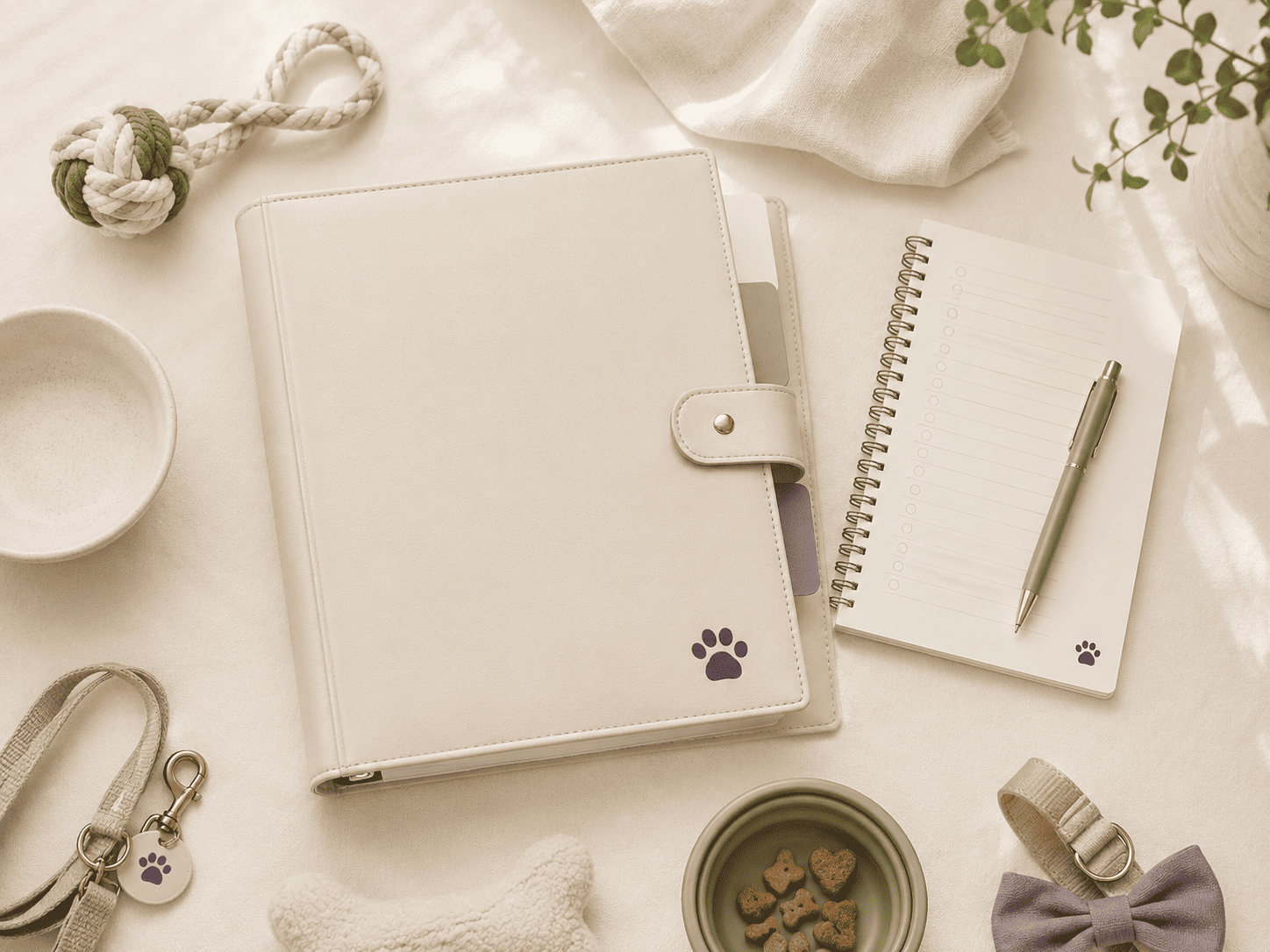
A puppy starter kit binder is useful when collection paperwork, daily notes and household instructions arrive at once. Its job is to help you care for the puppy and find evidence, not to create a stack of forms you feel obliged to complete.
Start with the pages needed for arrival and the ordinary routine. Add other sections as they become relevant, using confirmed information rather than copying sample answers or guessing veterinary dates.
Open the binder before the puppy comes home
Prepare an identity page and contact sheet while you still have time to ask questions. Leave unknown information labelled unknown. The puppy's name can be updated later; missing food instructions or emergency contacts need resolving before care depends on them.
Collect documents from the breeder or rescue in one clearly identified section. Keep original certificates and clinic paperwork recognisable. Your own collection checklist can record which documents were received and which are still being requested.
- Create the puppy profile and veterinary contact page.
- Record the previous carer's actual feeding information.
- Assign supervision, toilet access and arrival responsibilities.
- File collection documents without inventing missing details.
- Add a page for unresolved questions and their sources.
- Prepare a simple daily note sheet for the household.
Keep account passwords and private access credentials outside the binder. A folder you may take to a class or leave for a helper should not become a copy of every household secret.
Choose starter pages by the decision they support
A shopping checklist answers what is ready before arrival. A routine planner answers who provides care. A completed log answers what happened. Keeping those purposes separate prevents an attractive plan from being mistaken for evidence.
| Starter page | Useful job | When it stops helping |
|---|---|---|
| Preparation checklist | Confirm safe essentials and unresolved purchases | When arrival preparation is complete; archive it |
| Feeding reference | Identify established food, preparation and source | Replace when the confirmed arrangement changes |
| Care cover planner | Assign actual supervision and handovers | Revise when availability changes |
| Toilet log | Connect opportunities, events and outcomes | Reduce when it no longer answers a useful question |
| Veterinary questions | Keep missing evidence and concerns visible | File the answer once the question is resolved |
| Training notes | Record a reward-based skill in its setting | Retire an unused field instead of fabricating progress |
Do not promise a fixed collection of tasks must be completed in the first month. Veterinary appointments, registration processes and household preparation have different requirements. Confirm what applies to your puppy with the responsible source.
Make the routine usable by another household member
Write the established feeding arrangement in terms another person can reproduce. Identify the actual food container and measuring method. Keep veterinary directions available where applicable rather than rewriting them into an improvised routine.
Plan toilet opportunities around relevant events and the puppy's needs. Name the adult responsible for each care period and agree how responsibility transfers. A planned rest period is not a substitute for supervision or cover while everyone is away.
Record actual completion after the task. A household member should be able to distinguish the next planned meal from one already served. Include observations such as food remaining or an outing with no result, rather than marking every offered task successful.
Use the routine planner to expose gaps in your own availability. If a work call overlaps care, arrange a consenting backup or change your arrangements. Adding another printed reminder cannot provide the missing person.
Keep health evidence apart from training progress
Use a health tab for clinic documents, vaccination evidence and current written instructions. Mark future recommendations as recommendations and confirmed appointments as appointments. Do not copy a guessed booster date into the calendar as if the clinic supplied it.
Write owner observations in ordinary terms and list questions for the practice. New appetite, toileting or movement changes should not be scored as failures in a training chart. Ask the veterinary team about concerns and how urgently they need assessment.
A training page should describe the cue, setting, reward and comfortable response. It can preserve homework from an appropriate reward-based professional, but it cannot replace help with fear or unsafe interactions. Stop and make a difficult exercise easier rather than expecting the chart to justify persistence.
Keep early-experience plans individual. Ask the vet how to balance positive exposure with vaccination status and local risks. The binder can capture that advice without prescribing the same experience calendar for every puppy.
Build a small handover packet from the binder
A temporary helper needs the current routine, supplies, safe access arrangement and relevant contacts. They do not necessarily need old shopping receipts or every training note. Copy the pages that support their accepted role and date the packet.
Demonstrate ordinary tasks while you can answer questions. Ask the helper to locate food, identify the puppy's safe area and explain whom they would contact if a care task could not be completed. Resolve the uncertainty instead of merely adding more pages.
Helper cover note: “Use the routine page dated [date]. I have completed [tasks]. You are covering [care period]. The collection documents remain in the health tab; any unanswered veterinary question is marked pending.”
After the cover period, ask what was last completed and what remains unresolved. Archive temporary dates and exceptions. A previous sitter's special arrangement should not silently become the puppy's permanent routine.
Example: turn collection paperwork into a working kit
On collection day, Leo's owners receive a feeding note and a clinic document. They put the feeding note beside the current household routine and file the clinic evidence under Leo's name. A question about future care goes on the pending list for the practice.
Daily toilet notes stay near the care area because that is where both adults can record events. At review, they file completed sheets behind the current page. They do not keep copying the same meal into separate routine, toilet and training tables.
When a relative covers an afternoon, the owners prepare a small care packet and demonstrate the supplies. The relative finds the next task without reading the entire collection archive. The binder works because the pages support distinct jobs.
Common mistakes with puppy starter binders
- Building an elaborate archive before arranging supervision. Filing cannot cover the puppy's care. Establish responsibilities first, then organise the evidence around those tasks.
- Writing guessed veterinary dates as confirmed bookings. Another person may rely on inaccurate timing. Ask the practice and label pending questions until the plan is confirmed.
- Keeping finished shopping pages among active care sheets. They distract from what needs doing now. Archive completed preparation and leave the working pages prominent.
Frequently Asked Questions
Should I print the entire kit before collection?
Print the pages that support immediate preparation and care. Check the other sections as needs emerge, rather than making every unused tracker look like an unfinished responsibility.
Where should breeder or rescue paperwork go?
Keep it under the puppy's identity in the relevant evidence section. Reference any current feeding or care information from the working page without losing the source document.
Can the same binder grow with my dog?
Yes. Retire puppy-specific working pages when they stop helping and preserve useful history. Rename active sections around the dog's current care instead of leaving an outdated routine at the front.
How do I decide whether to add another tracker?
Name the question it will answer and who will use the result. If you cannot identify either, a short note or existing page may be sufficient.
Resources & Links
These sources help you prepare the puppy routine and care questions organised in a starter binder.
- PDSA: Toilet training your puppy — Supports the toilet-opportunity page with positive teaching and appropriate access.
- PDSA: Basic training for puppies — Explains reward-based learning to use when choosing simple early training notes.
The New Puppy Starter Kit is for households preparing a working set of puppy care information before adding an extensive archive. Get the New Puppy Starter Kit →
Printable and fillable PDF templates for pet owners — feeding schedules, health records, training trackers and more.