
The Puppy Socialisation Window: What to Do Before 16 Weeks
The period between 3 and 16 weeks is the most critical in a dog's life for long-term behaviour. Here is exactly what to do with that time — and what happens if it is missed.
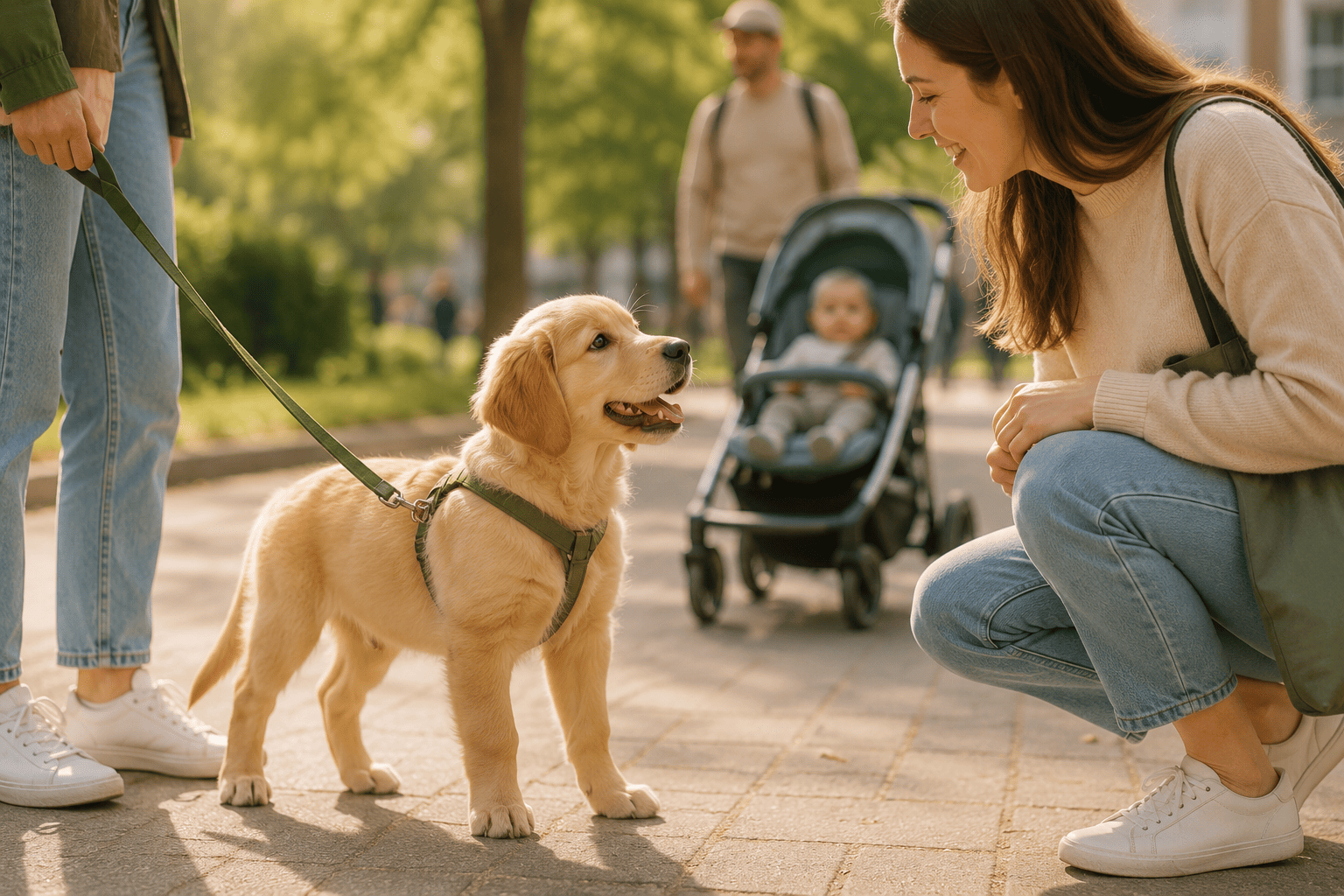
In short
The period between 3 and 16 weeks is the most critical in a dog's life for long-term behaviour. Here is exactly what to do with that time — and what happens if it is missed.
Puppy socialisation is one of those concepts that sounds simple — let your puppy meet things — but is easy to underestimate or get wrong. The stakes are higher than most new owners realise. The experiences a puppy has (and does not have) before 16 weeks shape their behaviour for the rest of their life in ways that are very difficult to reverse later.
What the Socialisation Window Is
Between approximately 3 and 16 weeks of age, puppies have a unique neurological openness to new experiences. During this period, they can encounter novel sounds, surfaces, people, animals and situations and accept them as normal parts of the world — with minimal fear response. After this window closes, unfamiliar things are met with much more caution and sometimes outright fear.
This does not mean a dog socialised after 16 weeks will definitely be fearful. It means the effort required is significantly greater, and the results are less reliable.
The Vaccination Problem
Most puppies are not fully vaccinated until 12–14 weeks. The traditional advice — keep puppies at home until vaccination is complete — directly conflicts with the socialisation window. Vets increasingly recommend a balanced approach: managed, low-risk socialisation before full vaccination is completed, weighing the behavioural risk of under-socialisation against the disease risk of exposure.
Practical low-risk options before full vaccination:
- Carry your puppy in areas where they cannot walk on the ground
- Visit homes of vaccinated, healthy dogs
- Attend puppy classes that require vaccination records for all attendees (the socialisation benefit outweighs the small risk for most puppies)
- Car trips, exposure to traffic, markets, and different environments — without ground contact in high-dog-traffic areas
Discuss the specific timing with your vet based on your puppy's vaccination schedule and your local disease risk.
What to Socialise Your Puppy With
The goal is breadth, not just depth. A puppy who has met ten different people in similar settings is less well socialised than one who has encountered a wide variety.
People
- Men with beards and hats
- Children of different ages (carefully managed)
- People in uniform, high-vis jackets, helmets
- Elderly people with mobility aids
- People with different appearances and voices
Sounds
- Traffic, lorries, motorbikes
- Thunder and fireworks (sound recordings at low volume)
- Vacuum cleaners, washing machines
- Shouting, crying children, crowds
- Construction and power tools
Surfaces and Environments
- Wet grass, gravel, wood floors, metal grating
- Stairs (up and down)
- Lifts
- Car journeys
- Town centres, car parks, markets
Animals
- Calm, vaccinated adult dogs (at home)
- Cats (if safely managed)
- Other species if relevant to your lifestyle — horses, livestock
How to Do It Well
Exposure alone is not enough — the experience must be positive, or neutral at worst. A puppy that is frightened by something during the socialisation window can develop a lasting fear of it.
- Keep sessions short — 10 to 15 minutes is enough for a young puppy
- Watch your puppy's body language — ears back, tail tucked, freezing, or trying to move away are signs to increase distance
- Use treats and calm praise to build positive associations
- Do not force interaction — let the puppy approach on their own terms
- Log what you have done: it is easy to think you have covered more than you have
The Fear Period
Within the socialisation window, there is also a "fear imprint period" at around 8–10 weeks where a single frightening experience can have a disproportionate impact. This typically coincides with the week many puppies come home. Keep things calm during the first few days — this is not the time for a large family gathering or a loud fireworks display.
What Happens If Socialisation Is Missed
Under-socialised dogs are more likely to show fear and reactivity to things they were not exposed to as puppies — strangers, other dogs, traffic, handling. This is not a character flaw; it is a developmental outcome. Behaviour modification work with a qualified behaviourist can help, but it is slower and less complete than early socialisation. The window matters.
New Puppy Starter Kit
Includes a socialisation checklist, first week planner, daily routine tracker and potty log — so you can track every experience your puppy has during this critical period.
Get the New Puppy Starter Kit →Frequently Asked Questions
Is it too late to socialise my 5-month-old puppy?
Not too late to make improvements, but the window has closed. Work with a qualified trainer to build positive associations with things your dog finds challenging. Progress is possible — it just requires more time and consistency.
How many new things should my puppy meet each week?
There is no exact number, but aim for variety rather than volume. A few well-managed, positive experiences across different categories each week is more valuable than dozens of brief, chaotic ones.
Printable and fillable PDF templates for pet owners — feeding schedules, health records, training trackers and more.