
Pet First Aid Kit Checklist: What Every Owner Should Keep at Home
A pet emergency can happen at any moment. This checklist covers everything your first aid kit needs — from bandages to emergency contacts — so you're never unprepared.
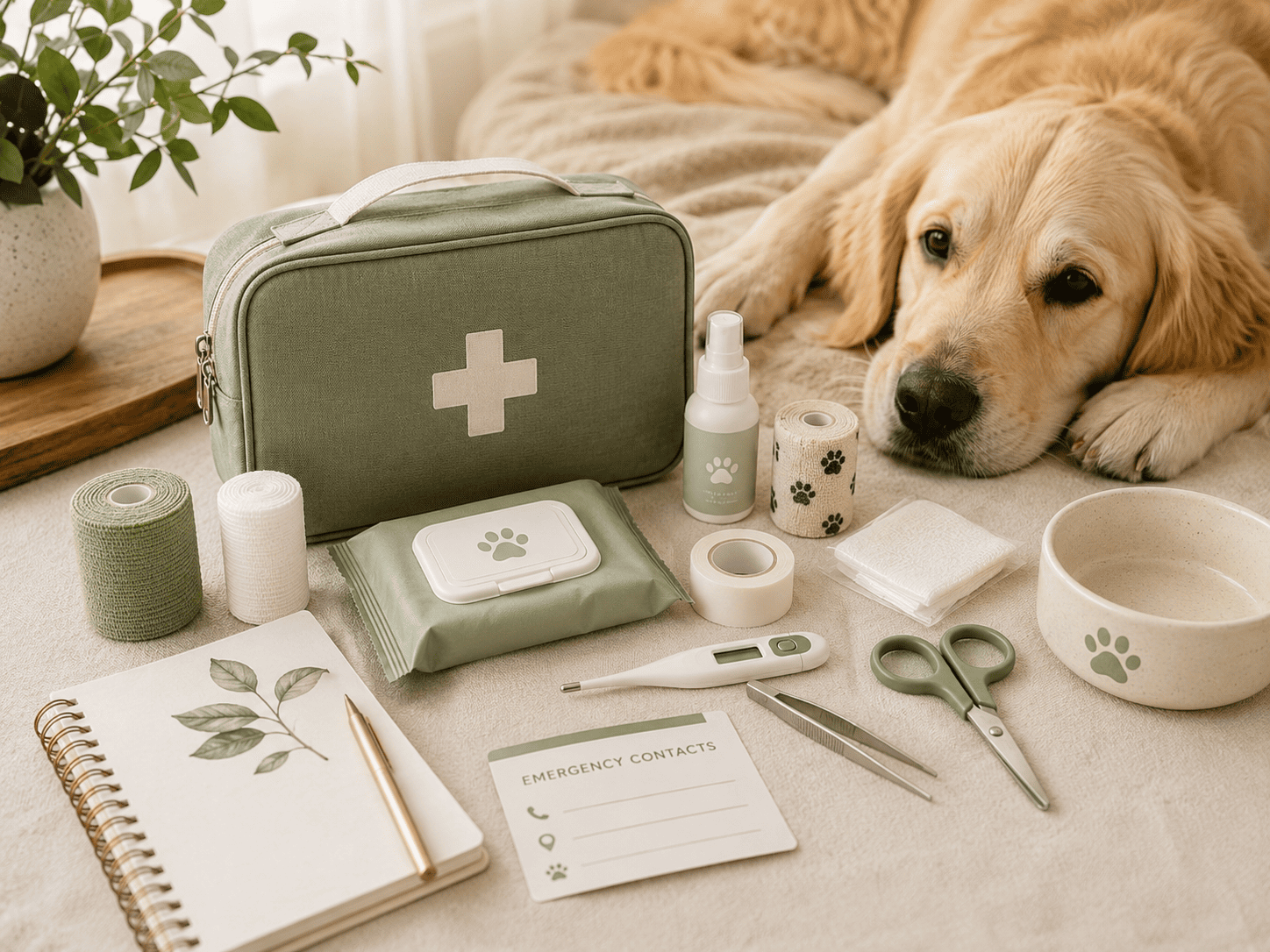
In short
A pet emergency can happen at any moment. This checklist covers everything your first aid kit needs — from bandages to emergency contacts — so you're never unprepared.
Emergencies don't give warnings. A dog that swallows something it shouldn't, a cat with a deep scratch, a puppy that burns its paw on hot pavement — any of these can happen on a Sunday afternoon when your vet is closed.
A good pet first aid kit won't replace veterinary care, but it buys you time and keeps your pet comfortable until you can get professional help.
What to Keep in Your Pet First Aid Kit
Wound Care
- Gauze pads and rolls — for covering wounds and controlling bleeding
- Self-adhesive bandage wrap (like Vet Wrap) — sticks to itself, not to fur
- Sterile saline solution — for rinsing eyes and flushing wounds
- Antiseptic wipes — alcohol-free, pet-safe formulas only
- Tweezers — for splinters or visible foreign objects (never probe deep wounds)
- Blunt-tip scissors — to cut bandages and trim fur around a wound
Monitoring and Examination
- Digital rectal thermometer — a pet's normal temperature is 38–39°C (100.5–102.5°F)
- Lubricant (like KY jelly) — for taking temperature safely
- Magnifying glass — for spotting thorns, glass or ticks in paw pads
- Penlight or small torch — to check inside ears, mouth and throat
Medication and Treatment
- Activated charcoal tablets — only use if directed by your vet for certain toxin ingestion
- Hydrogen peroxide 3% — sometimes used to induce vomiting (vet guidance only)
- Antihistamine tablets — for allergic reactions; check dose with your vet in advance
- Eye wash — sterile, single-use pods
Practical Items
- Latex or nitrile gloves — protect you and the wound from contamination
- Muzzle — even the gentlest dog may bite when in pain; know the correct size for your pet
- Slip lead or spare lead — to safely restrain a pet in an emergency
- Foil emergency blanket — prevents shock and keeps an injured pet warm
- Syringe (no needle) — for giving liquid medication or flushing wounds
Documents to Include
- Your vet's phone number and address
- Nearest emergency veterinary clinic (24-hour)
- Your pet's current medications and doses
- Known allergies
- Microchip number
Good ready-made option: Pet First Aid Kit on Amazon — most include the basics and are compact enough for home and travel. Check that it includes gauze, bandage wrap and gloves as a minimum.
Where to Keep Your Kit
Keep one kit at home (ideally in the kitchen or bathroom) and a smaller travel version in your car. If you walk your dog in remote areas, a compact kit for your bag is also worth having.
Don't Forget: Written Emergency Information
A first aid kit is only half the picture. The other half is knowing who to call and what information to have ready. Keep a printed Pet Emergency Card with your kit — your vet's number, your pet's blood type (if known), current medications, microchip number and two emergency contacts.
If you have multiple pets or a complex medication schedule, a Pet Health Record Binder makes it much easier to brief a vet quickly in an emergency.
First Aid Skills Matter Too
Products alone aren't enough. Consider taking a pet first aid course — many animal welfare organisations run them online and in person. Knowing how to muzzle safely, how to move an injured animal without causing further damage, and the basics of CPR for pets can genuinely save a life.
Summary Checklist
| Item | Essential? |
|---|---|
| Gauze and bandage wrap | ✓ Yes |
| Sterile saline | ✓ Yes |
| Thermometer | ✓ Yes |
| Gloves | ✓ Yes |
| Muzzle | ✓ Yes |
| Emergency contacts (printed) | ✓ Yes |
| Activated charcoal | Ask your vet first |
| Antihistamine | Ask your vet for dosing |
Keep your kit stocked, your emergency numbers written down, and your pet's records in order. That preparation costs very little — and in a real emergency, it's everything.
Printable and fillable PDF templates for pet owners — feeding schedules, health records, training trackers and more.