
Pet First Aid: What Every Owner Should Know Before They Need It
A pet emergency gives you seconds to react. Knowing basic first aid could be the difference between a good outcome and a devastating one.
In short
A pet emergency gives you seconds to react. Knowing basic first aid could be the difference between a good outcome and a devastating one.
Pet First Aid: What Every Owner Should Know Before They Need It
A pet emergency gives you seconds to react. Knowing basic first aid — and having the right supplies — could make a critical difference. None of this replaces emergency veterinary care, but it can stabilise your pet until you reach help.
Build a Pet First Aid Kit
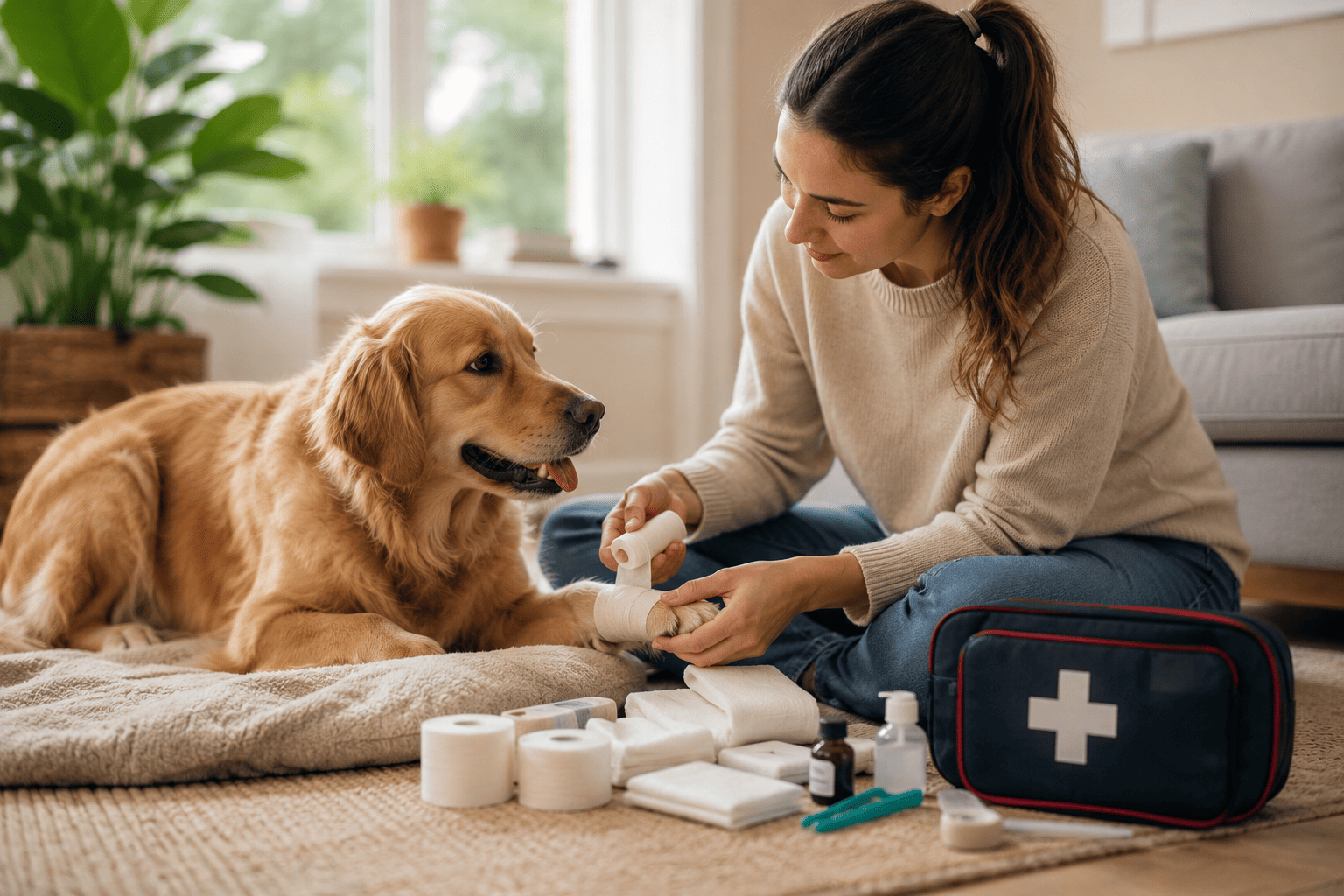
Keep one at home and one in your car. Include:
- Sterile gauze pads and bandages
- Adhesive tape
- Blunt-ended scissors
- Digital thermometer (rectal)
- Saline solution for wound flushing
- Disposable gloves
- Tweezers (for ticks and splinters)
- Your vet's number and nearest 24-hour emergency clinic
- A muzzle
- Blanket or foil emergency blanket
Know Your Pet's Normal Baseline
- Resting heart rate: Dogs 60–140 bpm; Cats 140–220 bpm
- Resting breathing rate: 15–30 breaths per minute
- Normal temperature: 38–39.2°C for both dogs and cats
- Gum colour: Should be pink and moist
Common Emergencies and First Response
Choking: Look in the mouth for visible obstruction. Do not blindly sweep with fingers. Get to a vet immediately.
Heatstroke: Move to shade. Apply cool (not cold) water to the body. Vet immediately.
Bleeding: Apply direct pressure with gauze for at least five minutes. Vet immediately for deep wounds.
Suspected poisoning: Do not induce vomiting unless instructed by a vet. Call the Animal Poison Line. Time matters.
Seizure: Do not restrain. Move nearby objects. Time the seizure. If longer than 5 minutes — emergency vet immediately.
The Most Important Rule
First aid buys you time. It does not replace veterinary care. When in doubt, call your vet.
Printable and fillable PDF templates for pet owners — feeding schedules, health records, training trackers and more.