
New Kitten Checklist: Everything to Prepare Before Bringing a Kitten Home
Prepare a quiet kitten room, essential supplies, safe transport and collection questions, with a hazard check and practical steps for a calm arrival.
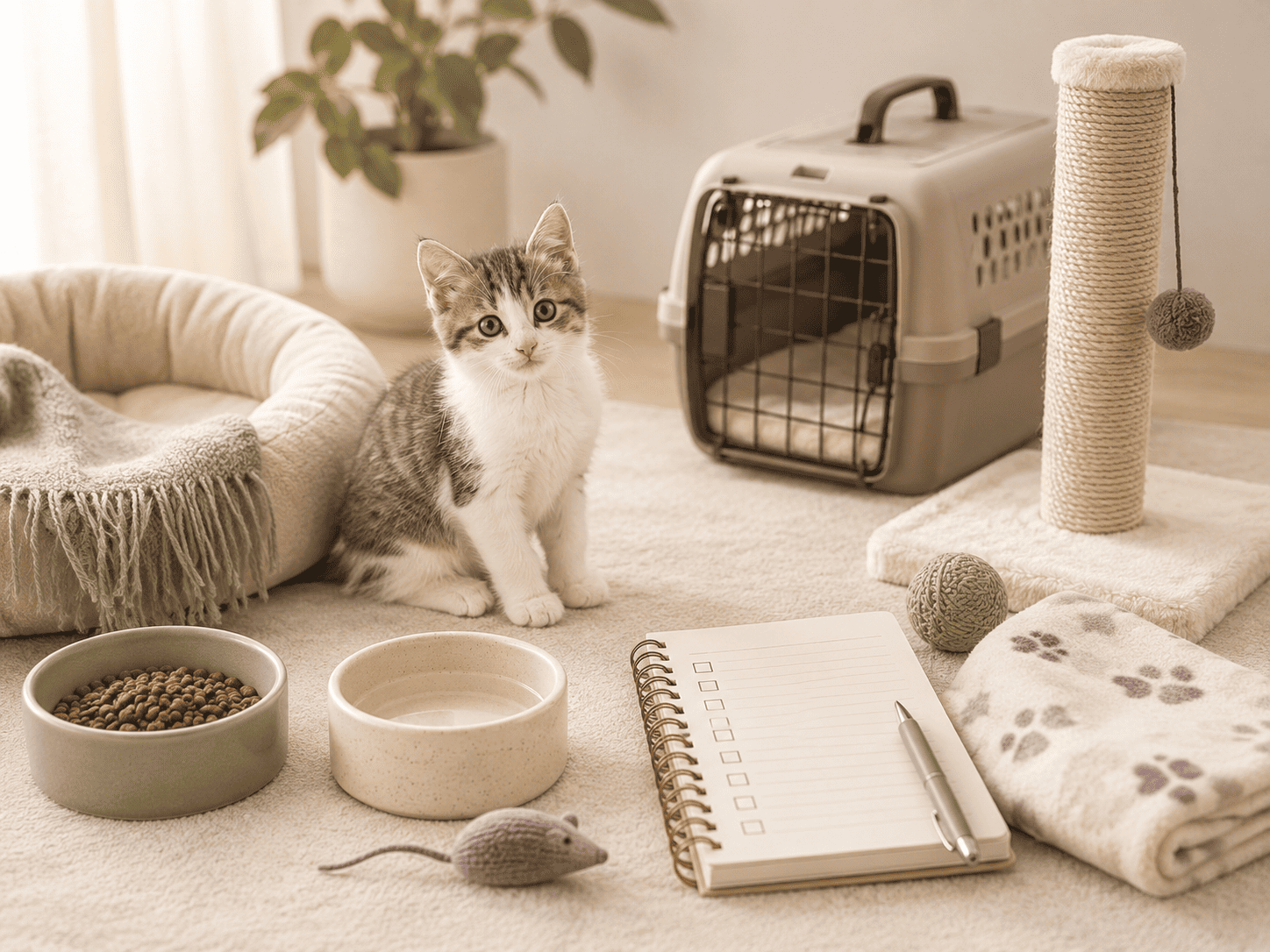
In short
Prepare a quiet kitten room, essential supplies, safe transport and collection questions, with a hazard check and practical steps for a calm arrival.
A new kitten checklist should help you prepare a usable home before collection, not just fill a shopping basket. Start with secure transport, familiar food and litter information, then set up a quiet space where the kitten can rest, eat and toilet comfortably.
The checklist below separates essentials from things you can add later. It also covers questions for the previous carer, household hazards and the first veterinary discussion.
Ask these questions before collecting the kitten
Contact the rescue, breeder or previous carer while there is time to resolve important details. Ask for the actual products and routine the kitten knows, along with relevant health documents and the next appropriate contact for unanswered questions.
- Which food and variety is the kitten eating, and what is the established feeding arrangement?
- Which litter and tray setup are familiar, and is that product suitable for this kitten?
- Which veterinary documents will accompany the kitten?
- Is there any current prescribed care, and who can explain it?
- Which identification or ownership-transfer steps need completing?
- What handling and ordinary household experiences have been comfortable?
- Who should you contact if a question appears after collection?
Keep the supplied documents available for the receiving vet. Avoid inventing missing vaccination or treatment dates. Arrange a veterinary discussion appropriate to the kitten and any concern before planning interactions with resident animals.
Prepare a quiet first room
Choose a secure room you can make comfortable and easy to supervise. A room full of cleaners, open appliance spaces or unsafe windows needs changes before it becomes a kitten room. Separate food, water, resting and toileting resources suitably.
- Comfortable bedding in a quiet accessible place.
- A safe hiding option, such as a suitable box or covered resting place.
- Food and water resources easy for the kitten to reach.
- An accessible litter tray in a suitable location away from feeding resources.
- A stable scratching surface appropriate to the kitten.
- Safe play space and secure storage for toys after supervised use.
- Closed or securely protected windows and a clear door routine.
Check the hiding option is safe and reachable if help is required. Block hazardous gaps without removing every retreat. The kitten should have a choice about approaching you rather than being kept on display.
Buy the essentials before optional accessories
| Job | Useful essential | What to check |
|---|---|---|
| Transport | Secure suitable carrier | Closures, comfortable size and safe use |
| Feeding | Established food, bowls and measuring equipment | Exact variety and current preparation instructions |
| Toileting | Suitable tray, litter, scoop and disposal supplies | Access and product suitability for the kitten |
| Rest | Comfortable bedding and a hiding option | Safe location and easy access |
| Scratching | Stable suitable scratching surface | Whether it stays steady during use |
| Play | Simple appropriate supervised toys | Loose parts, damage and storage afterwards |
Ask about tools and coat care before purchasing a grooming set. A kitten's size and coat affect what is suitable. Large climbing furniture can wait until you have checked stability, access and how the kitten uses the room.
Choose litter on suitability and the familiar arrangement, not fragrance or a universal assumption about clumping products. Discuss a needed change with the previous carer or vet, particularly for a young kitten that may investigate or ingest litter.
Walk through the hazards before arrival
- Secure household chemicals, medicines and unsuitable food in closed storage.
- Check plants against reliable toxicity information and remove hazards.
- Put away loose strings, cords and small swallowable objects.
- Check windows, balcony access, screens and doors.
- Block dangerous spaces around appliances or furniture.
- Keep appliances closed and check before use.
- Discuss the safe room and door routine with everyone at home.
Include children and visitors in the access rules, with an adult responsible for care and safety. Toys that need supervision should return to secure storage after play. Recheck the room after ordinary household activity, because an open bag or newly placed item can change the setup.
For suspected poisoning, breathing difficulty, collapse, seizures or straining to urinate, contact a vet or emergency clinic immediately. Keep contact information available before collection rather than searching during an incident.
Make the journey and arrival calm
Secure the kitten in suitable transport equipment and follow its instructions for the journey. Do not open the carrier in an unsecured vehicle or busy transfer area. Bring the relevant handover documents and familiar supplies.
At home, secure the first room before opening the carrier. Allow the kitten to approach the surroundings at a comfortable pace. Keep food, water, tray and retreat accessible while avoiding a crowd around the arrival.
Use quiet, manageable interaction and suitable play when the kitten is ready. Do not pull the kitten from a hiding place to introduce visitors. Gradual access to more space should follow comfort and safe supervision, not a fixed settling deadline.
Plan introductions to resident pets carefully rather than allowing an uncontrolled meeting at the carrier door. Ask for individual veterinary or appropriate behaviour guidance when health status or interactions need assessment.
Prepare the first veterinary conversation
Take the supplied clinical documents and a concise list of questions. Ask about appropriate feeding, vaccination arrangements, identification, parasite prevention, neutering where relevant and safe early experiences. Use the plan given for this kitten rather than a generic calendar.
Tell the practice about appetite, toileting, movement or behaviour concerns you have noticed. Ask how prescribed care should be performed safely if applicable. Request a demonstration for unfamiliar handling or maintenance tasks.
Appointment question: “These are the records we received and the food and litter the kitten knows. What care should we arrange next, which missing documents matter and how should we plan safe introductions at home?”
File the practice's response, update the home instructions and follow up any missing record.
Example: choose a safe retreat over an unused bed
Olive's new owners prepare a soft bed and a secure hiding box in the first room. Olive chooses the box after arrival. The family leaves it available and keeps her food, water and litter resources accessible.
They postpone an excited visitor's introduction and offer calm company nearby. The shopping list is considered ready because Olive's needs are covered, not because she uses every purchased item.
After the veterinary discussion, the owners add the confirmed care arrangements to their checklist. A planned climbing accessory remains optional until they can choose a stable suitable setup.
Common mistakes in kitten preparation
- Buying accessories before preparing a safe room. A full basket does not secure windows or remove hazards. Complete the room check first.
- Insisting the kitten use a purchased bed. It removes comfortable choice during arrival. Keep a safe retreat available and let preference guide later purchases.
- Choosing litter solely by marketing claims. Products differ in suitability. Check the familiar product and ask for kitten-specific advice before substituting.
Frequently Asked Questions
Do I need a cat tree immediately?
Prioritise secure transport, accessible resources, rest and safe scratching. Add climbing furniture when it is suitable, stable and manageable for the kitten and room.
Should the kitten meet my other pet on arrival?
Prepare a controlled introduction plan rather than opening the carrier into a meeting. Seek individual advice about health status and interactions, keeping the first resting area secure.
What if the rescue and shop recommend different litter?
Ask why the recommendations differ and check suitability with the provider or vet. Familiarity can help, but it should not override a safety concern about the actual product.
Can I wait until collection day to buy a carrier?
Prepare and inspect it beforehand. Knowing how the carrier closes and is secured makes the collection journey easier to plan safely.
Resources & Links
These feline welfare and veterinary guides support the room setup and care questions on the kitten checklist.
- Cornell University: Choosing and caring for a new cat — Covers preparation and feline care considerations useful before the kitten arrives.
- Cornell University: Feline vaccines, benefits and risks — Provides background for the vaccination discussion with the receiving veterinary practice.
- PDSA: Creating a cat-friendly home — Explains suitable home resources and locations when preparing the kitten's first room.
The New Pet Shopping Checklist is for households preparing suitable essentials before bringing a new kitten home. Get the New Pet Shopping Checklist →
Printable and fillable PDF templates for pet owners — feeding schedules, health records, training trackers and more.