Is My Pet Overweight? Simple Signs Every Dog or Cat Owner Should Watch
Obesity is the most common preventable health condition in pets — and one of the most underrecognised. Here is how to tell if your dog or cat is carrying too much weight, and what to do about it.
In short
Obesity is the most common preventable health condition in pets — and one of the most underrecognised. Here is how to tell if your dog or cat is carrying too much weight, and what to do about it.
This article is for educational purposes only and does not replace professional veterinary advice. If you have concerns about your pet's weight or health, please consult your vet.
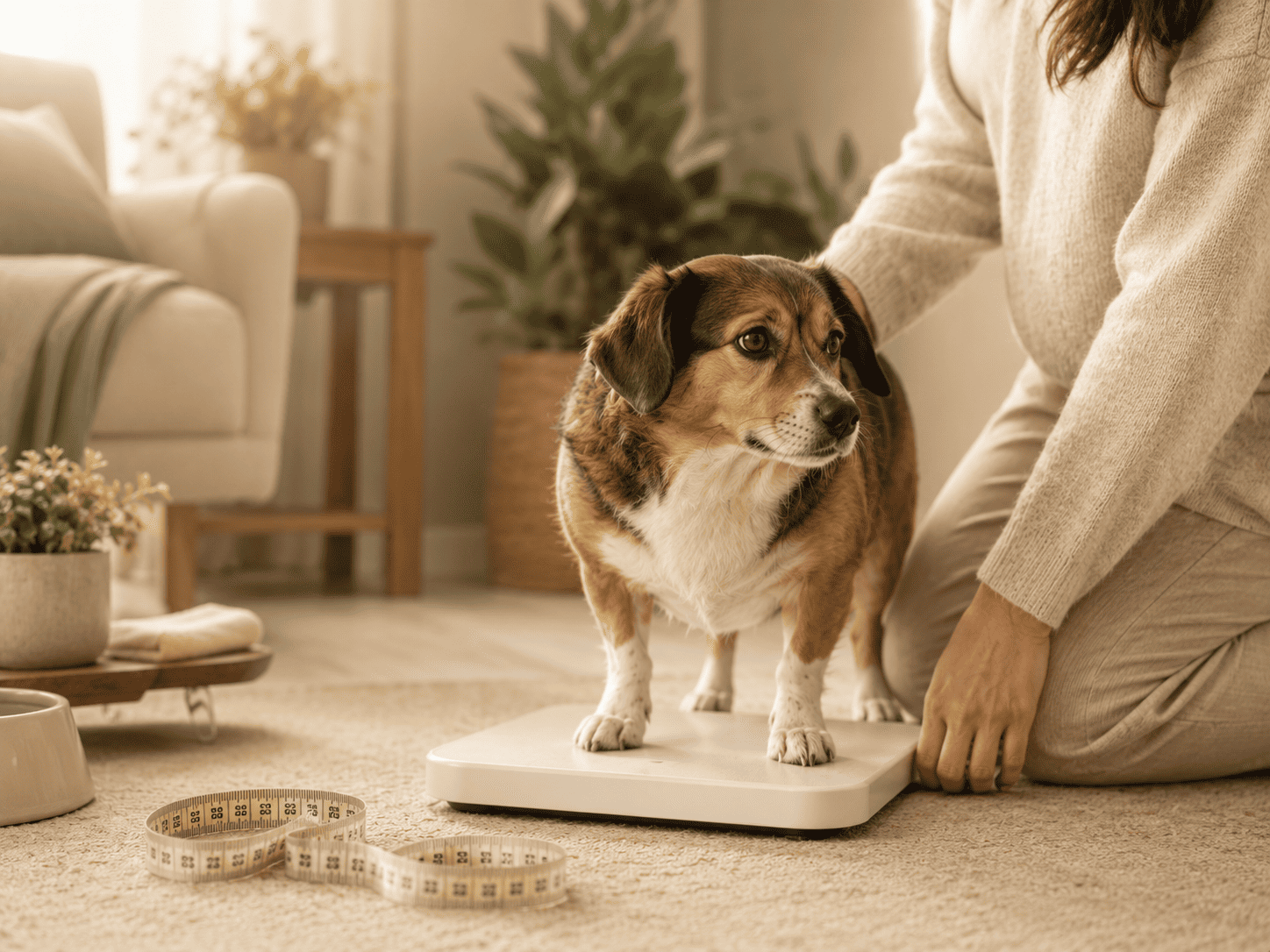
Veterinary surveys consistently find that more than half of dogs and cats in the UK and US are overweight. Many owners do not recognise it — partly because it develops gradually, and partly because overweight pets have become the visual norm.
Carrying excess weight is not just an aesthetic concern. In pets, obesity is directly linked to joint disease, diabetes, heart and respiratory problems, reduced lifespan, and lower quality of life.
The Body Condition Score
Vets use a Body Condition Score (BCS) — typically a 1–9 scale — to assess weight beyond a number on a scale. You can do a basic version of this at home.
The Rib Check
Run your hands along your pet's ribcage with light pressure.
- Healthy: Ribs are easily felt with a slight covering of fat — like knuckles through a light glove
- Underweight: Ribs are clearly visible and very prominent with no fat coverage
- Overweight: Ribs are difficult or impossible to feel through a thick layer of fat
The Waist Check
Look at your pet from above.
- Healthy: A visible narrowing behind the ribs — a discernible waist
- Overweight: The body is roughly uniform width from shoulders to hips, or wider at the belly
The Side View
Look at your pet from the side.
- Healthy: The abdomen tucks up slightly from the ribcage toward the hind legs
- Overweight: The belly hangs low or there is no tuck — the underline is flat or drooping
Behavioural and Physical Signs
Beyond the visual check:
- Reluctance to exercise or tiring very quickly on walks
- Difficulty jumping (cats especially)
- Laboured breathing after light activity
- Difficulty grooming hard-to-reach areas (cats)
- Limping or stiffness after rest
These signs can overlap with other conditions. A vet check is always worthwhile when you notice them.
Why Pets Gain Weight
- Overfeeding: Free-feeding or heaping bowls. Most feeding guides on packaging are conservative upper limits, not prescriptions.
- Too many treats: Treats should make up no more than 10% of daily caloric intake. Most owners significantly underestimate this.
- Insufficient exercise: Especially in indoor cats and dogs in flats
- Age: Metabolism slows as pets age. A feeding amount appropriate at age two may cause weight gain at age seven.
- Neutering: Neutered pets have slightly lower energy requirements. Many owners do not adjust food intake after neutering.
- Medical causes: Hypothyroidism in dogs, certain medications. If your pet gains weight despite appropriate feeding, a vet check is warranted.
What to Do
Do not put your pet on a crash diet. Rapid weight loss — especially in cats — can cause serious medical complications (hepatic lipidosis in cats is a genuine risk).
- Book a vet weight check — many practices offer free nurse weight clinics
- Get an accurate current weight and a target weight
- Measure food — use scales, not cups, and go by manufacturer guidelines for the target weight, not current weight
- Reduce treats — or switch to low-calorie options (plain cooked chicken, cucumber, carrot for dogs)
- Increase activity gradually — extra walks, more play sessions, puzzle feeders that make eating slower and more effortful
- Reweigh monthly and adjust
Weight loss in pets is slow. A healthy rate for dogs is 1–2% of body weight per week. For cats, 0.5–1% per week. Slower is safer.
A Note on "But My Pet Isn't Fat, They're Just Big-Boned"
Skeletal size does vary between individuals. But excess fat covering is visible and palpable regardless of frame size. If you cannot feel your pet's ribs without pressing hard, there is excess fat there.
Printable and fillable PDF templates for pet owners — feeding schedules, health records, training trackers and more.