How to Read a Pet Food Label: A Practical Checklist
Decode Beef Dinner, with Beef and flavour wording, then check natural, grain-free, human-grade and premium claims. Use comparison tables and a shopping checklist.
In short
Decode Beef Dinner, with Beef and flavour wording, then check natural, grain-free, human-grade and premium claims. Use comparison tables and a shopping checklist.
Knowing how to read pet food labels helps you separate a useful claim from words that merely make a bag sound appealing. “Beef Dinner”, “with Beef” and “Beef flavour” can describe very different recipes, while “premium” tells you little about nutritional fit.
Check what a front-of-pack claim means before paying extra for it. Then confirm that the food meets your pet's species, life stage and health needs; an attractive description cannot settle that decision.
How to read pet food labels: decode the product name
The table below summarises common US naming rules under AAFCO's model regulations, which states use in their feed rules. Percentages refer to the named ingredient, not protein content. For names combining ingredients, the combined amounts and additional naming conditions matter.
| US name example | Common minimum for the named ingredient | What to take from it |
|---|---|---|
| Beef Dog Food | 95% excluding added water, and at least 70% including it | A substantial named ingredient, subject to the full naming rules |
| Beef Dinner | 25% excluding added water, and at least 10% including it | Beef need not be the main ingredient |
| Dog Food with Beef | 3% excluding added water | A small named contribution can support the wording |
| Beef flavour | No fixed minimum percentage; the flavour must be supported | The name cannot tell you how much beef is present |
These thresholds are not worldwide labelling rules; check the requirements where the product is sold. Also read the complete name: “dinner”, “entrée” or another qualifier can change which rule applies. A beef-flavoured product is not necessarily beef-free.
Use the name to ask a better question
If you want a particular ingredient, check the declared recipe and ask the manufacturer about an unclear name. If you are avoiding an ingredient because of a diagnosed problem, follow the vet's diet advice; marketing wording is a poor way to screen for exposure. Do not choose a food by its meat percentage alone.
Understand natural without assuming raw or safer
AAFCO's natural definition allows ingredients from plant, animal or mined sources and several kinds of processing. Heating or rendering does not automatically disqualify an ingredient. Natural therefore does not mean unprocessed or raw.
You may see a qualified natural claim that allows added synthetic vitamins, minerals or other trace nutrients. Read the qualifier alongside the main wording. Natural is not a promise that a food suits every pet or treats a health problem.
- Check whether the claim applies to the whole food or a named ingredient.
- Look for wording that explains added vitamins and minerals.
- Ask what a vague term means for the exact recipe you are buying.
Check grain-free and human-grade claims separately
Grain-free describes an exclusion
Grain-free tells you that grains are excluded; it does not mean carbohydrate-free. Other ingredients can supply carbohydrate. It also cannot identify the cause of itching or digestive trouble in your pet.
If your pet has ongoing symptoms, get a veterinary assessment before working through bags with different exclusions. A vet-directed diet trial needs a clear plan for all foods and treats. Changing the main food while keeping assorted snacks can undermine that plan.
Human-grade concerns the whole production chain
Under AAFCO guidance, a human-grade claim needs support for the ingredients and the resulting product, including handling, processing, storage and transport under human-food requirements. One ingredient described as human-quality cannot establish that the whole food meets the claim. Ask the manufacturer what documentation supports the exact product.
A supported human-grade claim still cannot tell you whether the food supplies complete nutrition for a growing kitten or a dog with a particular condition. Confirm nutritional purpose separately. Nor should a pet-food label be treated as an invitation to serve it as food for people.
Look past premium and other prestige words
AAFCO explains that terms such as premium and gourmet do not create a special nutritional standard. They may describe positioning, packaging or the manufacturer's preferred language. Compare the evidence behind a claim rather than using it as a score.
| Claim | Useful question | Purchase decision |
|---|---|---|
| Premium | What specific benefit is supported for this recipe? | Do not pay extra for the word alone |
| Natural | What is covered, and what does the qualifier allow? | Check the full wording |
| Grain-free | Is excluding grain needed for this pet? | Use health advice rather than a trend |
| Human-grade | Is the whole product and production chain covered? | Ask for substantiation |
| Complete and balanced | For which species and life stage? | Confirm the intended nutritional use |
A named meat, a lifestyle claim and a nutritional adequacy statement answer different questions. For the full reading order and comparing wet and dry nutrient percentages, use reading pet food labels. Keep the manufacturer contact details when a claim remains unclear.
A worked example: two foods with similar-looking fronts
Jules is choosing an adult dog's food and compares a bag labelled “Premium Beef Dinner” with one labelled “Dog Food with Beef”. Both show a large picture of beef. Jules checks the exact names and realises the naming thresholds differ.
The dinner wording gives a different minimum from the with wording, but it does not make one recipe automatically better for the dog. Jules checks that each is intended as complete adult dog food, then considers tolerance, availability and the vet's advice. The premium word adds no separate nutritional guarantee.
A third bag says “Beef flavour”, so Jules cannot use that name to estimate beef content. Because the dog eats beef without a known issue, the uncertainty is a shopping question for the manufacturer. For a dog on a vet-directed exclusion diet, Jules would stick to that plan rather than trial a flavour claim.
A manufacturer message you can copy
“I am asking about [full product name] sold in [country]. What does [claim] mean for this exact recipe? If you use human-grade wording, does it cover every ingredient and the complete production chain? Please point me to the supporting information.”
Use a quick marketing-claims checklist
- Read the full name, including dinner, with or flavour.
- Confirm which country's naming rules apply.
- Separate named ingredient content from total protein content.
- Read qualifiers beside natural or similar wording.
- Do not infer low carbohydrate from grain-free.
- Ask whether a human-grade claim covers the whole product.
- Set aside prestige words when comparing nutritional fit.
- Check that a treat or complementary food is not being chosen as the main diet.
- Keep the exact name and country when sending a manufacturer query.
Common mistakes
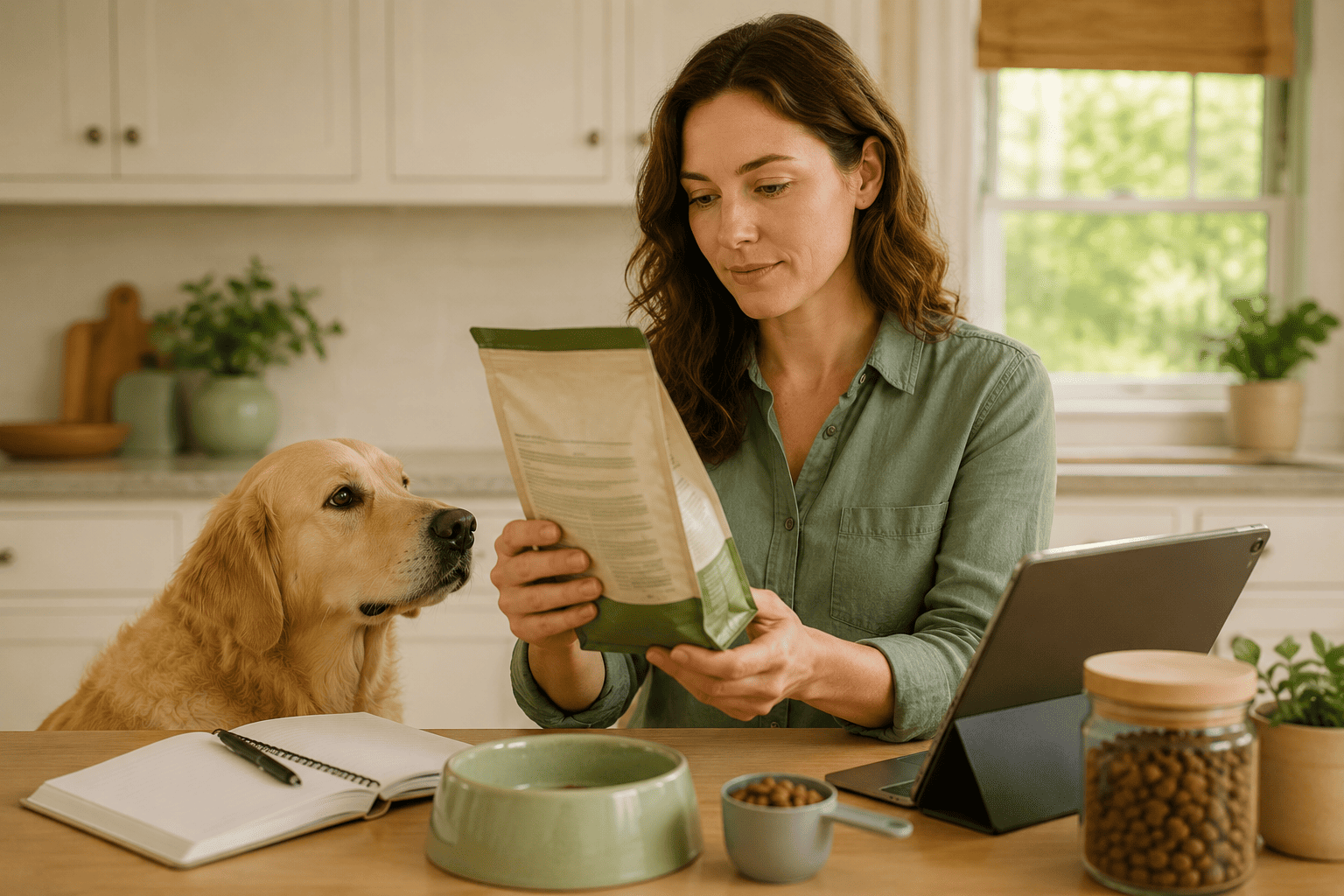
Shopping by the picture: the image cannot explain the naming threshold. Using grain-free as a diagnosis: symptoms need assessment. Assuming natural means no processing: read the definition and qualifier. Treating premium as certification: ask what evidence supports the benefit you want.
Frequently Asked Questions
Is Beef Dinner the same as Dog Food with Beef?
The common US naming thresholds differ. Dinner generally invokes the 25% rule, with a minimum including water too; with invokes a 3% minimum. Read the exact name and recipe, and remember those figures are ingredient content, not protein content.
Can beef flavour food contain beef?
Yes. Flavour wording does not mean the ingredient is absent, and it does not provide a fixed percentage. For an exclusion diet, use the vet's recommended food rather than inferring safety from the name.
Does natural mean a food has no added vitamins?
Not necessarily. A qualified claim can account for added synthetic vitamins, minerals or other trace nutrients. Read the wording beside natural and ask the manufacturer if it is unclear.
Is premium food always a better choice?
The word does not establish a special nutritional standard. Choose around complete nutrition for your pet's needs, health advice, tolerance and reliable supply. Ask for evidence of a specific benefit before paying more for it.
Resources & Links
These sources help distinguish truthful label claims, nutritional purpose and the pet’s feeding needs.
- FDA: Animal Food Labelling and Pet Food Claims — Check the federal and state framework for truthful animal-food labels and claims.
- FDA: Complete and Balanced Pet Food — Separate nutritional adequacy from the marketing wording on the front of the pack.
- Cornell: Feeding Your Cat — Apply species and life-stage needs when a claim alone cannot settle a food choice.
- AAFCO: Reading Labels — Check US model naming rules and the meaning of dinner, with and flavour wording.
Keep allergy and dietary notes alongside your pet’s health information in the Pet Health Record Binder. Get the Pet Health Record Binder →
Printable and fillable PDF templates for pet owners — feeding schedules, health records, training trackers and more.