
How to Pet-Proof Your Home: Room by Room
Pets explore with their mouths, paws and relentless curiosity. Here is what to check in every room before your new pet arrives.
In short
Pets explore with their mouths, paws and relentless curiosity. Here is what to check in every room before your new pet arrives.
How to Pet-Proof Your Home: Room by Room
Pets explore with their mouths, paws and relentless curiosity. Before a new pet arrives, walk through your home at their height and see what they see.
Kitchen
- Toxic foods: Chocolate, grapes, raisins, onions, garlic, xylitol and alcohol are toxic. Keep out of reach.
- Bins: Use bins with secure lids.
- Cleaning products: Store under lock or in high cupboards.
- Dishwasher: Keep closed — tablets contain harmful chemicals.
Living Room
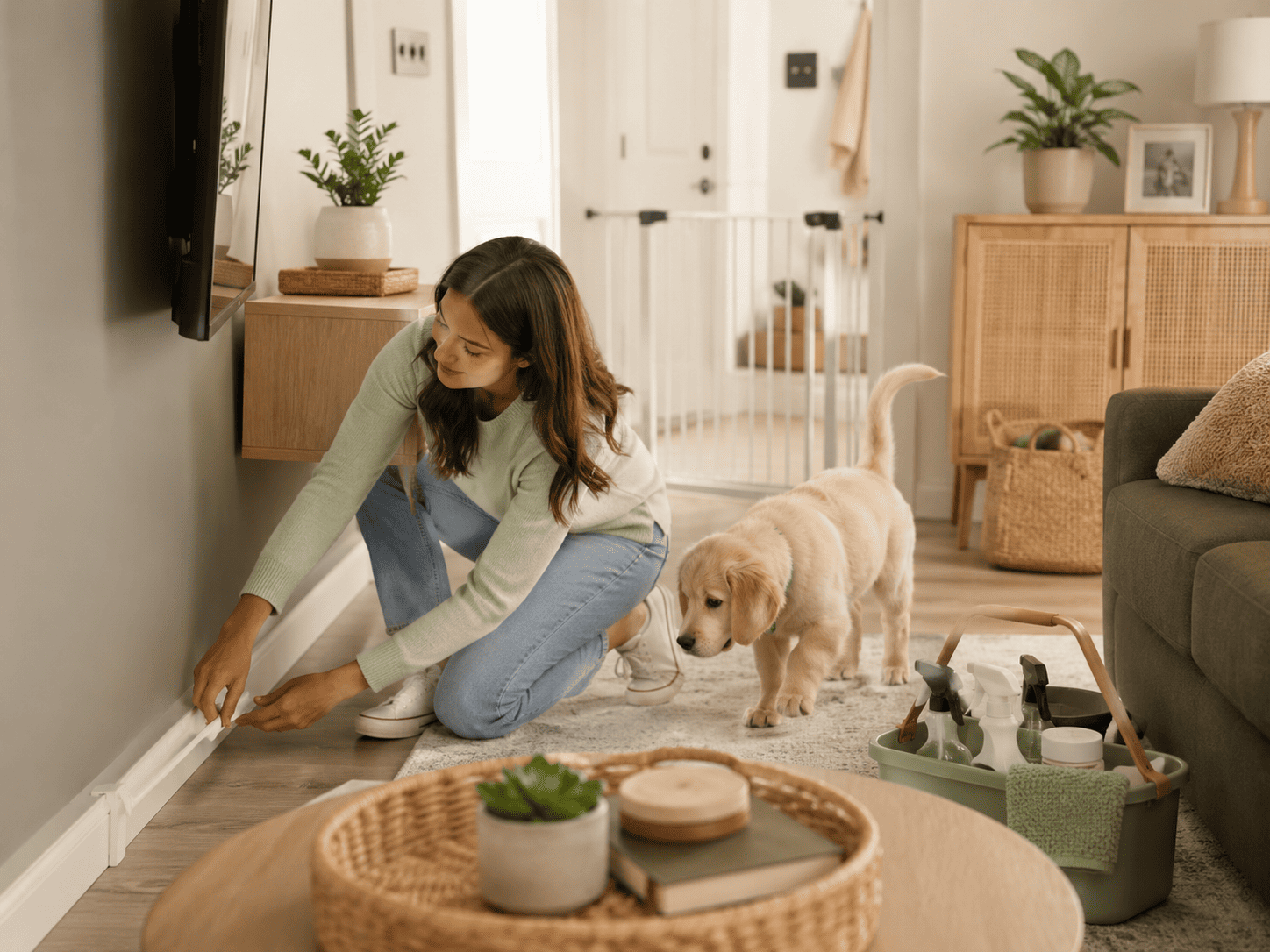
- Cables: Puppies and kittens chew cables. Use cable management covers.
- Plants: Many houseplants are toxic — lilies (fatal to cats), poinsettia, aloe vera, monstera. Check every plant.
- Candles and diffusers: Essential oils (tea tree, eucalyptus) are toxic to cats.
- Small objects: Coins, rubber bands, hair ties and batteries are swallowing risks.
Bathroom
- Medications: Human medications — paracetamol, ibuprofen — are among the most common causes of pet poisoning. Store in a closed cabinet.
- Toilet: Keep lid closed around small pets.
Garden
- Fencing: Check for gaps, broken panels and anything a dog could dig under.
- Toxic plants: Foxglove, bluebells, daffodils, tulip bulbs, yew, laburnum — know what you are growing.
- Slug pellets: Metaldehyde is highly toxic to dogs. Use pet-safe alternatives.
- Ponds: Young puppies and kittens can drown. Net ponds or supervise closely.
Garage
- Antifreeze: Contains ethylene glycol — extremely toxic and fatally attractive to cats. Store securely and clean up any spills immediately.
Want to stay organised?
Browse Templates →Printable and fillable PDF templates for pet owners — feeding schedules, health records, training trackers and more.