
How to Crate Train a Puppy: A Step-by-Step Guide That Actually Works
Crate training is one of the most effective things you can do for a new puppy — but only when it is introduced correctly. Here is a step-by-step guide from day one to sleeping through the night.
In short
Crate training is one of the most effective things you can do for a new puppy — but only when it is introduced correctly. Here is a step-by-step guide from day one to sleeping through the night.
A crate is one of the most misunderstood tools in puppy raising. Used correctly, it gives a puppy a safe, predictable space of their own. Used incorrectly, it becomes a source of distress. The difference is almost entirely in how it is introduced.
Why Crate Training Works
Dogs are den animals by instinct. A correctly sized crate — dark, enclosed, just big enough to turn around in — satisfies that instinct. It also becomes the most reliable toilet training tool available: puppies will not soil their sleeping space if they can avoid it, which teaches them to hold on until they are taken outside.
Choosing the Right Crate
The crate should allow your puppy to stand up, turn around, and lie down — but not much more. A crate that is too large removes the den-like feeling and gives the puppy enough room to toilet in one corner and sleep in another.
- Wire crates with a divider panel are ideal — you can start small and expand as your puppy grows without buying a new crate.
- Plastic airline crates are darker and often preferred by puppies who like to feel enclosed.
- Soft fabric crates are not suitable for crate training — a motivated puppy will escape them.
Step 1: Introduction (Days 1–3)
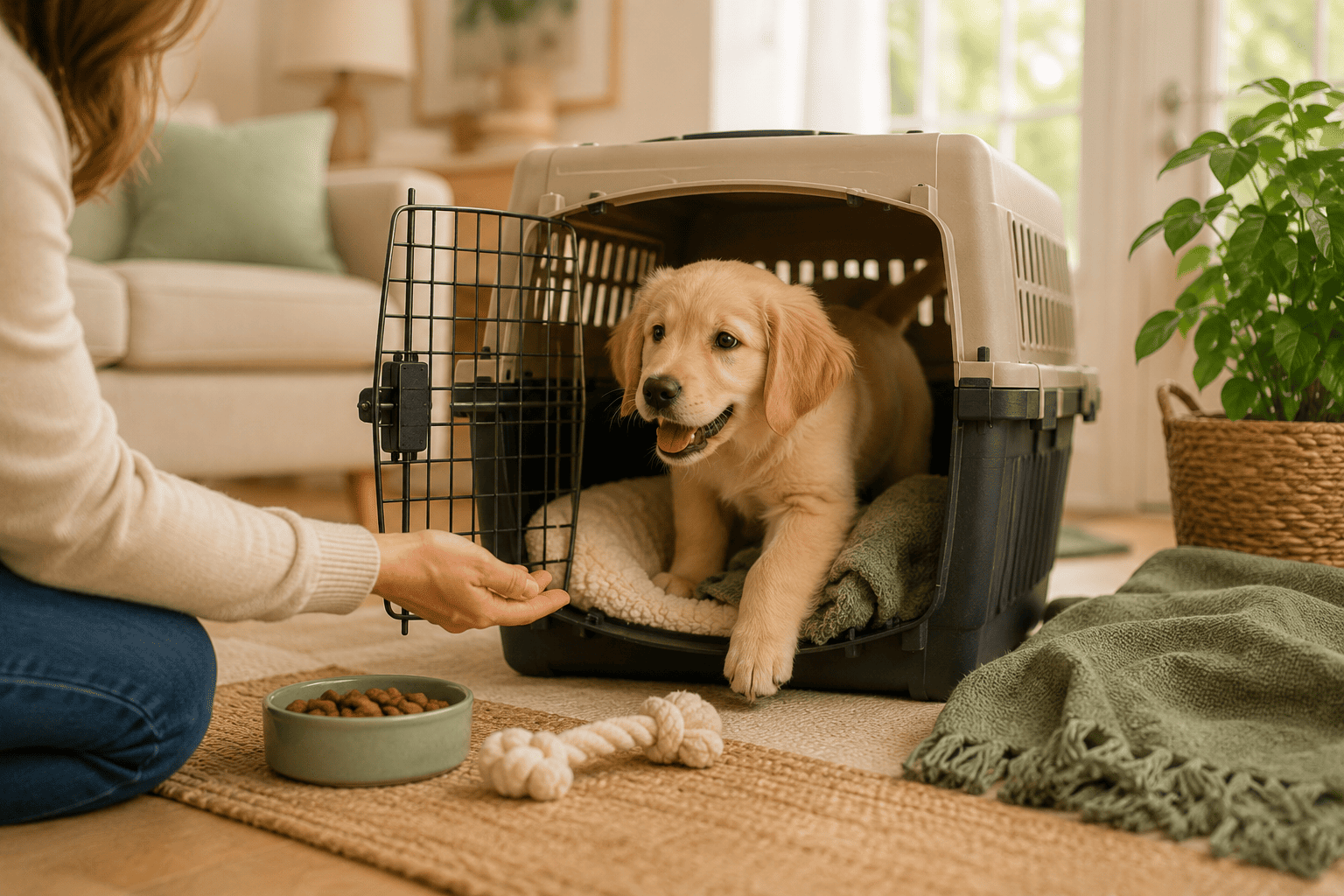
Never push a puppy into a crate and close the door on the first day. The goal is to make the crate the most interesting and rewarding place in the room.
- Place the open crate in the room where the puppy spends most time.
- Drop treats just inside the doorway — progressively further in over a few hours.
- Feed meals inside the crate with the door open.
- Never force them in. Let curiosity do the work.
Step 2: Short Sessions with the Door Closed (Days 3–7)
Once your puppy enters willingly, begin closing the door for 30-second sessions with a chew or frozen Kong inside. Open the door calmly — no big reaction. Build to 2–3 minutes over several days. Only close the door when the puppy is already calm.
Step 3: Building Duration (Week 2)
A stuffed, frozen Kong is the best tool here — it keeps a puppy occupied and builds a strong positive association with the crate.
- Aim for 30-minute sessions with you in the room, then move out of sight.
- Practice leaving and re-entering the room calmly.
- Never let a puppy out while they are whining — wait for any pause in noise, however brief.
Step 4: Overnight (Week 2–3)
Most puppies sleep through the night in a crate by 10–12 weeks with one toilet break. Place the crate in your bedroom initially — the sound and smell of you helps enormously.
- Last toilet trip immediately before bedtime.
- No food or water in the crate overnight.
- If the puppy wakes and whines, take outside quickly and quietly — no play, straight back to the crate.
Common Mistakes
- Using the crate as punishment. It must always be a positive place.
- Moving too fast. If a puppy is crying after five minutes, go back a step.
- Leaving them in too long. Puppies under 12 weeks should not be crated more than two hours during the day.
- Removing the crate too early. Many dogs choose to sleep in their crate for life — keep access available.
New Puppy Starter Kit
Includes a First Week Planner, Daily Routine Tracker, Potty Training Log and Feeding Schedule — everything you need to track your puppy's progress from day one.
Get the New Puppy Starter Kit →Frequently Asked Questions
How long does crate training take?
Most puppies can be left comfortably for 30–60 minutes within two weeks of consistent training. Overnight success typically comes within three to four weeks.
Should I put a blanket over the crate?
Many puppies settle faster with three sides covered — it increases the den-like feeling. Leave the front open so they can see out.
My puppy cries all night. What should I do?
Move the crate next to your bed so your puppy can hear and smell you. This resolves most night crying within two to three nights. If crying is severe and persistent, speak to your vet to rule out discomfort.
Printable and fillable PDF templates for pet owners — feeding schedules, health records, training trackers and more.