How to Build a Pet Emergency Kit (And Where to Keep It)
Build a kit you can collect and carry: choose containers, pack task modules, label last-minute supplies and run a calm loading test with your backup carer.
In short
Build a kit you can collect and carry: choose containers, pack task modules, label last-minute supplies and run a calm loading test with your backup carer.
Learning how to build a pet emergency kit means turning loose supplies into something you can collect, carry and use under pressure. A complete shopping list helps, but the bag also needs to fit your animals, your storage space and the person who may collect it.
Build a portable departure kit first, then a reserve for a longer disruption. Keep instructions for last-minute items visible so refrigerated medicine, a carrier or fresh water is not forgotten.
How to build a pet emergency kit: define the job first
Choose the situations the kit must cover: leaving home quickly, staying with another household or managing a temporary interruption to normal supplies. Think about where each pet will sleep, eat and toilet. A cat, a dog and a small animal will not share all the same equipment.
For a detailed packing manifest, use 10 things to put in your pet emergency kit. Then work through the practical build below using the items your household needs. Ask your vet about any prescribed-care supplies and storage requirements.
- List each animal's species, size, handling needs and normal food.
- Name the person who could collect the kit if you were away.
- Identify the likely transport: car, a helper's vehicle or another planned service.
- Check where pets can stay, including species restrictions.
- Note care needs that ordinary household supplies cannot meet.
For a bird, reptile or other specialist pet, ask a species-experienced vet about portable housing, temperature and diet. Do not assume a dog's bag or an improvised container will work. Plan those requirements before buying the outer bag.
Choose containers you can move and store
Lay the supplies out before selecting a bag. A container that holds everything but cannot be lifted is a storage box, not a departure kit. Keep drinking water and longer-term reserves separate when their weight makes the bag difficult to carry.
| Container | Useful purpose | Check |
|---|---|---|
| Portable bag or small box | Items needed when leaving and during the first handover | Handle strength, closures and manageable weight |
| Labelled reserve box | Extra food, water and consumables for a disruption | Dry storage and rotation of dated supplies |
| Document pouch | Identification, contacts and key care information | Protection from moisture and access without unpacking |
| Last-minute collection list | Items that cannot live in the packed kit | Exact location and who can retrieve them |
Store the kit where it can be reached without crossing a likely hazard or opening a locked cupboard. Keep it separate from chemicals and protected from damp, heat and chewing. Tell your backup carer the location; a label inside the owner's private room may not help them find it.
Pack modules in the order you will use them
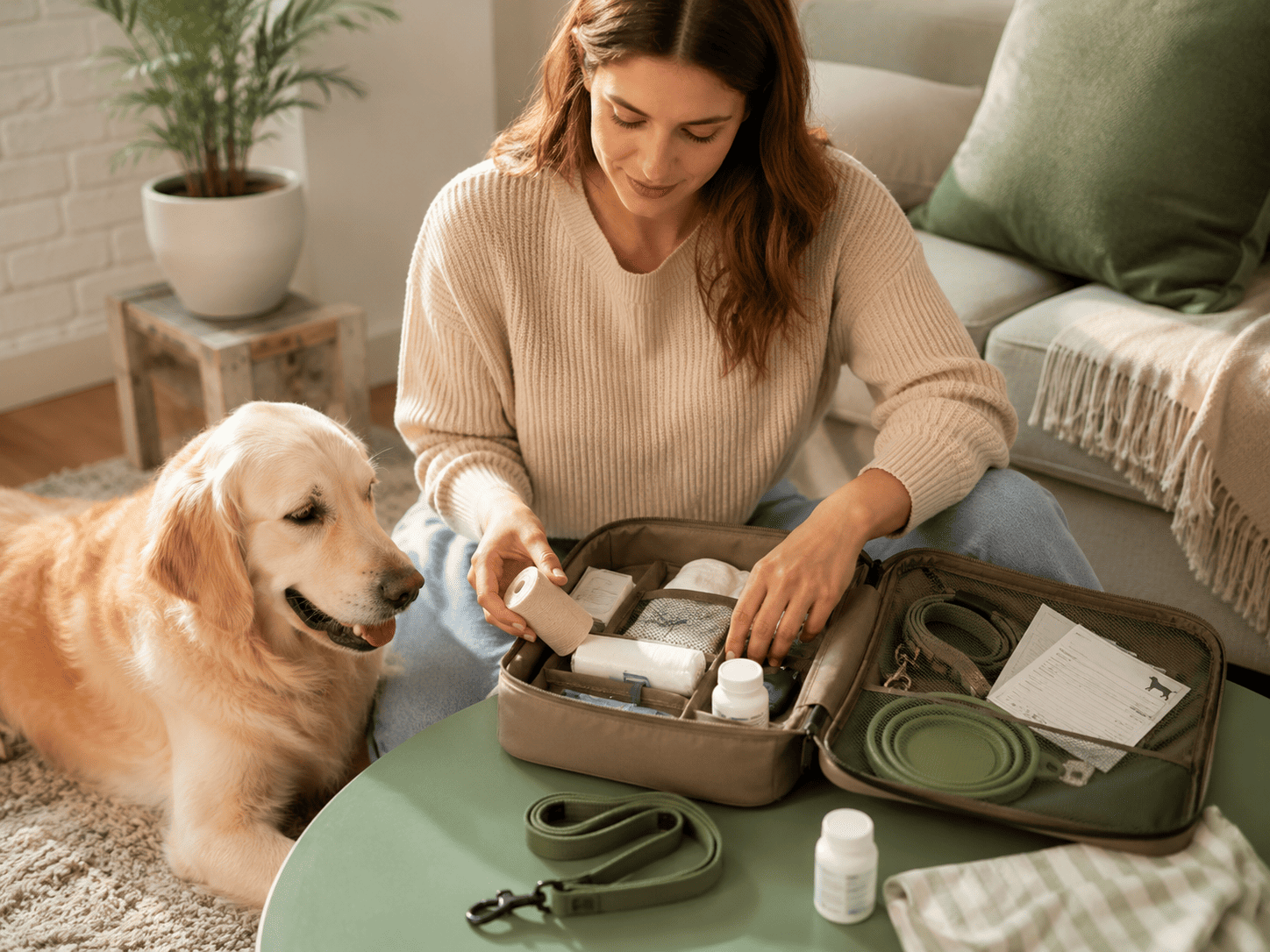
Group supplies by the task, using labelled pouches or small containers. You should be able to find water supplies or a spare lead without tipping the whole bag onto a car park. Keep each animal's food and prescribed instructions clearly identified.
- Pack immediate handling items near the opening: the spare lead or harness you need to secure the animal.
- Place contact and identity information in a reachable pouch: include an offline copy rather than relying entirely on a phone.
- Group feeding supplies: label the food and keep the bowl and measuring item together.
- Group toilet and cleaning supplies: keep waste materials apart from food and medicine.
- Protect first-aid supplies: retain packaging and keep unfamiliar treatments out of the kit.
- Add a small comfort item: choose something washable that the pet already uses.
Put a paper inventory on top with the packing date and each item's location. If a supply is split between the bag and reserve box, say so. “Water: reserve shelf beside the kit” is more useful than ticking water while leaving its location unstated.
Handle food reserves and medicines without guessing
CDC's disaster-kit guidance recommends a two-week food and water supply. Use that as a preparedness target and calculate food from the amount your pet currently eats. If water volume or cost makes one portable load unrealistic, build and rotate a separate reserve while improving the departure kit.
Keep food protected from moisture and pests, following its storage instructions. Retain the product name, batch information and expiry date if you use a different container. A bag of unidentified kibble is difficult for a helper to replace.
Ask the vet what medicine reserve can be supplied and how it must be stored. Do not stockpile prescription products, change instructions or place a medicine in the bag against its storage requirements. Keep prescribed instructions with the correct animal's supplies.
A last-minute label you can copy
“Before leaving: collect [item] from [exact location]. Storage during transport: [instructions from the vet or label]. Put it in [named container]. If it cannot be collected safely, tell [responsible contact or vet] immediately.”
Test whether a helper can follow the label without access to your phone. If an item needs controlled storage, agree a transport method with the vet rather than assuming an ordinary insulated bag is enough. Keep food and medicine where children or animals cannot reach them.
Run a calm collection and loading test
Choose a quiet time and practise with empty carriers or willing animals who are comfortable with the equipment. Do not create smoke, loud alarms or a frightening escape exercise. The aim is to find missing access and awkward loads.
- Ask the backup carer to locate the kit from your instructions.
- Have them identify each animal's carrier, restraint and supplies.
- Lift the kit and move it along the planned route to the vehicle.
- Check that animals and equipment can fit without blocking ventilation.
- Find contact details, a water bowl and waste supplies without emptying the bag.
- Read the last-minute collection list and identify any access problem.
- Return everything to storage and fix the problems discovered.
Never enter a dangerous building to retrieve a kit. If your practice exposes a dependence on stairs, a heavy box or one person with a key, make a backup arrangement now. Keep transport equipment accessible as well as the packed supplies.
A worked example: one bag, two carriers and a reserve shelf
Owen has two cats and initially packs all supplies into a large box. During a collection test, his neighbour can lift the box but cannot carry it while managing both carriers. The box also hides the contact sheet underneath the litter.
Owen moves the first-use items into a smaller bag and keeps bulk food, litter and water on a labelled reserve shelf. The contact pouch goes near the bag's opening. A label names the separate carriers and identifies which cat uses which one.
They practise loading the empty carriers and supplies into the neighbour's car. Owen then changes the handover plan so another agreed helper can assist when both cats need moving. The fix is a manageable load and enough people, not a larger container.
Maintenance that keeps the kit ready
- After using anything, replace it before putting the bag away.
- Check dated supplies when you rotate normal household stock.
- Replace damaged clips, broken closures or damp packaging.
- Update contacts and identification after a phone number, address or ownership change.
- Revise the kit after a diet, prescription or household change.
- Repeat the loading check when vehicles, carriers or helpers change.
Do not treat sealed as finished. A packed bag can contain stale details, unusable food or a harness the pet has outgrown. Put a reminder beside the inventory and keep the kit part of your ordinary supply checks.
Frequently Asked Questions
Does everything have to fit in one bag?
No. A manageable departure bag, separate carriers and a labelled reserve can work better than one heavy load. Make the split visible and check how the household will collect each part.
How much food and water should I prepare?
CDC recommends a two-week supply for disaster preparedness. Calculate food from your pet's current daily amount and make a separate water reserve if necessary. Ask the vet about needs affected by health, diet or the conditions you may face.
Can I keep all medicines permanently in the kit?
Only if the prescribed supply and storage arrangements allow it. Ask the vet about reserves and transport; use a collection label for anything stored elsewhere. Never alter treatment to make packing easier.
How do I know whether a helper could use the kit?
Ask them to find it, read the labels and identify the carriers and first-use supplies during a calm practice. Fix locked storage, heavy loads and unclear locations before relying on the arrangement.
Resources & Links
These sources help turn stored supplies into a usable evacuation and care arrangement.
- CDC: Pet Emergency Preparedness — Build evacuation responsibilities and a backup care plan around your packed supplies.
- FDA: Take Care of Your Pets Before Disaster Strikes — Check storage, identification and readiness as part of assembling the kit.
- PDSA: Emergency Care for Pets — Keep reachable clinic details and transport arrangements alongside the equipment.
Keep care information ready for an emergency with the Pet Emergency and Care Info Kit. Get the Pet Emergency and Care Info Kit →
Printable and fillable PDF templates for pet owners — feeding schedules, health records, training trackers and more.