
Why Do Cats Purr, Knead, Hide, or Meow? Cat Behaviour Explained
Cats communicate in ways that can seem mysterious — or even contradictory. Here is what your cat is actually telling you when they purr, knead, hide, scratch, or suddenly sprint down the hallway at 2am.
In short
Cats communicate in ways that can seem mysterious — or even contradictory. Here is what your cat is actually telling you when they purr, knead, hide, scratch, or suddenly sprint down the hallway at 2am.
Cats have a reputation for being enigmatic, but most of their behaviour is entirely logical once you understand what drives it. Here is a plain-language guide to the most common cat behaviours owners ask about.
Purring
Purring is most often a sign of contentment — but not always. Cats also purr when anxious, in pain, or unwell. Researchers believe purring may have a self-soothing function.
Contentment purring: Relaxed body, half-closed eyes, settled posture. Stress purring: Often accompanied by a tense body, dilated pupils, flattened ears, or unusual context (e.g., at the vet).
If your cat is purring but also hiding, not eating, or seems lethargic, the purr is not a sign that everything is fine.
Kneading
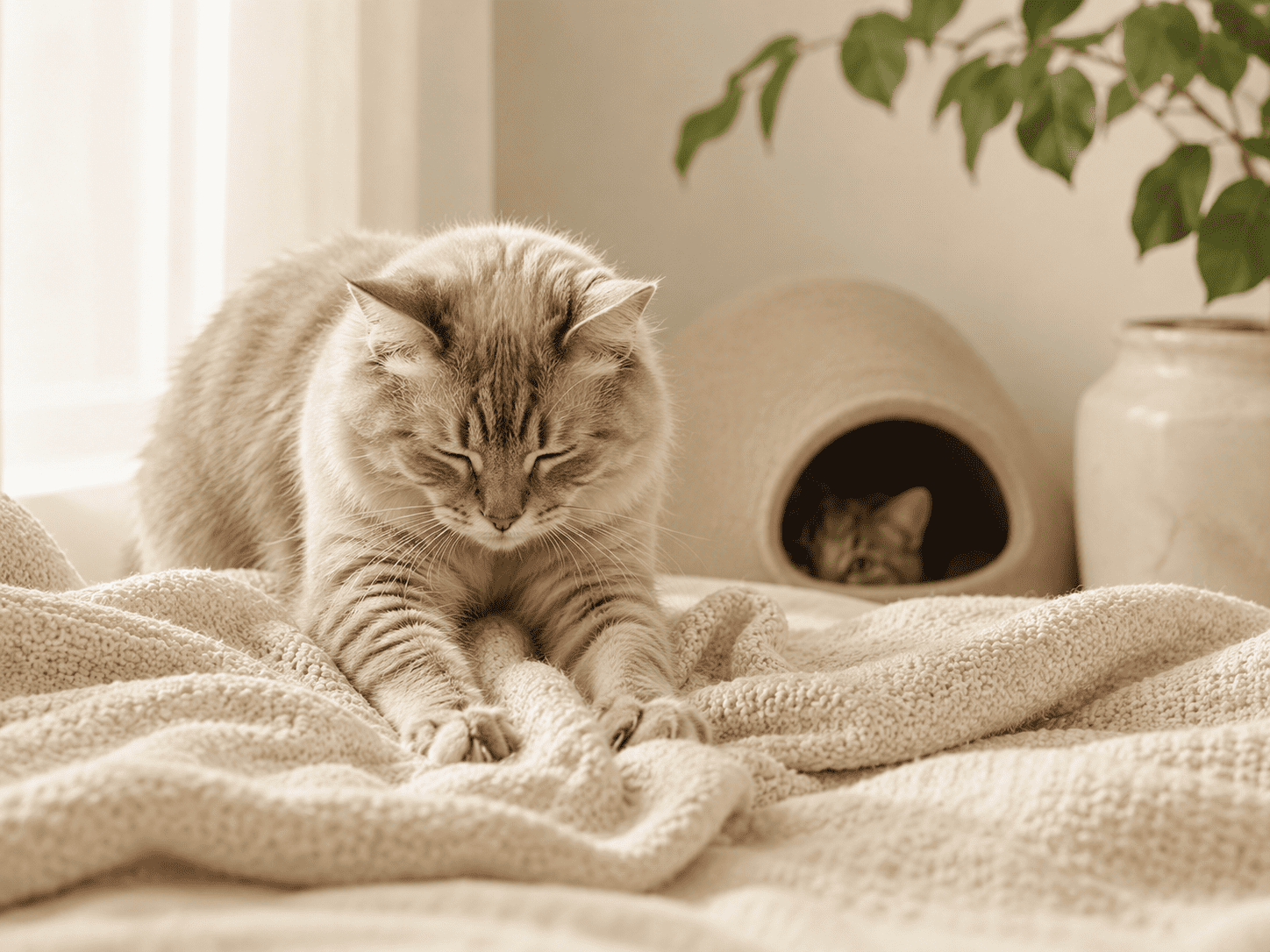
Kneading — pushing paws rhythmically against a soft surface — is a behaviour rooted in kittenhood, when kittens knead their mother to stimulate milk flow. Adult cats do it when content, comfortable, and feeling safe.
It is a compliment. If your cat kneads you, it means they are very relaxed in your presence.
Some cats extend claws during kneading, which can be uncomfortable. Trim nails regularly and provide a blanket for them to knead instead if needed.
Hiding
Hiding is normal behaviour for cats — they are both predators and prey animals, and having access to enclosed, elevated, or hidden spaces makes them feel safe.
Normal hiding: A cat who hides occasionally, especially in new or loud environments, is just decompressing.
Concerning hiding: A cat who suddenly starts hiding more than usual, is not eating, and is reluctant to come out may be unwell. Pain and illness often cause cats to withdraw. If this persists beyond 24 hours, contact your vet.
Excessive Meowing
Cats evolved to meow primarily as communication with humans — adult cats rarely meow at each other. Increased vocalisation can mean:
- Hunger — especially if it occurs around feeding times
- Attention — if the cat has learned that meowing produces a response
- Discomfort or pain — particularly sudden or unusual vocalisations
- Cognitive changes — older cats with cognitive dysfunction often vocalise more, especially at night
- Heat — unspayed female cats in heat meow persistently and loudly
If vocalisation has changed suddenly or is occurring at night in an older cat, a vet visit is worthwhile.
Scratching
Scratching serves three purposes: it maintains claw condition, stretches muscles, and deposits scent from glands in the paws. It is not spite or bad behaviour — it is a physical need.
What helps:
- Provide appropriate scratching surfaces (both vertical and horizontal; some cats prefer one over the other)
- Place scratching posts near sleeping areas — cats often scratch when waking up
- Use positive reinforcement to direct scratching to appropriate surfaces
- Nail caps can reduce damage from cats who scratch furniture despite having posts
Zoomies
The sudden frantic sprints — often at night — are called FRAPs (Frenetic Random Activity Periods). They are a normal energy release behaviour, more common in younger cats and those who are indoor-only.
If your cat's zoomies are disrupting your sleep, increase interactive play in the evening to deplete energy before bedtime.
Signs of Stress in Cats
Cats often hide stress well. Watch for:
- Overgrooming (leading to bald patches)
- Under-grooming (coat becoming unkempt)
- Changes in litter box use (going outside the box, straining, blood)
- Appetite changes (eating more or less)
- Increased hiding or withdrawal
- Aggression that is new or out of character
- Excessive vocalisation
Common stressors: new people or animals in the home, changes to routine, home moves, building work, other cats outside.
When Behaviour May Indicate a Health Problem
Several behaviours that appear behavioural can actually be medical:
- Urinating outside the litter box: Often a sign of a urinary tract infection or bladder disease
- Increased thirst and urination: Can indicate diabetes or kidney disease
- Sudden aggression: May indicate pain
- Night-time vocalisation in older cats: Hyperthyroidism or cognitive dysfunction
When in doubt, rule out medical causes first before addressing the behaviour.
Printable and fillable PDF templates for pet owners — feeding schedules, health records, training trackers and more.