
10 Things to Put in Your Pet Emergency Kit (And Where to Keep It)
Most pet owners have nothing prepared for an emergency. These are the ten items that make the biggest difference when something goes wrong — and the information that is even more important than the supplies.
In short
Most pet owners have nothing prepared for an emergency. These are the ten items that make the biggest difference when something goes wrong — and the information that is even more important than the supplies.
A pet emergency can mean many things: a sudden illness, an accident, a natural disaster, a house fire. In any of these situations, having the right information and supplies immediately available saves time, reduces panic, and in some cases saves a life. This kit takes less than an hour to assemble and should be kept somewhere accessible — not in the loft.
1. Vet Contact Details (Primary and Emergency)
Your primary vet's phone number and the address and number of your nearest 24-hour emergency veterinary clinic. These should be saved in your phone and written on a card in the kit. In an emergency, looking up a phone number is one more thing to do when you have no capacity left. Know the emergency clinic's address before you need to drive there at 2am — knowing it is "somewhere on the ring road" is not sufficient. Most emergency clinics also have a specific entrance for out-of-hours use that is different from the main reception.
2. Poison Control Helpline Number
In the UK: the Animal Poison Line (0800 689 5654 — charged). In the US: ASPCA Animal Poison Control (888-426-4435 — charged). These services provide specific advice on toxin ingestion, the likely severity based on the substance and amount, and whether to induce vomiting or go directly to an emergency vet. The charge per call is worth paying: they have information vets do not always have immediately available on specific substances, and they can help you avoid an unnecessary emergency visit for a low-risk exposure.
3. A Recent Photo of Your Pet
Kept in the kit and updated annually. If your pet gets lost in an emergency — during evacuation, in the confusion after an accident — a clear, recent photo is essential for creating lost pet notices, notifying shelters, and posting on local community groups. Keep it as a printed photo in the kit and as a file on your phone. Include a photo that shows any identifying markings clearly.
4. Copies of Health Records and Vaccination Certificates
If you need to take your pet to an emergency vet who has never seen them, their health history is enormously useful. What medications are they on? Do they have any known allergies? When were they last vaccinated? What conditions do they have? A one-page summary of your pet's health information is worth more than the physical kit in many emergencies. Update it every six months or after any significant health change.
5. Microchip Number and Registration Details
The microchip is useless if the registration database does not have your current address and contact number. Write the microchip number on the health summary in your kit. Include the name of the registry your chip is registered with (in the UK, look up your chip on the microchipregistration.com lookup tool). If you have moved and not updated the registration, do it today — it takes five minutes and makes the difference between a lost pet being returned and not.
6. A Muzzle (Even for Gentle Dogs)
A dog in severe pain will bite, regardless of temperament. This is not aggression — it is a pain response, and it applies to the most gentle dogs. A muzzle in the kit means you can safely handle and transport an injured dog without risking a bite. Know how to put it on before you need to — practice when the dog is calm. For cats, a fabric cat muzzle or even a thick towel wrapped around the head and body serves the same purpose.
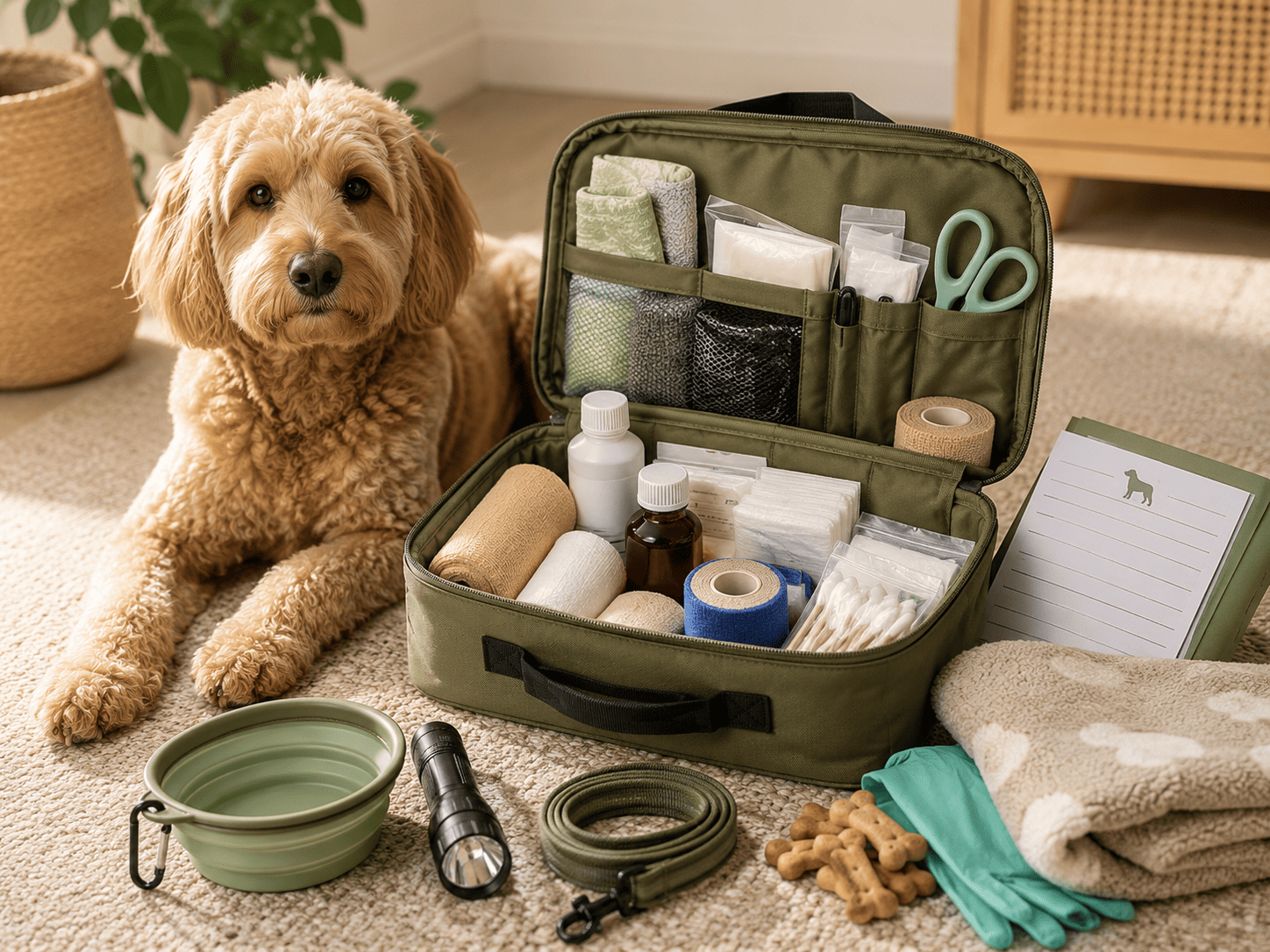
7. A First Aid Kit for Pets
Basic contents: sterile saline solution (for flushing wounds and eyes), non-adherent wound dressings, cohesive bandage (vet wrap — sticks to itself, not to fur), medical tape, sterile gauze pads, blunt-nosed scissors, tweezers (for splinters, ticks, or debris in wounds), a digital thermometer, and a tick removal tool. Do not include any medications without specific veterinary guidance — many human pain medications are toxic to cats and can cause serious harm in dogs.
8. Three to Five Days of Food and Medication
In a disaster scenario — house fire, flood, evacuation — your pet's food and any medications may not be accessible. Keep a small supply in the emergency kit, rotated every few months to stay fresh. For pets on prescription medications, discuss with your vet how to maintain a small emergency supply. Running out of a critical medication during a crisis adds a layer of difficulty to an already difficult situation.
9. A Carrier or Restraint for Every Pet
In a rapid evacuation, time spent searching for a carrier is time you may not have. Know where your pet's carrier is at all times. For dogs, a well-fitted harness and slip lead in the emergency kit provides a secure backup if the usual lead is not at hand. For cats, a hard-sided carrier is safer than a soft one in vehicle accidents. Label the carrier with your contact information in case you are separated from it.
10. Insurance Policy Number and Claims Line
After the emergency is managed, the admin begins. Your policy number and the insurer's claims line, kept in the kit, means you can start the claims process immediately and — if the vet requires it — confirm cover before authorising expensive procedures. Some insurers have a 24-hour claims line; others require you to wait for business hours. Knowing which applies to your policy matters when you are trying to get authorisation at 3am.
Pet Emergency and Care Info Kit
A complete printable kit — emergency contacts, health summary, medication log, microchip record and sitter instructions — everything that needs to be accessible when things go wrong.
Get the Pet Emergency and Care Info Kit →Frequently Asked Questions
Where should I keep the emergency kit?
Somewhere accessible without searching — a labelled box in a hallway cupboard, a bag near the front door, or a dedicated shelf in a utility room. Not in the loft, not in the car (medications can degrade in temperature extremes), and not somewhere you would not naturally go first in a crisis.
Do I need a separate kit for each pet?
The information sections (health records, photos, microchip details) should be separate for each pet. Supplies can be shared across pets. Label each animal's documents clearly if they are stored together.
Printable and fillable PDF templates for pet owners — feeding schedules, health records, training trackers and more.