
10 Things Every New Puppy Owner Must Do in the First 7 Days
The first week with a new puppy sets the tone for everything that follows. These are the ten most important things to do — and avoid — in those critical first seven days.
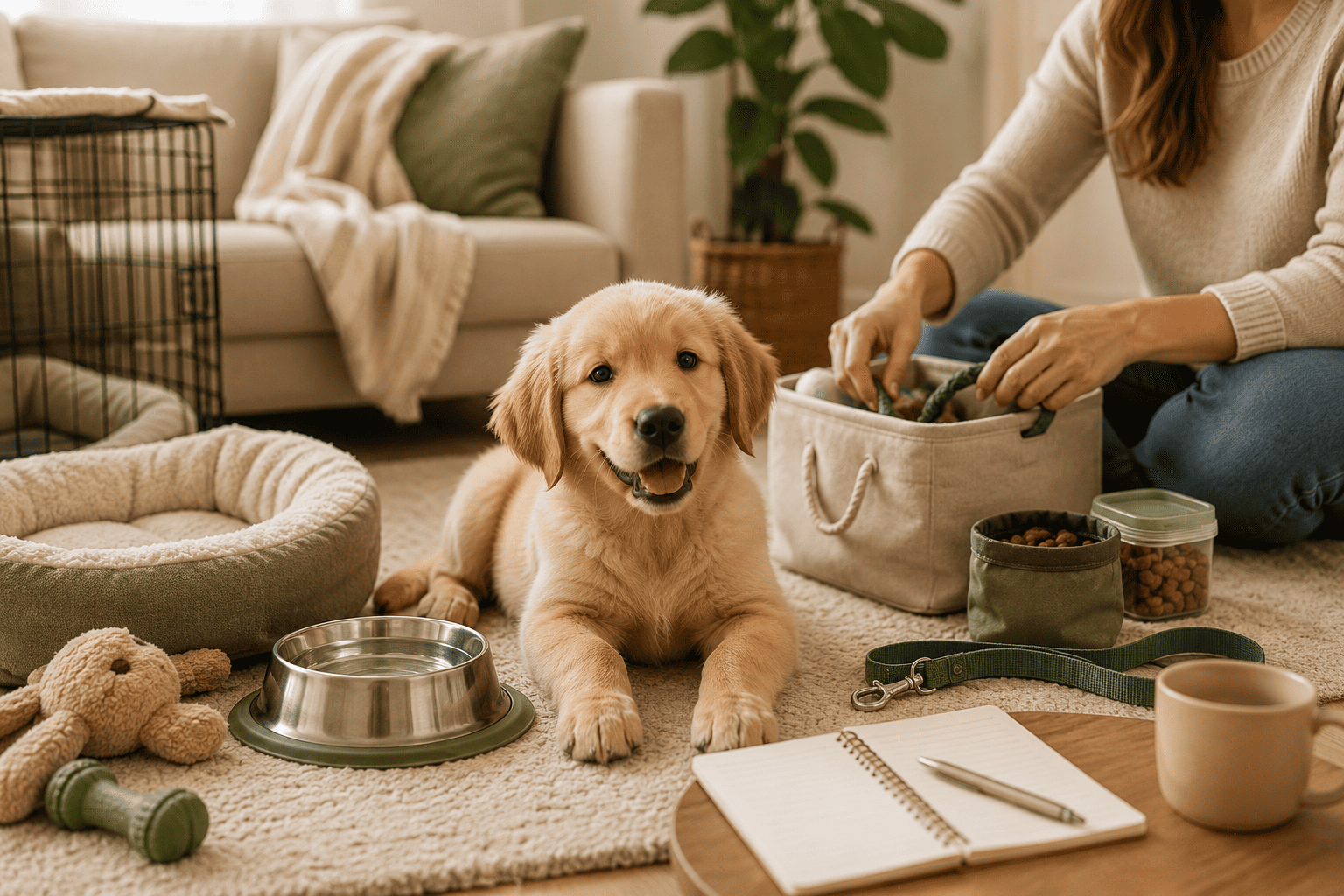
In short
The first week with a new puppy sets the tone for everything that follows. These are the ten most important things to do — and avoid — in those critical first seven days.
The first week with a new puppy is exhausting, overwhelming, and full of things nobody warned you about. It is also the most important week for building the foundation of a well-adjusted dog. The habits, boundaries and experiences your puppy encounters in days one through seven have an outsized effect on what they become. Here is what to prioritise.
1. Book a Vet Appointment Immediately
Your puppy should be seen by a vet within the first three to five days, even if they appear healthy. The vet will check for parasites, assess the puppy's weight and condition, begin or continue the vaccination schedule, and microchip if not already done. This appointment also establishes your relationship with the practice before you are facing an emergency. Book it before the puppy arrives if possible.
2. Set a Feeding Routine From Day One
Ask the breeder or rescue what food the puppy has been eating and stick to it for at least the first week. A diet change on top of the stress of a new home almost guarantees digestive upset. Feed at the same times each day — typically three to four meals for puppies under 12 weeks, three for puppies up to 6 months. Predictable mealtimes make toilet training significantly easier because they create predictable output.
3. Start Toilet Training Immediately
Take the puppy outside every 30–45 minutes, immediately after waking, immediately after eating or drinking, and after any play session. Go to the same spot. Wait. When they go, praise calmly and give a treat within two seconds. Do not react to accidents — just clean them up with an enzyme cleaner and prevent the next one. Every accident indoors is a training opportunity missed, not a character flaw. The puppy cannot hold on long enough to wait for permission — they need to be taken, consistently, until they understand where to go.
4. Introduce the Crate as a Safe Space
The crate is the single most useful tool for the first months of puppyhood — not as punishment, but as a den. Place it in the room where the puppy spends most time. Put bedding and a chew inside. Leave the door open and let the puppy explore it on their own terms. Begin feeding meals inside with the door open. Do not close the door on the first day. The goal for week one is simply that the puppy sees it as a normal, pleasant place to be.
5. Establish Sleeping Arrangements You Can Live With Long Term
Whatever you do on night one tends to become the arrangement by night seven. If you want the dog to sleep in their crate in the kitchen long term, start that on night one — even if it is harder. If you are comfortable with the dog eventually sleeping in your room, start there. Changing sleeping arrangements later is possible but significantly harder than getting it right from the start. Most puppies settle faster if the crate is in your bedroom initially, where they can hear and smell you.
6. Start Handling Practice
Spend five minutes each day gently handling areas your puppy will need to tolerate throughout life: mouth (open and look inside), ears (lift and look), paws (hold and press each toe), tail, and belly. Keep it positive — pair everything with small treats and stop before the puppy becomes resistant. A puppy who is comfortable with handling at the vet, at the groomer, and during at-home checks is a safer and easier dog to care for for the next decade.
7. Keep the First Week Calm
Do not invite the extended family round on day two. Do not organise a puppy party. The puppy has just left everything familiar — their mother, littermates, the smells they have known since birth. Some excitement is unavoidable but keep the first few days low-stimulation: quiet interactions, short introductions to one or two people, and plenty of sleep. A puppy needs 16–18 hours of sleep per day and will become overtired and difficult if not given the opportunity.
8. Begin Socialisation Within Safe Limits
The socialisation window closes around 16 weeks. You cannot afford to wait until vaccination is complete. Carry your puppy in environments you cannot walk them in yet — town centres, markets, car parks. Introduce them to calm adults who will be in their life. Expose them to sounds: traffic, household appliances, children at a distance. Every positive novel experience during this window is an investment in a confident adult dog.
9. Decide on the Rules and Apply Them Consistently
Is the puppy allowed on the sofa? Will they be fed from the table? Are they allowed upstairs? These seem like small decisions in week one but become significant later. More importantly: whatever the rules are, everyone in the household must apply them identically. A puppy who is occasionally rewarded for jumping up will jump up. Inconsistency is the single biggest obstacle to training.
10. Track Everything in Writing
When did the puppy last eat, last toilet, last sleep? Has the first vaccination been done? What food are they on and how much? In the fog of the first week, it is easy to lose track — and details like vaccination dates and food amounts matter at the first vet appointment. A simple daily log keeps everything in one place and helps you spot patterns (the puppy always has an accident at 2pm — because they are always fed at 1pm and you are not taking them out quickly enough).
New Puppy Starter Kit
Includes a First Week Planner, Daily Routine Tracker, Potty Training Log, Feeding Schedule and Socialisation Checklist — everything you need to track the critical first weeks with a new puppy.
Get the New Puppy Starter Kit →Frequently Asked Questions
Should I let my puppy sleep in my bed?
Only if you are comfortable with a full-grown dog sleeping there. Habits formed in week one are the hardest to undo. Make the decision deliberately, not by default.
My puppy cries all night. Is something wrong?
Very common in the first few nights. Move the crate next to your bed so they can hear you breathe. Most puppies settle within two to three nights when they realise the crying does not bring them to you but they can still sense your presence.
Printable and fillable PDF templates for pet owners — feeding schedules, health records, training trackers and more.