
10 Signs Your Dog Is in Pain (And When to Call the Vet)
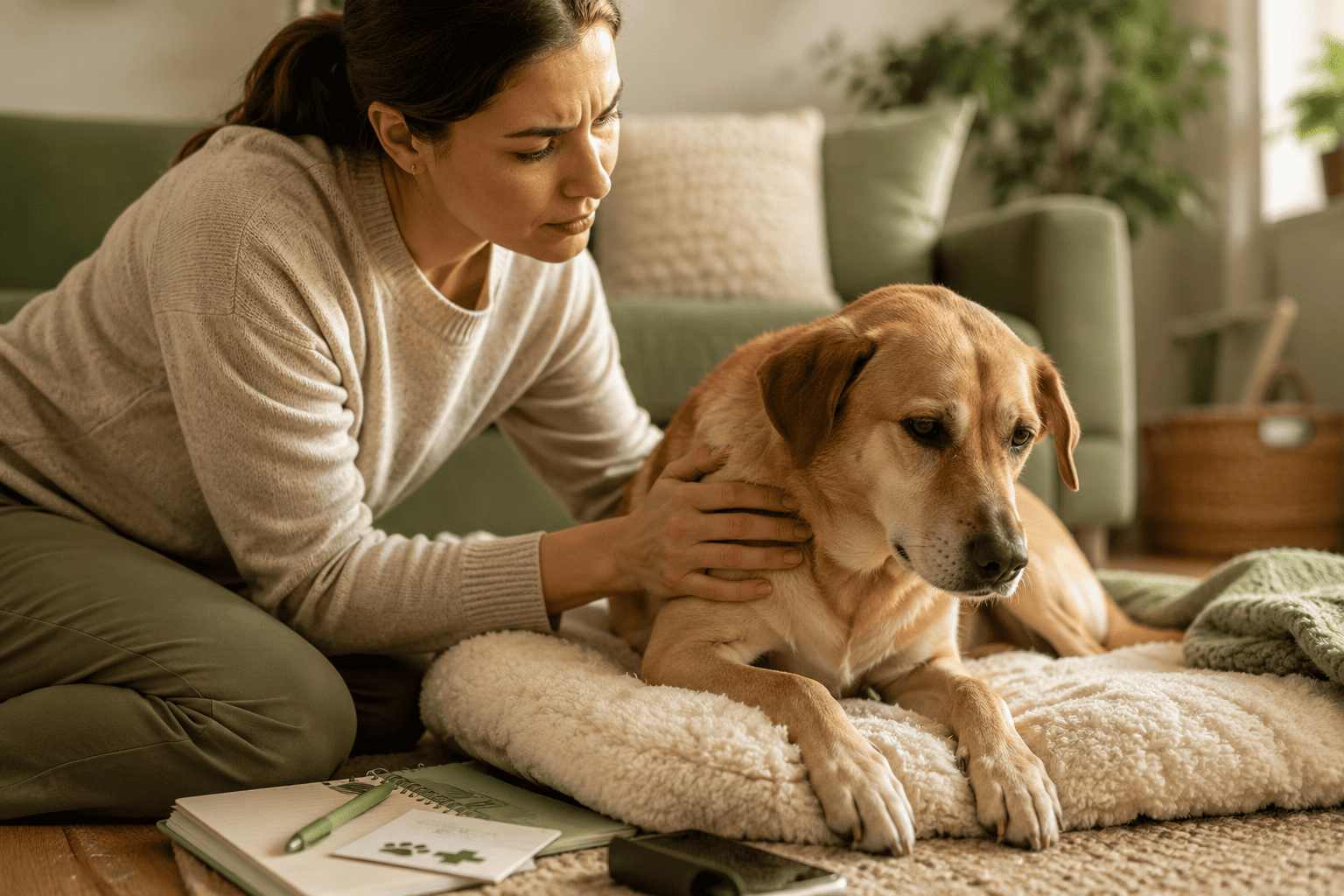
Dogs do not show pain the way humans do. Many signs are subtle and easy to miss — until the condition has progressed significantly. These are the ten indicators that something may be wrong.
In short
Dogs do not show pain the way humans do. Many signs are subtle and easy to miss — until the condition has progressed significantly. These are the ten indicators that something may be wrong.
Dogs are descended from animals where showing weakness meant being removed from the pack or targeted by predators. This instinct to mask pain persists in domestic dogs — a dog that is suffering often continues to eat, move around, and greet you at the door. Recognising pain in a dog requires knowing what to look for beyond the obvious limping or yelping.
1. Changes in Posture or Gait
A dog that is standing or moving differently than usual — one shoulder lower, an unusual stiffness in the back end, a subtle head bob when walking — is compensating for discomfort somewhere. This is particularly noticeable in dogs with joint pain who appear stiff when they first stand up after resting but loosen up after a few minutes of movement. Any change in how a dog holds or moves their body that persists for more than a day warrants attention.
2. Reduced Activity or Reluctance to Move
A dog that was previously enthusiastic about walks but now moves slowly, sits down frequently, or refuses to jump into the car may be in pain — not being difficult or stubborn. Reluctance to use stairs, hesitation before jumping, and lying down during a walk are all signs of discomfort. In older dogs, this is frequently the first sign of arthritis, which is very manageable once diagnosed.
3. Changes in Appetite
Pain suppresses appetite. A dog that is eating significantly less than usual — or that approaches the bowl with interest but then walks away — may have dental pain making chewing uncomfortable, abdominal pain, or systemic pain affecting appetite. A day without eating is not an emergency in an otherwise healthy adult dog; two days is a reason to call the vet.
4. Excessive Grooming of One Area
When a dog repeatedly licks or chews at a specific area of their body with no visible wound or skin issue, they are frequently trying to address discomfort they can reach — a painful joint, a soft tissue injury, or internal pain that refers to a nearby surface. The paws, belly, and lower back are common areas. Part the fur and check for swelling, heat, or changes in skin colour. If you cannot identify a visible cause, the vet needs to look.
5. Vocalisation
Whimpering, groaning, or yelping — particularly when touched, moved, or when changing position — is a direct expression of pain. However, many dogs in significant pain are completely silent. The absence of vocalisation does not mean the absence of pain. Equally, some dogs are vocal under very minor discomfort. Know your individual dog's baseline.
6. Changes in Breathing
A dog that is panting heavily in a cool room, when not exercised, and not anxious may be in pain. Shallow, faster-than-normal breathing can indicate abdominal pain, chest pain, or widespread discomfort. Panting is a non-specific sign, but in combination with other items on this list, it is significant.
7. Aggression or Irritability When Touched
A dog that has always been gentle but snaps or growls when a specific area is touched, when they are lifted, or when they are disturbed while resting is very often doing so because it hurts. Do not interpret this as a behaviour problem without first ruling out pain as a cause. Many dogs who have been labelled as aggressive at the groomer or vet are actually reacting to pain from an underlying condition that has not been diagnosed.
8. Restlessness and Inability to Settle
A dog that normally settles easily at night but has become restless — getting up and lying down repeatedly, pacing, unable to find a comfortable position — may be struggling with pain that is more noticeable when at rest. Joint pain, gastrointestinal discomfort, and neurological conditions can all cause this. If your dog is sleeping poorly or seems unsettled at night, it is worth investigating rather than assuming it will resolve.
9. Changes in Eyes or Facial Expression
Pain changes a dog's facial expression in observable ways: the eyes may appear partially closed or glassy, the muscles around the muzzle may be tense, the brow may be furrowed, the ears may be held back more than usual. Researchers have developed pain scales for dogs based on these facial cues. A dog that looks different around the face and eyes — not their normal relaxed expression — may be expressing pain through the only means available to them.
10. Withdrawal or Personality Change
A dog that has become quieter, less interested in interaction, less playful, or that has stopped seeking affection when they were previously social is often in pain. This is one of the most commonly missed signs because it is easy to attribute to aging, mood, or "just having a quiet day." A personality change that persists for more than two or three days in a dog with no obvious explanation is worth a vet conversation.
Pet Health Record Binder
Log symptoms, changes in behaviour, and vet appointments so you can see patterns over time and give your vet the most accurate picture of what has changed and when.
Get the Pet Health Record Binder →Frequently Asked Questions
My dog seems fine but is licking one paw constantly. Should I be worried?
Persistent licking of a single area is worth checking. Part the fur, examine the skin between the toes, and check for any cuts, foreign bodies (thorns, splinters), or swelling. If nothing is visible but licking continues beyond a day or two, the vet should look — sometimes the cause is deeper than the skin surface.
Can dogs feel pain the same way humans do?
The neurological and physiological mechanisms of pain perception in dogs are very similar to those in humans. Dogs feel pain — they are simply not always able to express it in ways humans recognise. The instinct to mask pain is strong, which is why observational assessment is essential rather than assuming a dog is fine because they are not vocalising.
Printable and fillable PDF templates for pet owners — feeding schedules, health records, training trackers and more.