10 Human Foods That Are Dangerous for Dogs (And Why Each One Is a Problem)
Some of the most dangerous foods for dogs are things found in every kitchen. This guide covers the ten most important ones to know about — what happens if a dog eats them, and what to do.
In short
Some of the most dangerous foods for dogs are things found in every kitchen. This guide covers the ten most important ones to know about — what happens if a dog eats them, and what to do.
The list of foods that are toxic to dogs is longer than most owners realise, and the level of danger varies considerably between items. Some cause mild digestive upset. Others cause kidney failure or death. Knowing which is which allows you to respond appropriately: with observation at home, a call to a vet helpline, or an emergency appointment.
1. Grapes and Raisins
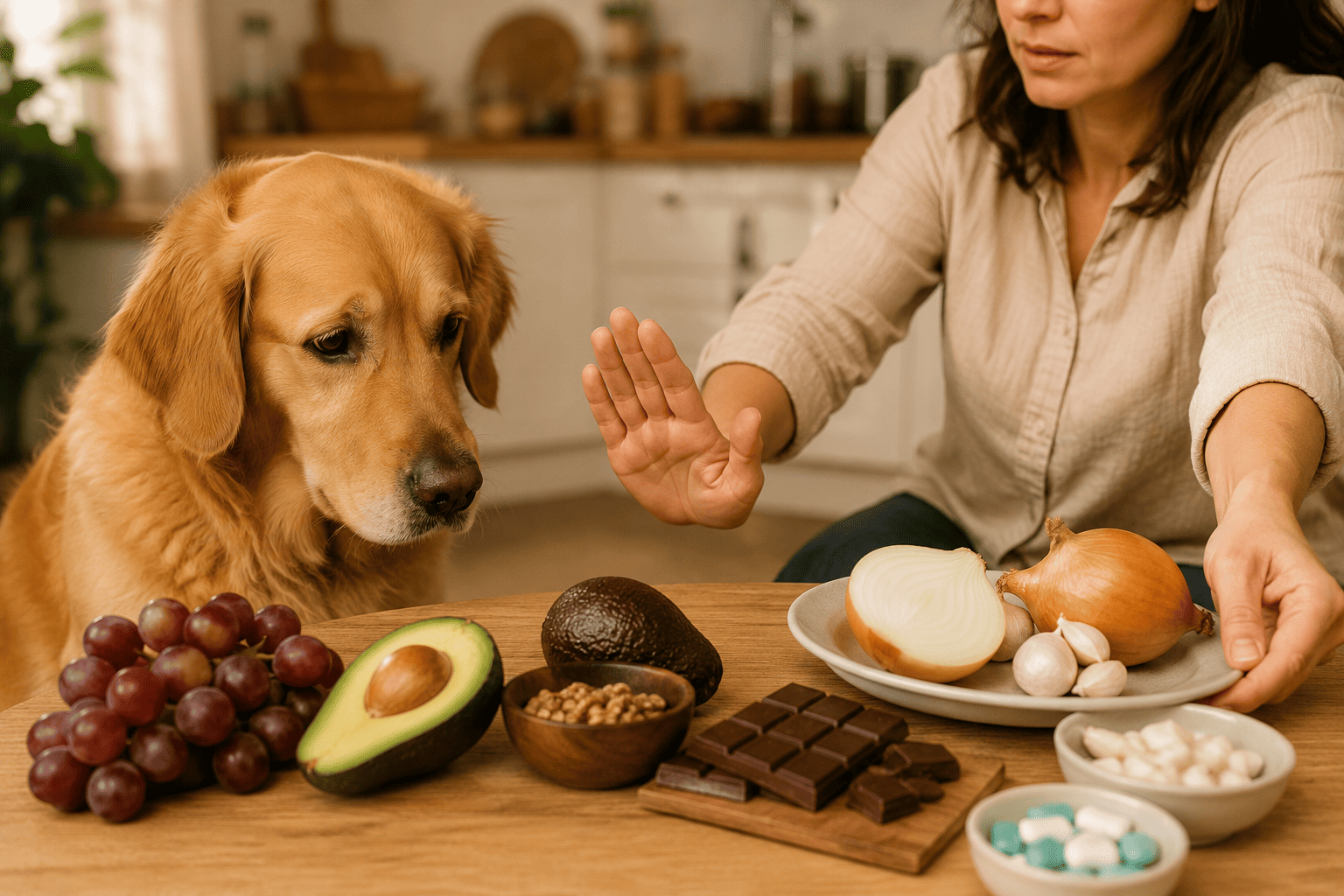
Among the most dangerous items on this list. Grapes and raisins — and products containing them, including mince pies, hot cross buns, and Christmas pudding — can cause acute kidney failure in dogs. The toxic compound has not been definitively identified, which means there is no established safe dose. Some dogs have eaten grapes with no apparent effect; others have developed kidney failure after a small amount. Do not treat this as low risk. If your dog has eaten any amount of grapes or raisins, contact your vet immediately — do not wait for symptoms.
2. Xylitol (Birch Sugar)
Xylitol is a sweetener found in sugar-free gum, some peanut butters, certain medications, dental products, and a growing range of reduced-sugar foods. In dogs, xylitol causes a rapid and severe drop in blood sugar (hypoglycaemia) and can cause acute liver failure. Even small amounts are dangerous. Symptoms include vomiting, weakness, staggering, and seizures — often within 30–60 minutes of ingestion. Check the label of any peanut butter before giving it to your dog and keep sugar-free products out of reach.
3. Chocolate
Chocolate contains theobromine, which dogs metabolise far more slowly than humans. The darker the chocolate, the higher the theobromine content. Milk chocolate is less dangerous than dark; baking chocolate and cocoa powder are the most concentrated. Symptoms include vomiting, diarrhoea, restlessness, muscle tremors, and in severe cases, seizures and heart arrhythmias. The severity depends on the type and amount eaten and the dog's size. If your dog has eaten dark chocolate or any significant quantity of any chocolate, contact your vet. Use an online chocolate toxicity calculator to assess risk level.
4. Onions, Garlic, Leeks, and Chives
All members of the Allium family are toxic to dogs and cause damage to red blood cells, leading to haemolytic anaemia. The toxic compounds survive cooking, so cooked onion in leftovers is as dangerous as raw. Garlic is significantly more potent than onion by weight. Symptoms may not appear for several days after ingestion: weakness, pale gums, reduced appetite, rapid breathing, and red or brown urine. Keep all leftover human food containing these ingredients away from your dog, including gravies, soups, and stir-fries.
5. Macadamia Nuts
The mechanism is poorly understood, but macadamia nuts reliably cause a characteristic syndrome in dogs: weakness, particularly in the hind limbs, vomiting, tremors, and fever. Symptoms usually appear within 12 hours. Most dogs recover within 24–48 hours with supportive care, but the experience is unpleasant and the severity can vary. Avoid giving your dog any nut products and keep macadamia-containing cookies and snacks well out of reach.
6. Avocado
Avocado contains persin, a fungicidal toxin present in the flesh, skin, pit, and leaves of the plant. In dogs, significant quantities cause vomiting and diarrhoea. The large pit is also a serious choking and gastrointestinal obstruction hazard. Guacamole frequently also contains garlic and onion, compounding the problem. Moderate exposure to the flesh of ripe avocado causes digestive upset rather than life-threatening toxicity in most dogs, but avocado should not be intentionally fed.
7. Alcohol
Dogs are significantly more sensitive to alcohol than humans, and a small amount relative to their body weight can cause alcohol poisoning. Sources are not always obvious: fermented fruit, bread dough containing yeast (which produces alcohol as it rises in the stomach), beer, wine, and spirits. Symptoms include vomiting, disorientation, breathing difficulties, and in serious cases, coma. Keep alcoholic drinks, fermenting produce, and raw dough containing yeast away from dogs.
8. Cooked Bones
Cooked bones — particularly poultry bones — become brittle when cooked and splinter into sharp shards that can cause lacerations in the mouth, throat, and gastrointestinal tract, or cause obstruction. Raw bones are a different matter and are appropriate for many dogs with supervision. The key distinction is cooked versus raw, not the species of animal the bone comes from. Dispose of cooked bones in a sealed bin and never leave a dog unsupervised near a bin containing food waste.
9. Caffeine
Coffee, tea, energy drinks, and caffeine-containing medications can cause restlessness, rapid heart rate, vomiting, muscle tremors, and in high doses, seizures. Like theobromine in chocolate, caffeine affects the dog's nervous system and cardiovascular function. A dog that has lapped up spilled coffee needs monitoring; a dog that has eaten multiple caffeine tablets needs immediate veterinary attention.
10. Corn on the Cob
Not toxic, but included because it is one of the most common causes of gastrointestinal obstruction in dogs, which is a surgical emergency. Dogs frequently eat the corn and the cob, and the cob does not digest — it sits in the intestine and causes a complete blockage. Symptoms are vomiting, lethargy, abdominal pain, and inability to keep food down. The cob must be surgically removed. Throw corn cobs in a sealed bin, never in a low-sided kitchen bin.
Pet Emergency Card
A quick-reference card for your fridge or wallet — vet contacts, poison helpline numbers, and emergency protocol. Exactly what you need when something goes wrong and you cannot think clearly.
Get the Pet Emergency Card →Frequently Asked Questions
What should I do if my dog eats something toxic?
Note the exact time, what was eaten, and approximately how much. Contact your vet or a pet poison helpline immediately — do not wait for symptoms. In the UK, the Animal Poison Line is available 24 hours. In the US, the ASPCA Animal Poison Control Center operates around the clock. Do not induce vomiting without veterinary guidance — for some substances, it can cause additional harm.
Is peanut butter safe for dogs?
Most peanut butter is safe in small amounts. Check the label for xylitol (also listed as birch sugar or E967) — any peanut butter containing it is toxic. Plain, unsalted peanut butter with no added sweeteners is the safest choice.
Printable and fillable PDF templates for pet owners — feeding schedules, health records, training trackers and more.